-
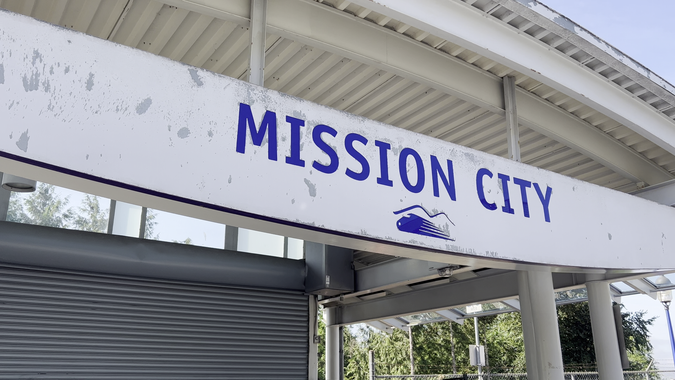
This is what passes for a Via Rail stop
This was an ongoing post series I had going on cohost.org starting on July 6, 2023 that eventually led to my friend, Tam and I going on a little train ride
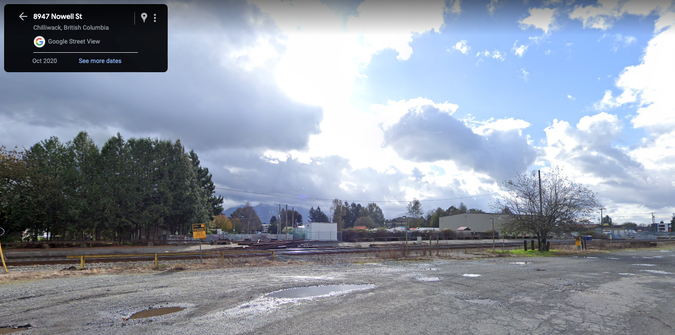
I decided to look this up on Wikipedia:
The station is served by Via Rail’s The Canadian as a flag stop (48 hours advance notice required). The station is only served by westbound trains towards Vancouver. Eastbound trains call at Agassiz railway station along the CPR tracks, on the other side of the Fraser River. This split in service between Vancouver and Ashcroft is due to CN and CPR utilizing directional running through the Thompson- and Fraser Canyon.
Okay. So 48 hours notice is required to catch a train from Chilliwack to Vancouver. Let’s see how much it costs to book:
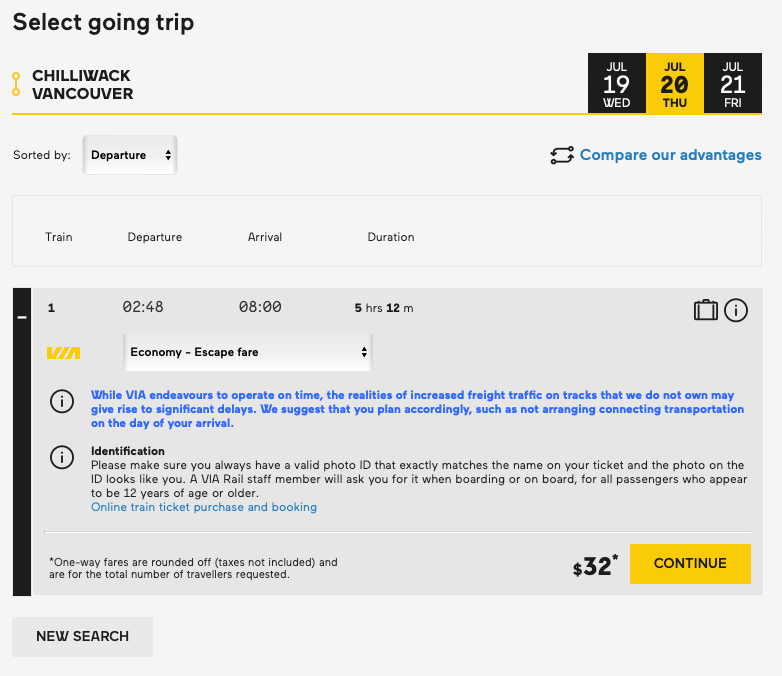
So it’s CA$32 to take a train, but they’re quoting me it’s five hours to do the entire trip? Here’s why it’s absurd:
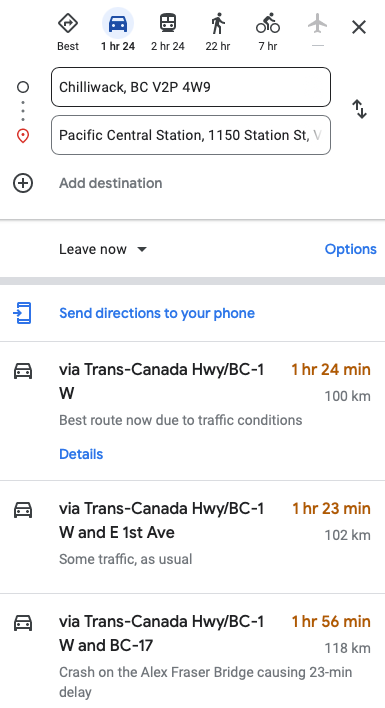
I am guessing Via has zero expectations for being on time when arriving so they pad it out by 5 hours. Freight rail surprise surprise often causes delays.
I was curious, what does Chilliwack’s counterpart in Aggasiz look like?
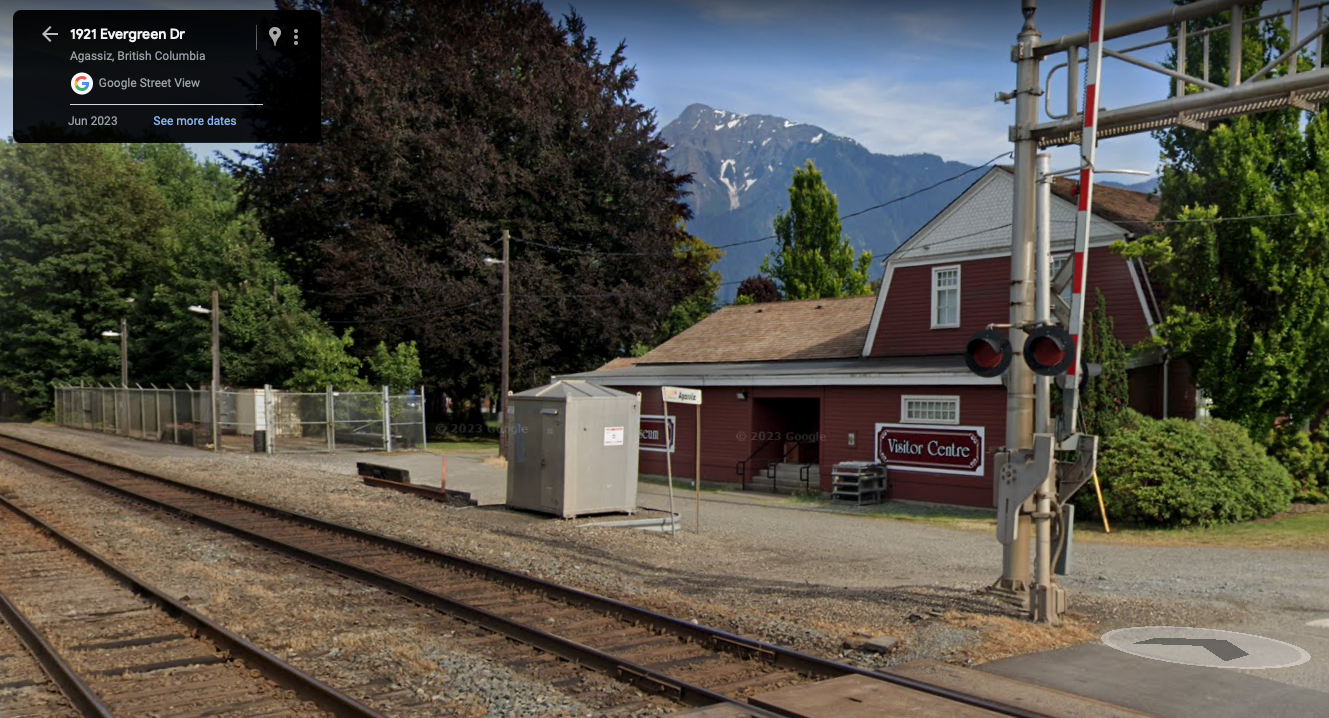
So it looks slightly better but it is still a dreadful platform situation. Just like Chilliwack, it has zero accessibility. However, we have another station we can look at:
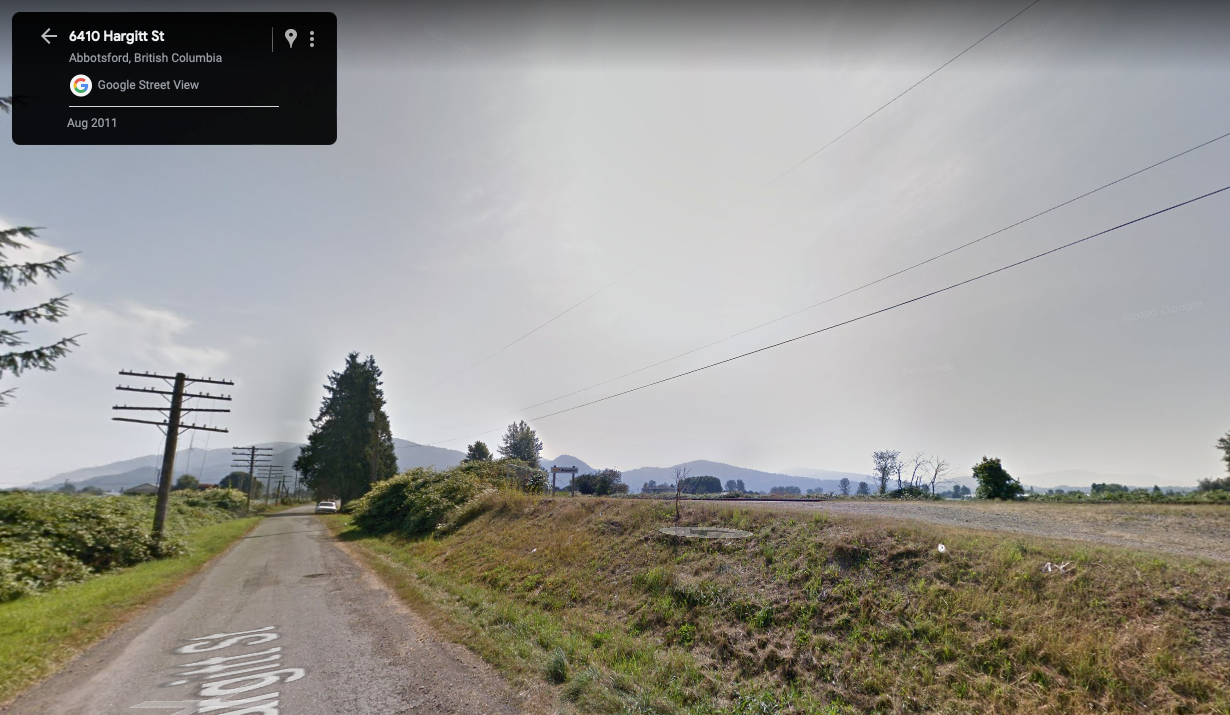
This is Abbotsford station. It’s literally in a farm field located 80 KM from Pacific Central. It’s the counterpart to this station:
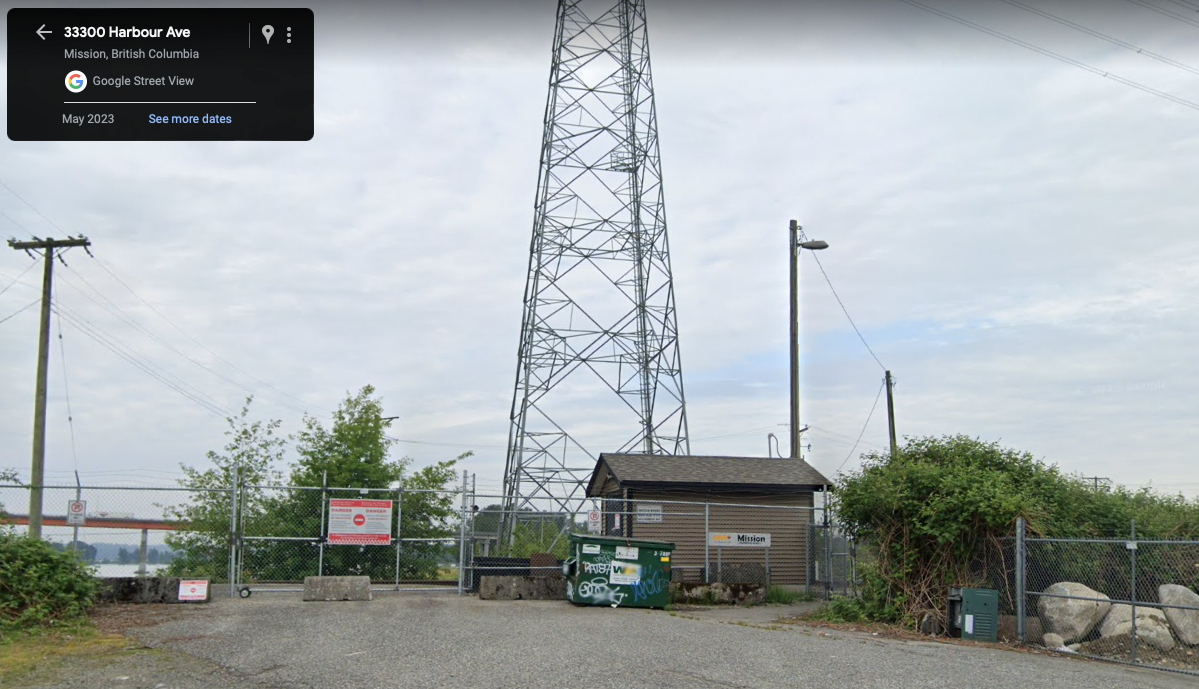
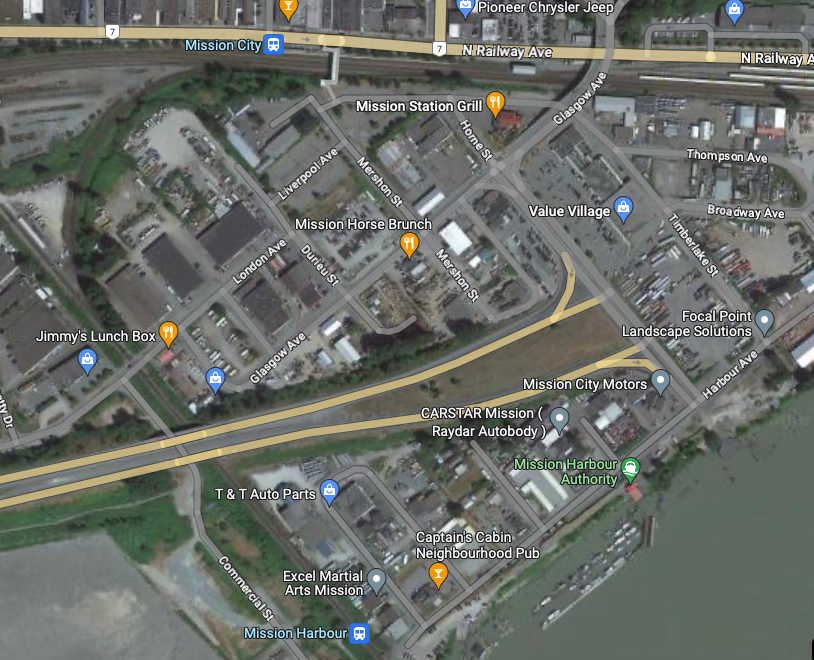
Yes. This is a station and it’s gated off. Just like Aggasiz, this is the split service station to Abbotsford. It’s so dreadful. The irony is that this station is 1 KM away from this station which is used for the commuter rail into Vancouver’s Waterfront station:
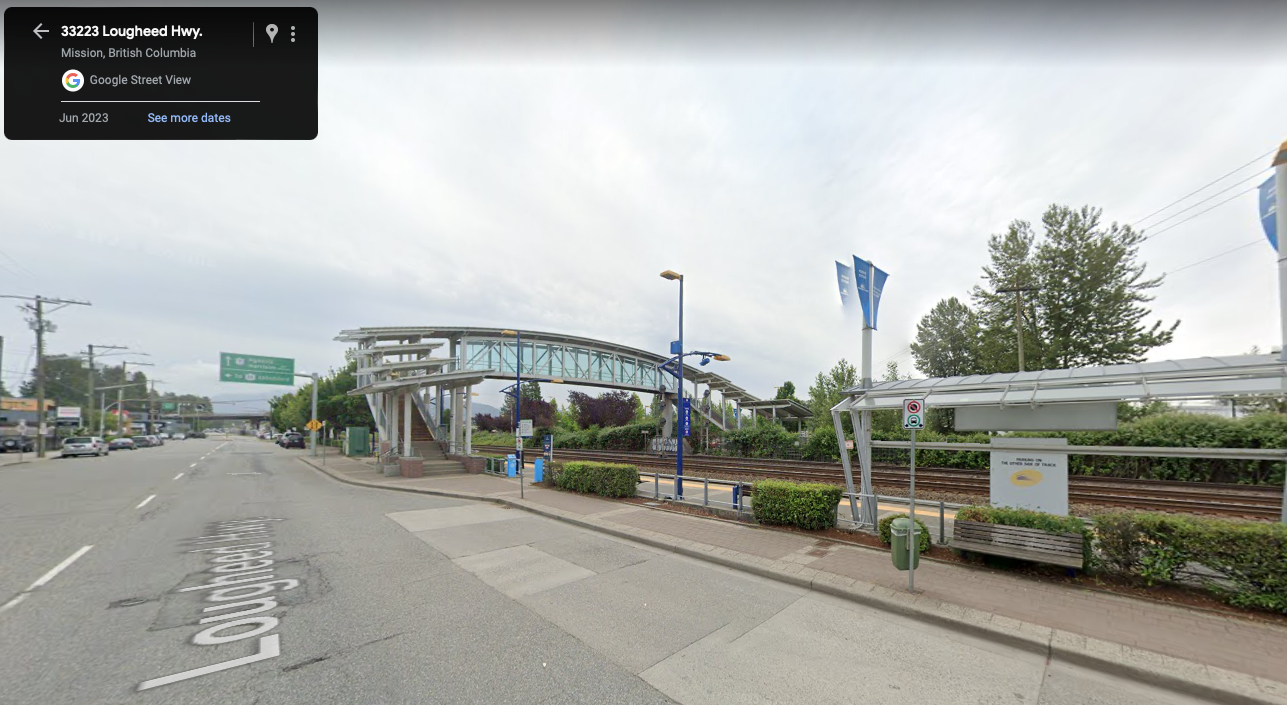
It is entirely possible for Via Rail to have a platform at this station considering it passes by it, but for whatever reason they do not want to build a platform on the other side.
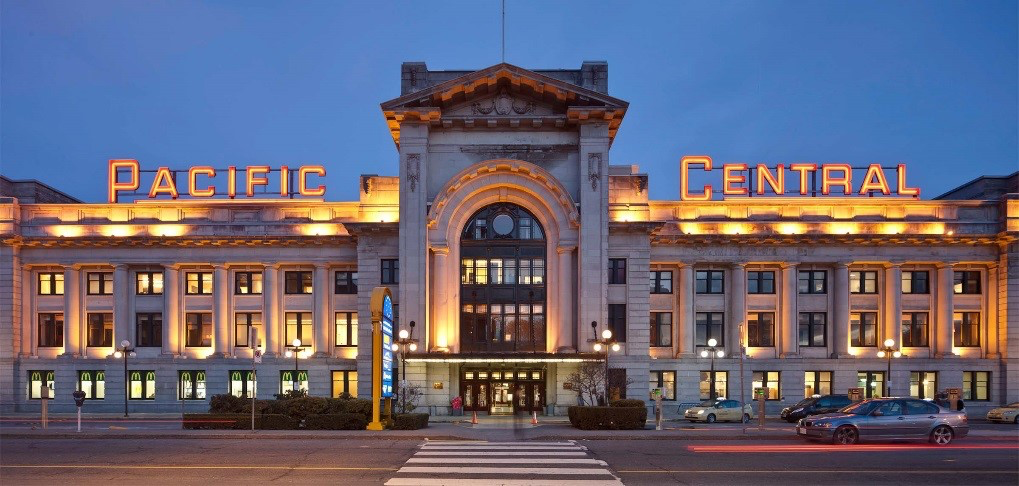
All of the trains that go to these Via Rail stations terminates or departs from this beautiful building:
Part of me wants to book a trip from one of these stations to Vancouver to just experience it, but the idea of dealing with an up-to five-hour delay seems like a really, really bad time.
If the employees at BC Transit in the Fraser Valley were not still on strike, I’d consider trying to do a loop between Downtown Vancouver, Mission City, and then back to where I started.
I sure as hell would not dare try this with Via Rail simply because the train -probably- arrives at 2 AM.
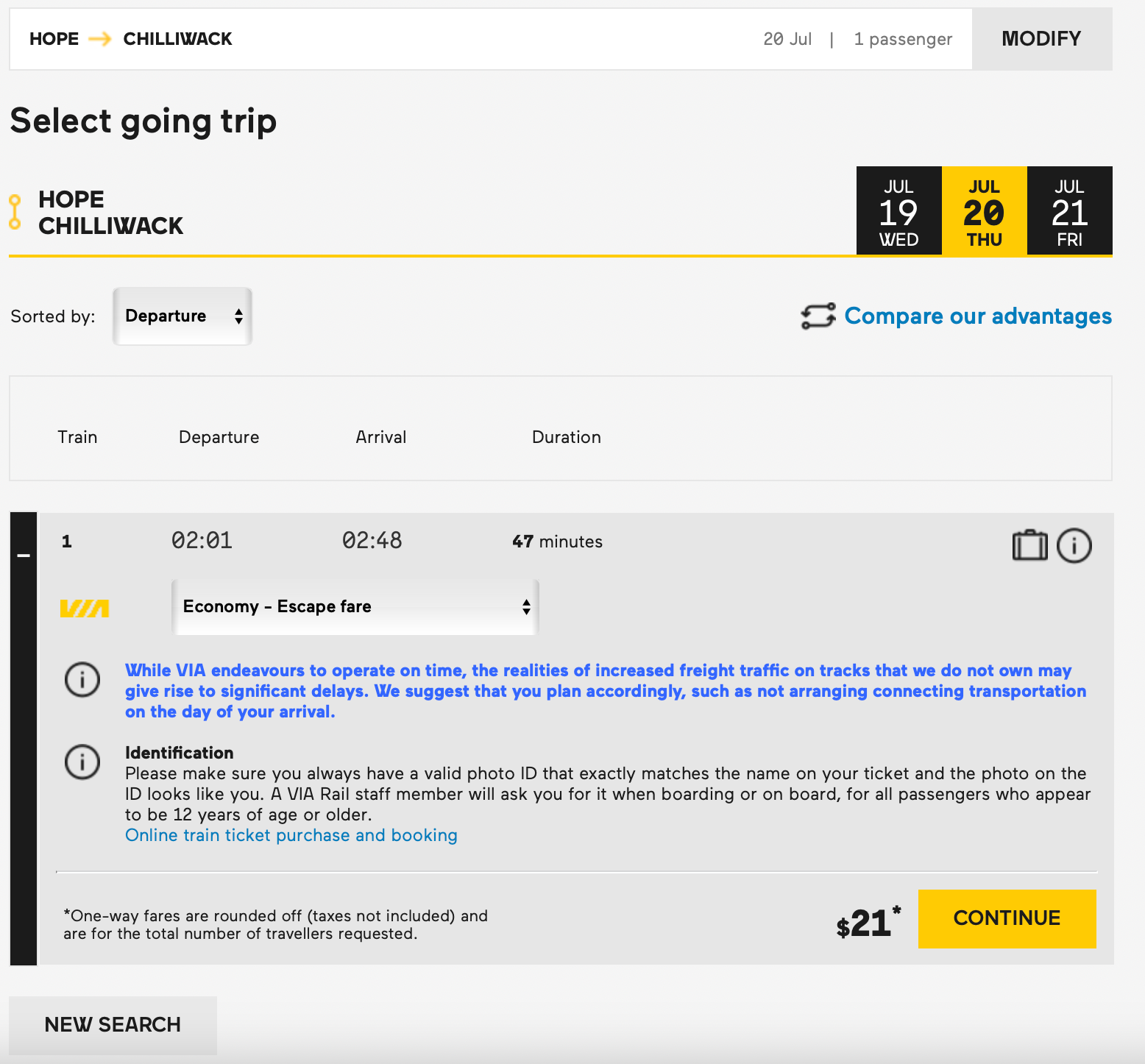
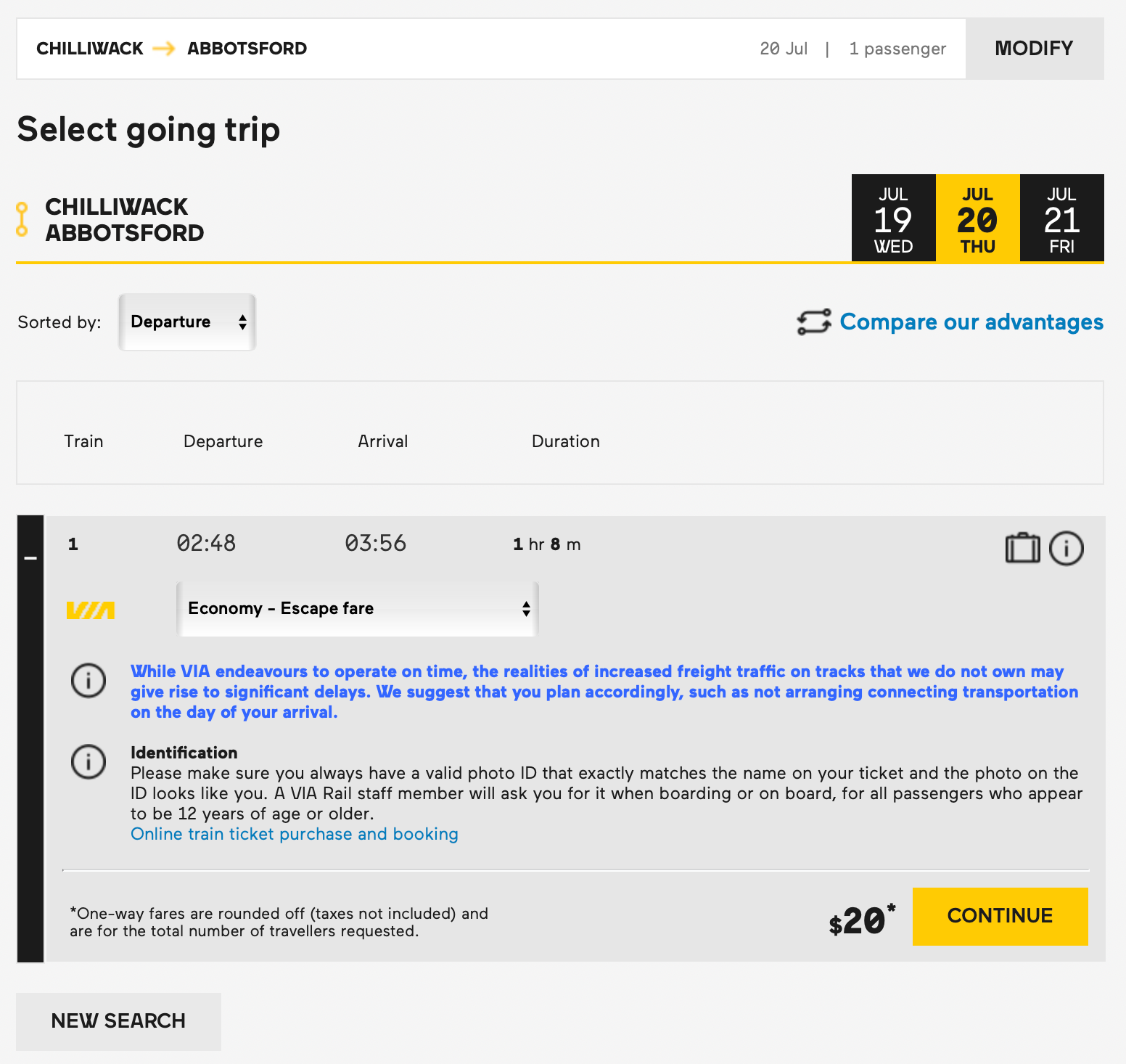
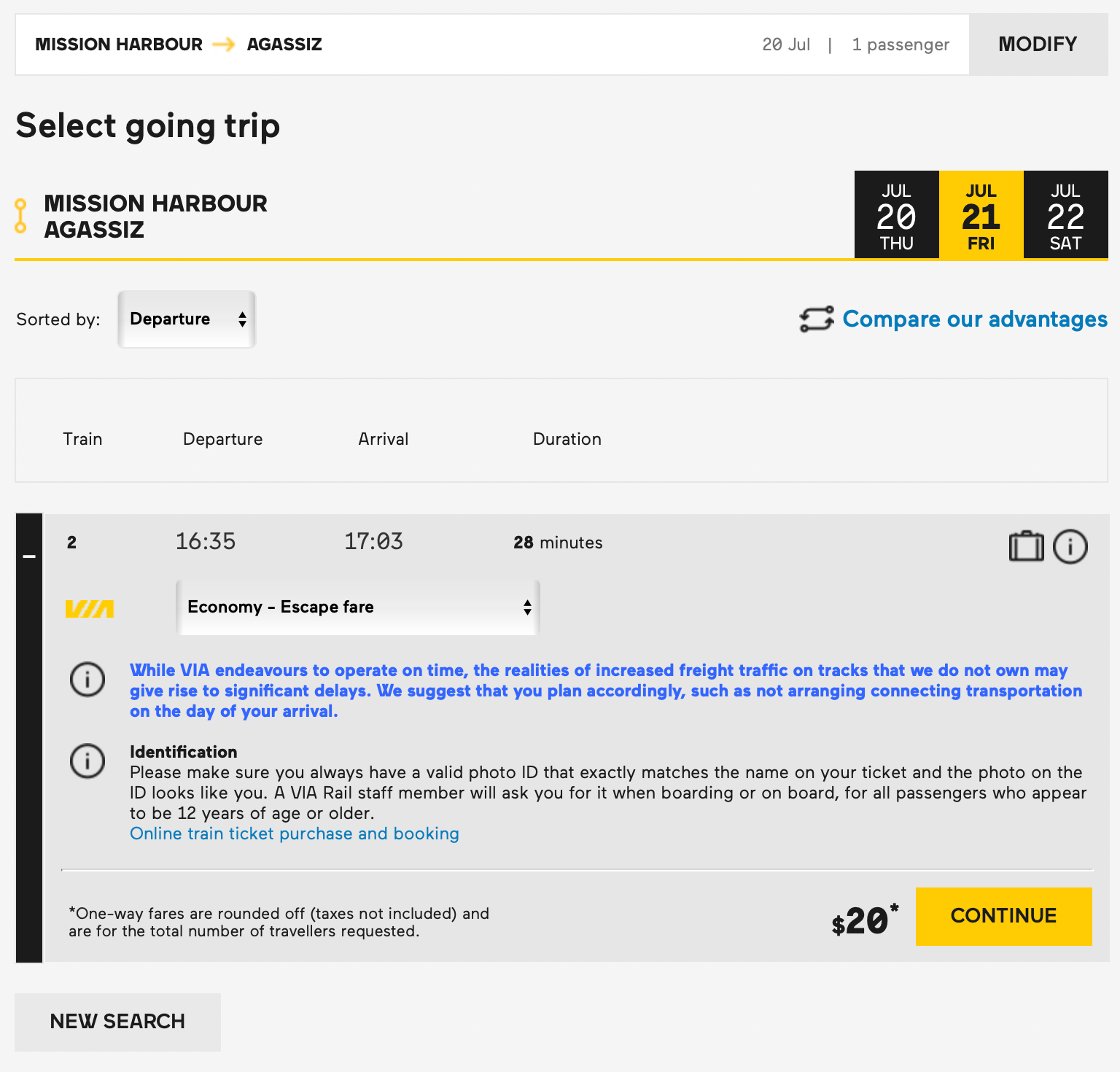
Look at these weird and awful trips I can do on Via Rail.
I visited two of the stations (Aug 12)
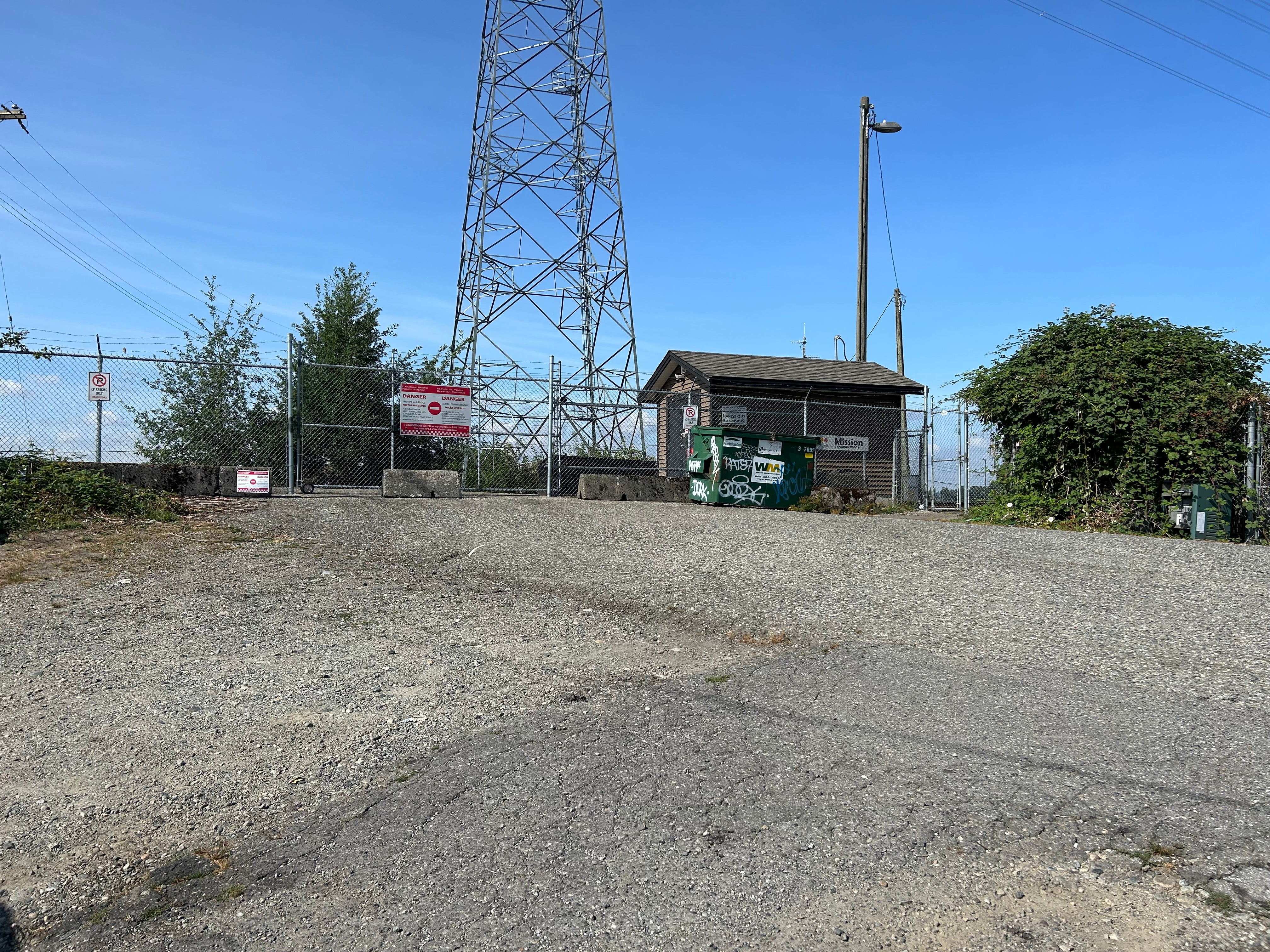
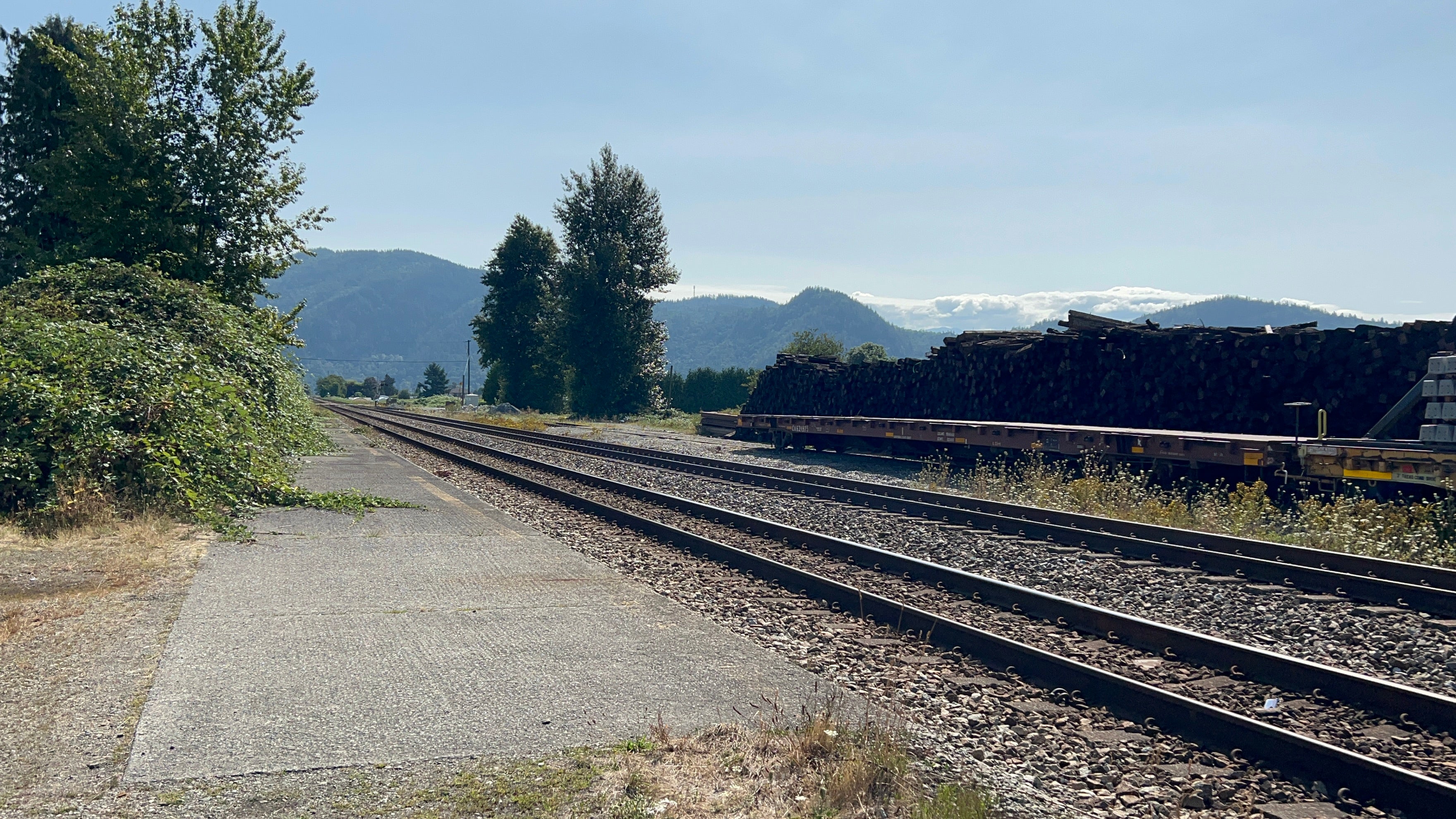
Mission Harbour (first) was gated but had a sign whereas Abbotsford (second) required me to trespass on a pothole-laden private road to get to it.
Yeah. This is abysmal.
I got some numbers today (Aug 21)
With Mission Harbour in 2019, it had 151 passengers board at the stop and 36 get off. Assuming 2 trains per week, at least one per was made to board and every 3-4 trains that pass through had someone get off at the stop.
Going to Abbotsford in the same year, it had 3 board and 193 leave. Over 50% of the time a train will have passengers get off at the stop and maybe every few months someone gets on there.
Planning some nonsense with a friend earlier this evening… (Aug 29)
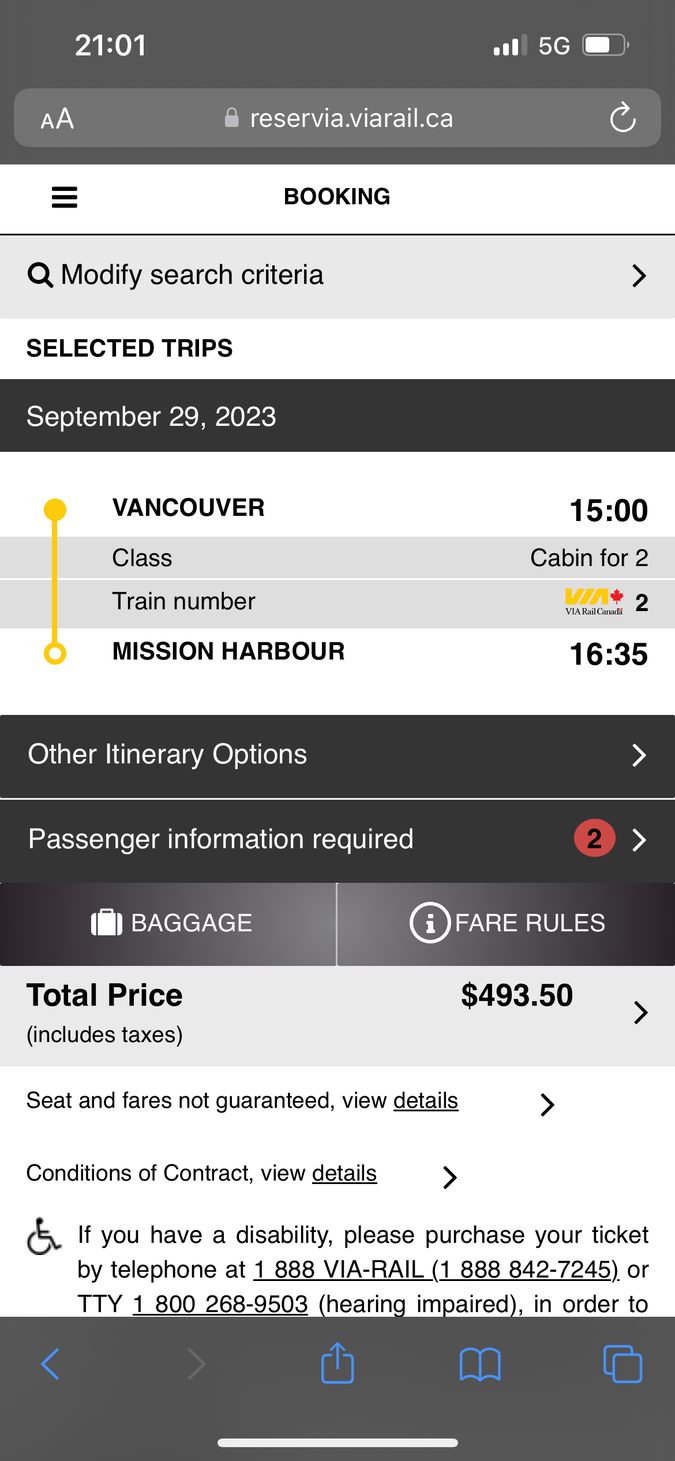
Imagine booking a sleeper train for two for a mere 80 KM trip which should take 1.5h and leaves at 3 PM and yet spending this much.
-
All about Mission City station
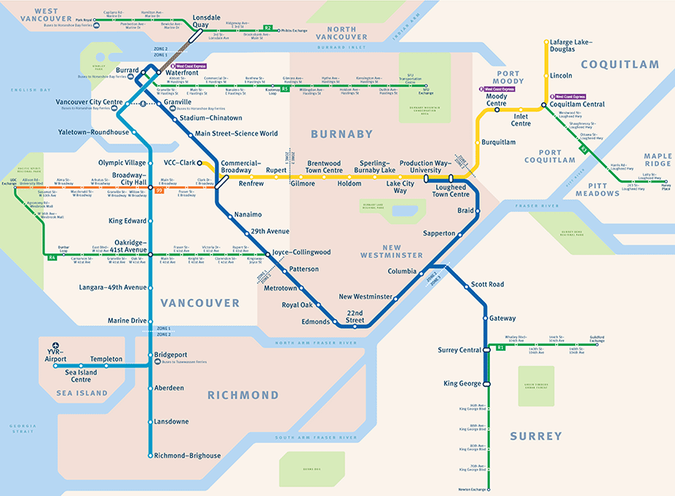
When you think about TransLink, you think about how it goes as far north as Lions Bay, as far south as White Rock, and as far west as Bowen Island. However, it does offer services outside of what is traditionally thought of as Metro Vancouver and that is where the curious case of Mission City station comes in.
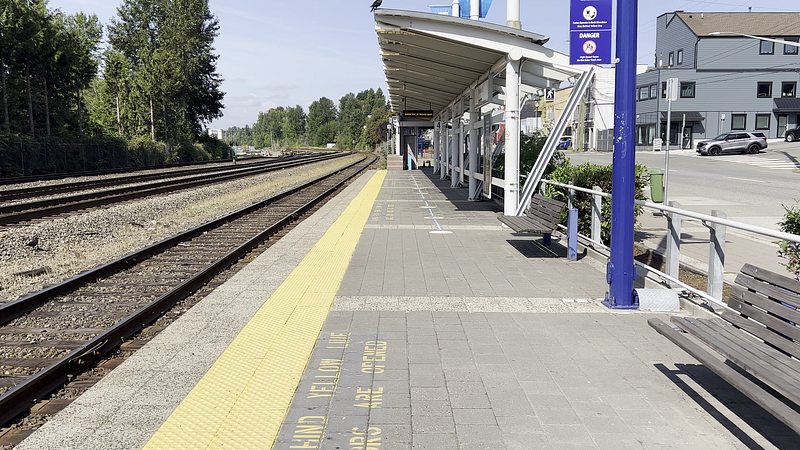
Opened in 1995, Mission City station is the easternmost TransLink-operated service and yet Mission itself is not under the jurisdiction of TransLink; instead it’s BC Transit. Its West Coast Express service only operates on weekdays minus holidays with five trains in the morning towards Vancouver with them all returning in the evening to then be serviced.
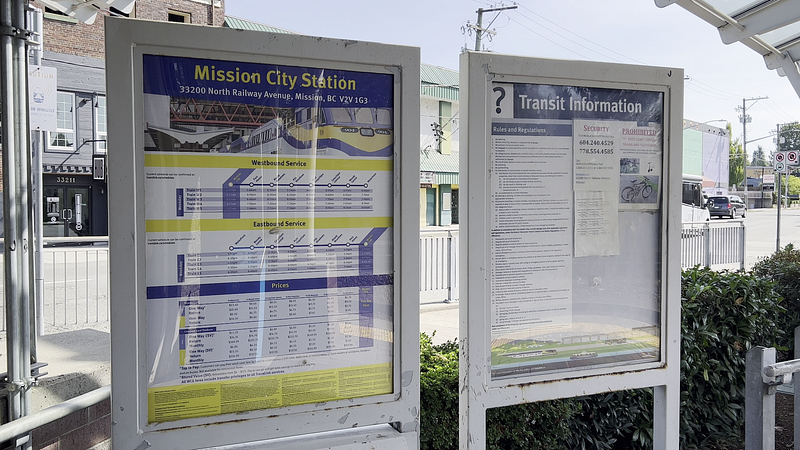
Outside of these times, bus service to Coquitlam Central is provided but only on the days the West Coast Express operates. With one bus late in the morning, one mid-afternoon, and two in the evening, its existence is solely to be supportive to commuters and nothing more.
Prior to the pandemic, the station handled under 550 passengers per day.
BC Transit service is available all day and has connections all over Mission and to parts of Abbotsford. It’s one of two train stations operated by TransLink which another agency provide service to; the other being Lougheed Town Centre.
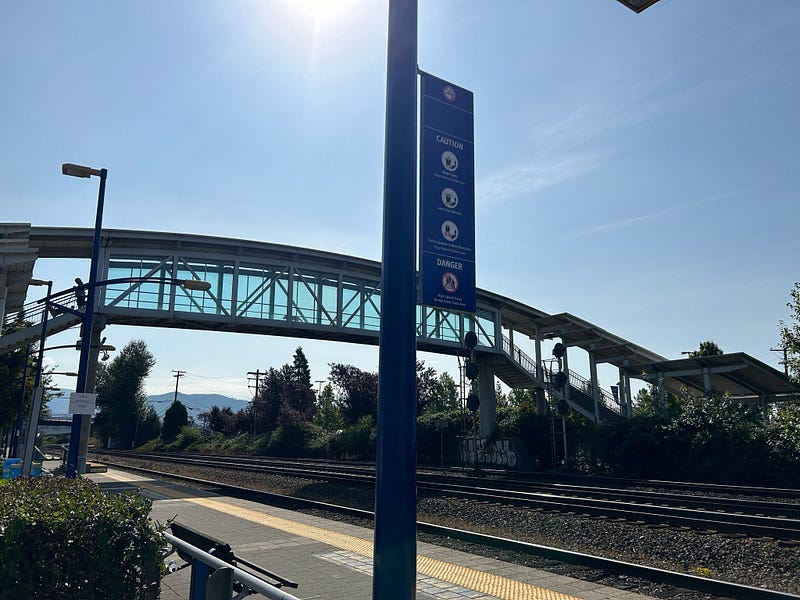
It’s also the only point where the West Coast Express and Via Rail, Canada’s national passenger railway service, meet even though the stop for Via is located at another station located 300 metres away down track at Mission Harbour Road. However, this sort of wasn’t always the case.
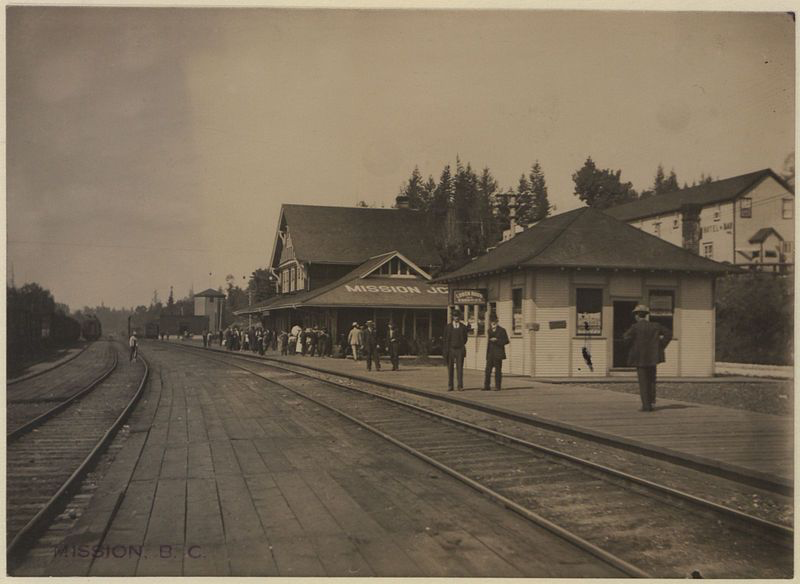
Prior to the dissolution of passenger rail service by the Canadian Pacific Railway, Mission Junction was the city’s railway station. Named for the junction which Mission City sits just east of, the station was located on the west side and became a heritage building in the early-1980s. Service to the station ceased in 1990 and for five years the street known as Railway Street which it sat on lacked a station until the West Coast Express came into being.
Sadly, a fire in 1999 burnt down the original CPR station and it is suspected that arson played responsibility. Prior to the fire, plans were made to turn it into some sort of community hall but a lack of funds led to it being disused.
This was originally posted to cohost.org/VancouverTransit.
-
I found my footing
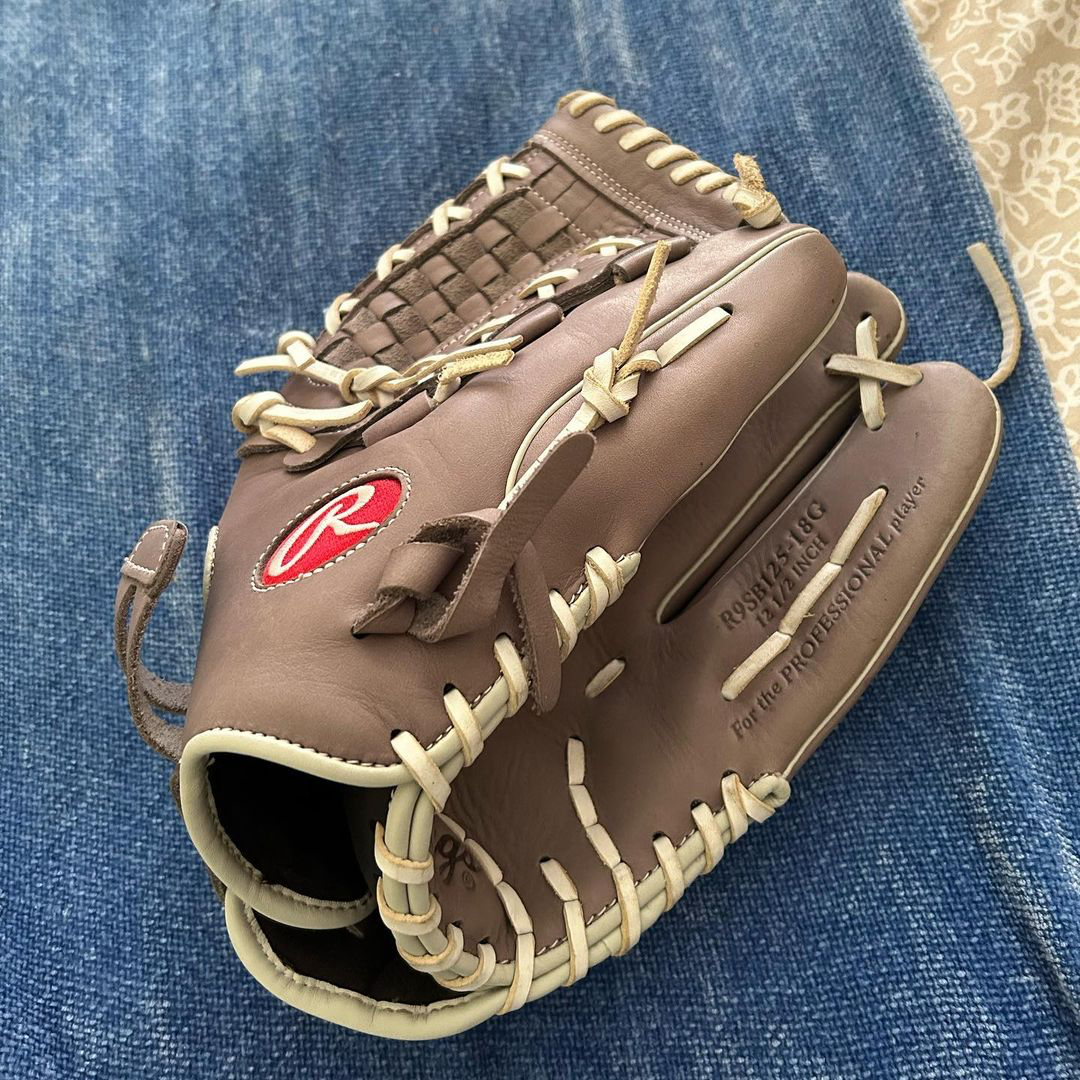
This past weekend marked the end of my first softball season play in over a decade. I’m feeling those blues where I know that this week I won’t be heading out to a nearby park to spend a few hours playing fastpitch. It has been a life-changing experience for me and I feel like I need to let off a happy vent here on cohost.
Until I was no longer a kid, I found sports alienating to play. I was discouraged from playing soccer as a child because I felt an immense pressure on me to perform a certain way instead of enjoying it all. I never had an outlet where I felt comfortable to play on a team and increasingly latched on to insular hobbies that were not great avenues for me to be social.
When I had entered adulthood, I had a few false starts.
I played softball on a co-ed team and found myself alienated due to an inability to really connect with folks on the team and some of the violence I had to witness. I moved away from the city I was then living in so that whole part of my life came and went rather quickly.
When I came out, i decided to give roller derby a try. I never made it beyond playing scrimmages and eventually injured myself so badly that I now sometimes walk with a cane when I stress out my hip too much. The community was great, but it required so much energy out of me to be part of it.
So after a major operation in 2019, I made a decision to give softball a try in the next year after learning of a local league for queer folk and marginalised genders. However, we all know what happened in 2020 and I had forgotten all about this plan of mine until my girlfriend on our first date reminded me of my desire to join as she played for a team in the league.
In February, after going to a meetup and giving my details, 18 of us random strangers were given a coach and we had formed a team after the league decided to expand the division we were put in. Nobody on this team I knew prior to and I definitely was out of my element, but I wanted to play so badly and we were being given this chance.
We began to practice in March and while annoyingly I had caught COVID in late April (I went over a thousand days without catching it), I played my first game in early May. Something was different: I liked who I played with and I wanted to know these teammates of mine. Yes. They were all strangers, but we didn’t have any past with each other and we had to form bonds.
For a team with a varied background of some softball to absolutely none, we managed to briefly be first in our division and then eventually finished the season third with only one point separating us from the second place team. We absolutely could improve (and will), but we were having fun and kicking butt.
The teams we played against had quality people and I eventually found myself socialising with them too. I’d check out my girlfriend’s team and they’d all know who I am on a first-name basis. It just felt right on every turn to be there in the league. I even had the privilege to play as a substitution for another team in our division towards the end of the season and had a delightful time. There were just so many lovely people I had the pleasure of both meeting and both playing with and against.
This past weekend, we had our finals tournament and we won three of our four games. If it were not only for us being two points short, we’d have played in the final game of the tournament. There were a bunch of photos of us huddling together in a group hug and we made sure our coach knew how much she meant to us for getting us together and showing us how to be a team. We went from being strangers to friends.
Last year, I knew things were bad with me with respect to what I was doing when I was not working my day job. All I knew to do was work more after finishing the day and it became quite apparent at the end of last summer that this was making me seriously ill.
I’m so glad that I found my footing with this ragtag group which became a good team. We all come from various backgrounds and lifestyles and yet we’re able to make this magic happen out on the field.
I cried a bit yesterday when we had finished our last game and had our post-game huddle. All I am thinking about is next season, but at least I know next month we’re getting together for a weekend getaway of which I cannot wait to happen.
If you’re in Vancouver and want to watch some of our games next season, let me know! We do love having fans coming out to watch.
-
What decided the Skytrain line colours?
This post has been sitting with me for a long while: why do the three SkyTrain lines have the colours they have today?
If we look at the Millennium Line, it’s coloured as yellow; the Expo Line is coloured as blue, and the Canada Line is light blue. The latter is weird I must admit, but it might help to explain the history of colouring on SkyTrain maps.
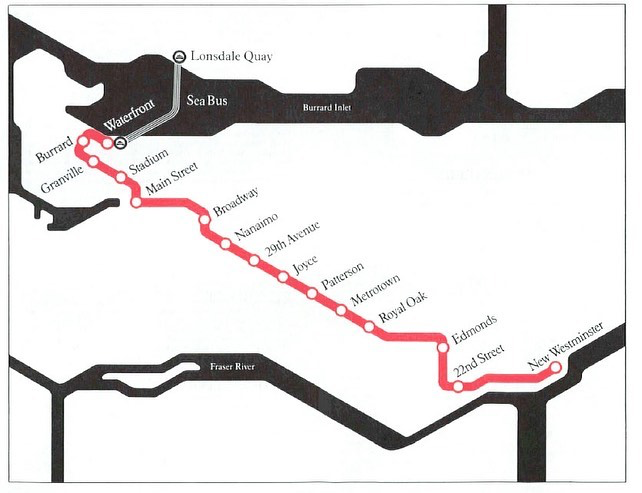
This is the original SkyTrain map. No mention of an Expo Line because it was all that existed when it opened for Expo 86, the World’s Fair hosted here in Vancouver. It was a simple line which ran from Waterfront to New Westminster. The line was coloured in red and that is curious because it was pretty standard for BC Transit and its predecessor BC Hydro née BC Electric Railway.
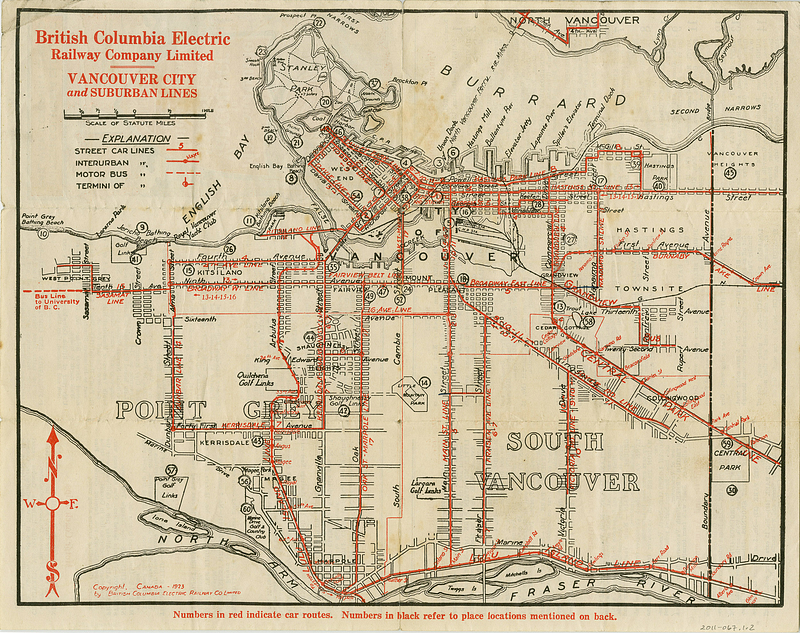
In this 1930s map, all of the street cars and interurbans were given a red line. It might seem confusing to look at, but being that the transit network went to where people lived and people lived near the street cars and interurbans, it was fairly simple.
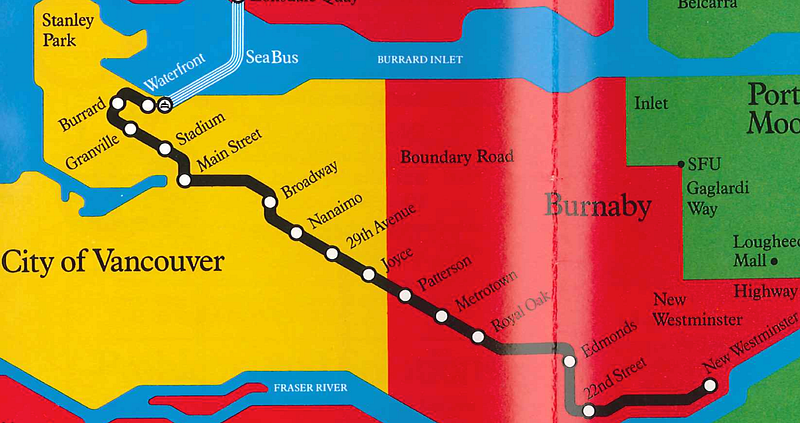
Eventually when maps needed to provide information about fares being charged by zone, the red colour went away in favour of black and stuck for nearly two decades.
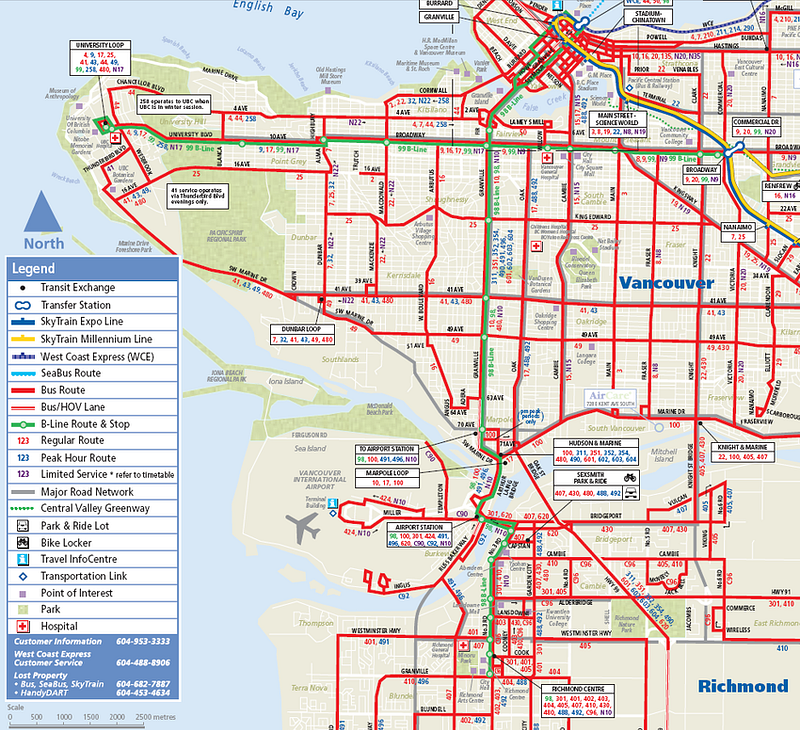
TransLink inherited the colour scheme from BC Transit and continued to mark bus routes as red. With the opening of the Millennium Line and subsequent naming of the original SkyTrain line becoming “Expo” in honour of its origins, colours were needed to differentiate their service separate from buses.
So why yellow and blue?
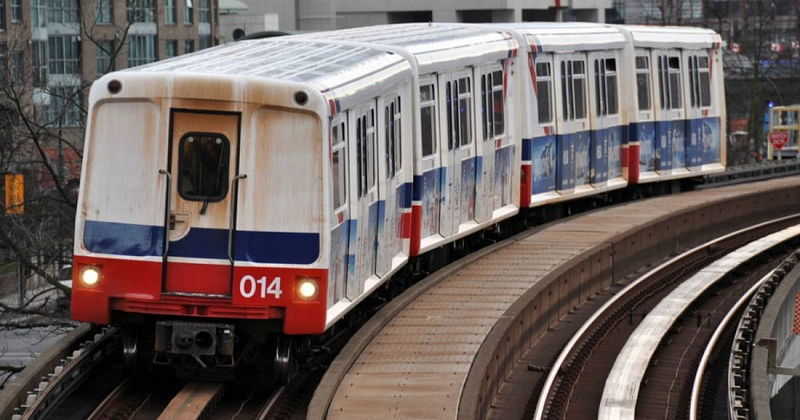
Blue should be an easy colour to talk about. SkyTrain was opened in time for Expo 86.
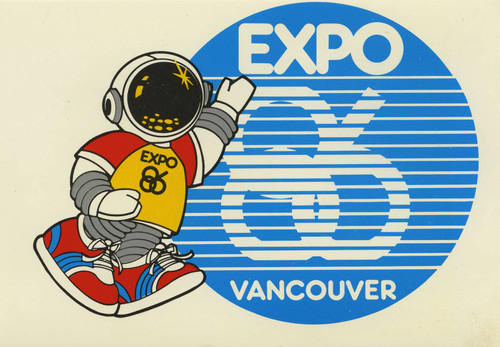
If we look at the Expo logo itself, we see a blue and this was the primary colour for the fair itself. With blue being the colour of Expo and being one of the primary colours used for the original SkyTrain livery, it stands to reason the best choice was a dark blue.
So Expo was easy, but then why is the Millennium Line given a yellow colour? The naming is straightforward, it was opened in time to mark the new millennium, but the colour is strange.
It would be safe to assume one thing: look at the political parties in power.
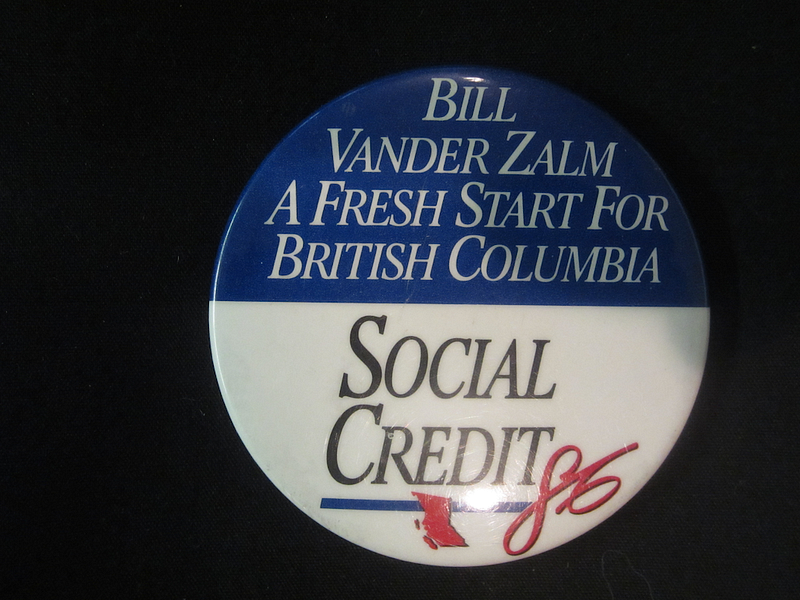
The political party in provincial power at the time of SkyTrain’s inauguration was Social Credit (Socred). Their primary colours were blue and red and they were not too dissimilar from BC Transit’s livery and in turn SkyTrain’s.
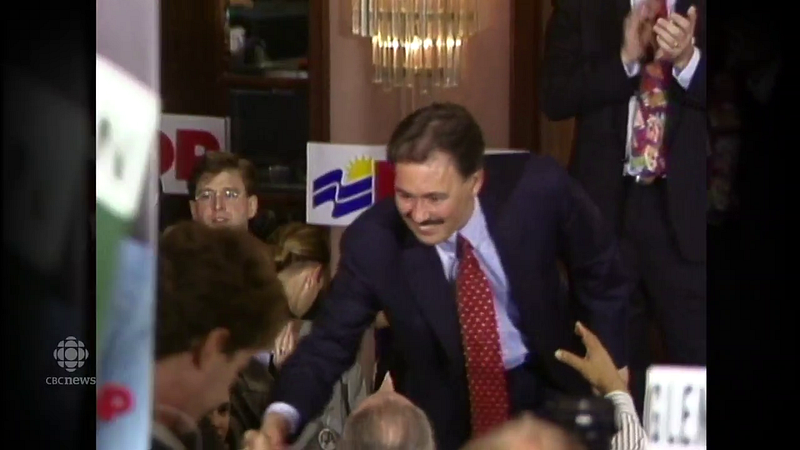
In the 1990s, the NDP colours were not orange as we know them now but instead blue, yellow, and red. The Millennium Line was an NDP project and it is safe to assume that the colour chosen was purely to have one that wasn’t that of the Socreds.
This is the best explanation I have because we see it play out when we talk about the Canada Line, because then things get weird. The Canada Line has a light blue colour, right? Let’s talk about some logos here.

If we look at the SkyTrain logo adopted by TransLink when the Millennium Line opened, we see two colours atop of the “SkyTrain” text itself: blue and yellow. This logo was made to indicate the two lines of the then current SkyTrain system. So let’s see the logo used for the Canada Line when it was under construction.

Like the SkyTrain logo, we see two familiar lines, but then we see a red line added with a maple leaf at the tail just above “Canada Line”. It is safe to assume that during planning and construction that the Canada Line itself was going to have a red colour. So why the change?

The prevailing thought was that red was initially chosen as it was a colour of the BC Liberals. However, red is also the primary colour of the federal Liberal party. As provincial politics in British Columbia are weird and the BC Liberals (now BC United) were not at all associated with the federal party other than by name (unlike the NDP), it has been suggested that pressure from the Conservative Party likely led to the colour not being adopted in order to secure funding.

Whether or not this is the case is hard to say, but there has been another instance where a colour was chosen for a rapid transit project for purely political reasons.
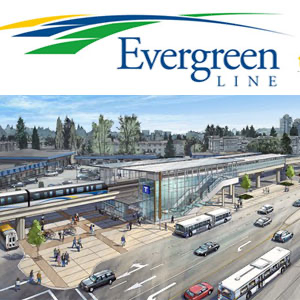
The extension of the Millennium Line into Coquitlam in 2016 was originally slated to be its own individual light rail line. It’s a recurring theme to have light rail become SkyTrain in Metro Vancouver and the “Evergreen Line” was eventually replaced by the “Evergreen extension” for a brief period of time after it was established it would integrated into the existing network.
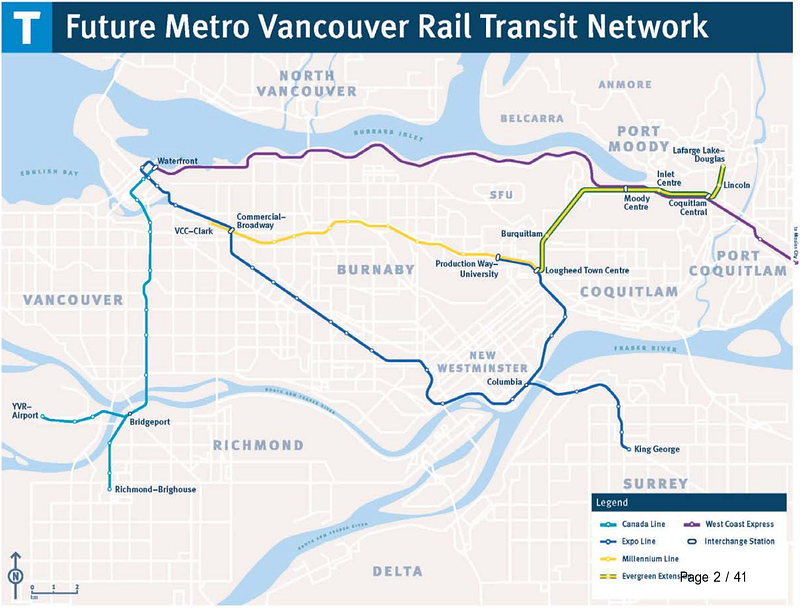
For a few years, the Millennium Line had a separate indicator for its Tri-cities extension only because the mayors of the time wanted it.
Though he said he understands TransLink’s intent to keep the name consistent with the Millennium Line, he said that name for that line has never made sense.
The mayor suggested SkyTrain lines could be renamed for their actual destinations.
“We still think it’s a problem that needs a better solution than what TransLink initially proposed,” he said, adding the city suggested Evergreen-Millennium, but that was turned down because it was too long.
“They’ve got some work to do clearly, they’ve [TransLink] gone down the path to having it renamed the Millennium Line without telling anybody.”
Port Moody Mayor Mike Clay is equally unimpressed with the idea of a name change for the new line.
“You just don’t give up on your brand,” he said.
“People buy into a brand, people identify with it locally. So the Evergreen Line is our line in the Tri-Cities, it’s always been that way. We’ve always identified with it.”
Seven years later and nobody refers to it as “Evergreen”-anything.
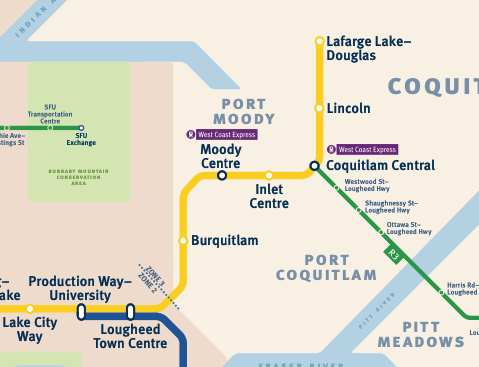
The current SkyTrain map shows a standard yellow colour and makes no mention of the special name given. The branding does remain in the stations themselves, but if the network is ever extended into Port Coquitlam, it is difficult to say whether or not it would keep it all. It should be kept in mind that these same demands never came from Vancouver for its extension to Arbutus or from Surrey or Langley for the extension out into the valley.
There is one more colour to talk about before I close this off: pink.
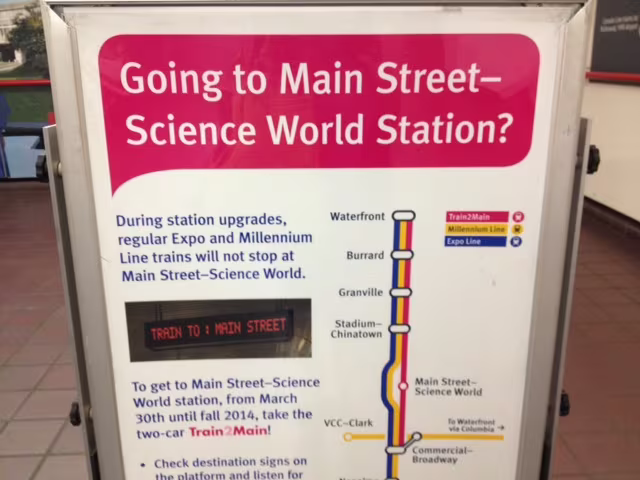
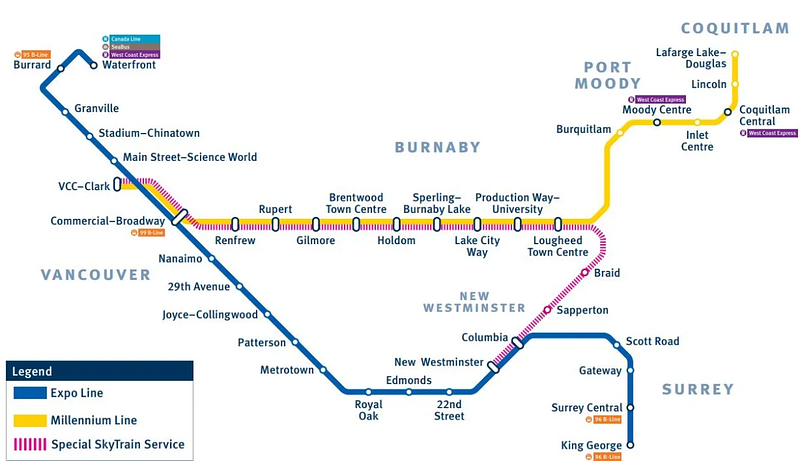
When SkyTrain has maintenance or must run a special service when dealing with station upgrades, the colour pink has been reserved to indicate that it is temporary.
So there you have it: the colours chosen to represent the lines on the map are either purely political or something is disrupted.
This was originally posted to cohost.org/VancouverTransit.
-
My first Linux distribution
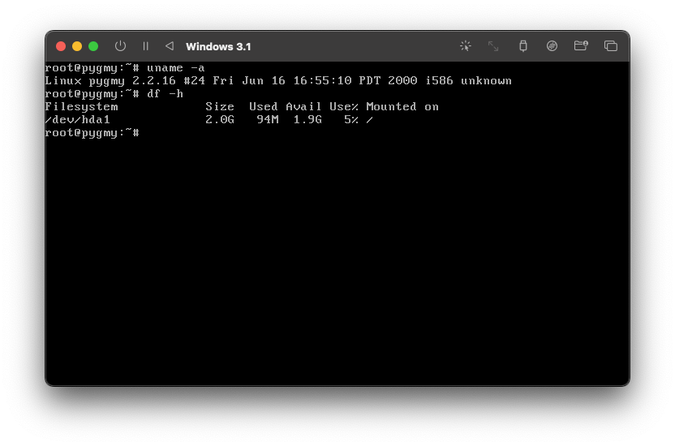
Back in 1999, I was introduced to Linux and really wanted to get my hands on using it at home. I didn’t have a computer of my own at the time, but my parents did have a second computer thanks to my father bringing home a retired 486 PC from his work.
Naturally this was used to allow us to play DOS games whenever he would work on the family PC. Being that I was the one who was actually interested in computers, I spent a lot of time on it and eventually wondered about a way to get Linux on it so I can learn how to use it.
At some point, my mother was nice enough to gift me a book on Linux which brought to my attention the concept of things like UMSDOS and LOADLIN, which were options to then boot a distribution such as Pygmy Linux which is described as follows:
… Pygmy is UMSDOS based… co-exists peacefully with DOS/Win95, 98 on the same partition. …minimal configuration is i486, 8 MB RAM and approximately 25 MB of disk space… internet ready… supports connection via …modem and …LAN… allows installation of Slackware, Redhat and Debian packages.
The idea of doing this now is nightmarish for so many reasons, but back then it was a boon to me because Linux would coexist with Windows without me having to do anything with partitions. Here I had an installation of Linux I could learn on and then if I screwed it up, I could just unzip the original distribution and carry on.
Last week, I was speaking with a friend and I mentioned that Slackware was my first distribution but sort of–I did eventually install a pure distribution of it later on. It got me thinking: whatever happened to Pygmy Linux?
Title: Pygmy Linux
Version: 0.9
Entered-date: 23FEB2001
Description: Pygmy Linux is small distribution of the Linux operating
             system, based on Slackware 7.1. Pygmy use UMSDOS filesystem,
             it allows an user to install a fully functional operating
             system, that co-exists peacefully with DOS/Win9x on the same
             partition. Pygmy is internet ready, it supports connection
             via modem and network card.
Keywords: UMSDOS minilinux
Author: pepso@penguin.cz (Peter Psota)
Maintained-by: pepso@penguin.cz (Peter Psota)
Primary-site: http://pygmy.penguin.cz
              ftp://ftp.penguin.cz/pub/Pygmy
Alternate-site:
Platforms: DOS, Win9x
Copying-policy: GPL
End
It never got much of an update after I stopped using it in favour of Slackware (I later switched to Debian). In October 2002, Pygmy 0.92 was the last version to be released, based on Slackware 7.1.
The author, Peter Psota shut down the website for the project and besides a few websites lingering out there, details and availability of its download was scarce. Heck, even details about the man himself are scarce as it seems that he just disappeared from the Internet completely.
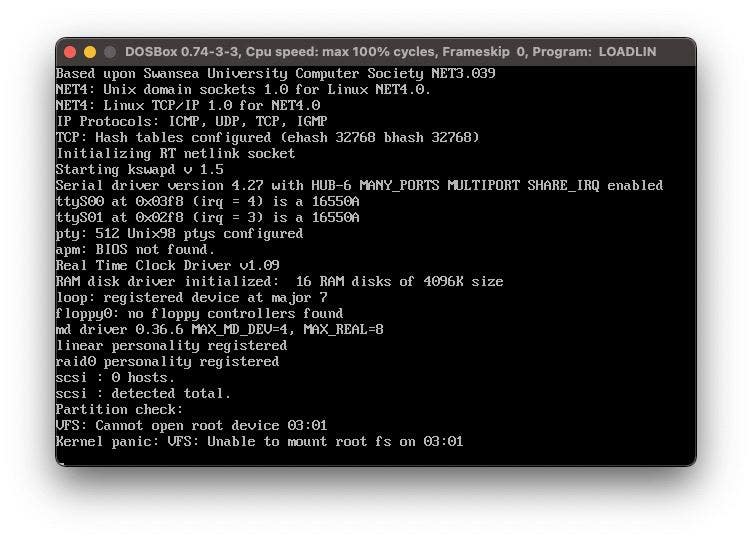
In any event, I decided to see if I could boot it again and the idea came to mind that it might work in DOSBox. I don’t have any 486 PCs kicking about and my main computer has an ARM-based Apple M1 Max (Mac Studio) which is thousands of times faster than the PC I ran Pygmy on in the first place, so emulation it is.
Sadly, no matter what I try, DOSBox and Pygmy cannot get along. I suspect it’s a very simple reason: once you run LOADLIN, a lot of things that make DOSBox seemingly work just won’t with it once gone. Perhaps with some tweaking of the sandbox’s configuration file I would get it to boot, but there are better ways to deal with this.
UTM is a really great implementation of QEMU for Apple Silicon computers. Honestly it’s good enough to use in lieu of VMware Fusion and it boots Windows 11 just great for me. However, what I am glad it does well is enabling relatively simple VMs with custom configurations to be created.
So I created a Pentium-class computer with no USB and a 2 GB IDE drive. Easy to get DOS on to it right? Well, sort of. Here’s a catch: I can get DOS and Windows 3.1 installed just fine using disk images, but how do I get files on to it? macOS hasn’t had useful support for FAT16 since forever so I had to find a way to get data on to the drive.
But of course, the answer was simple: Linux. I can just unzip the contents to the QCOW image for the DOS VM I created in another VM running Linux, which does support FAT16, and then run that QCOW image as a standalone machine. This worked and now I had a login prompt!
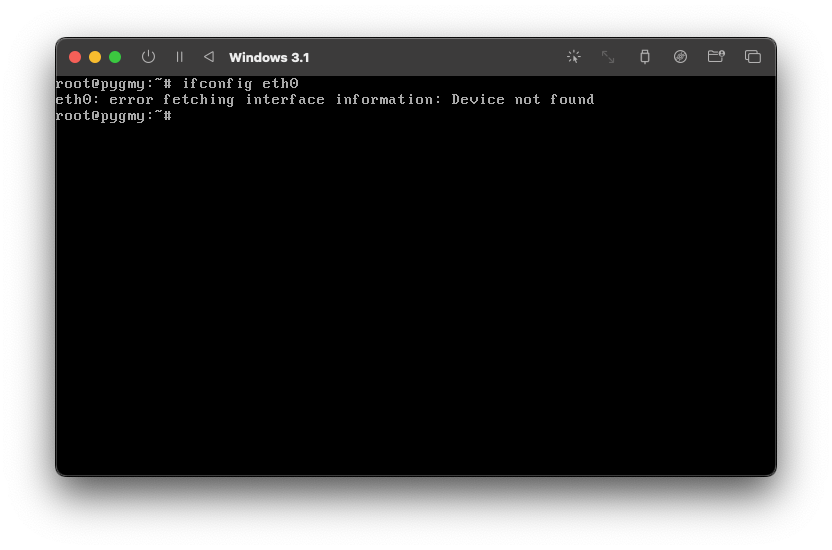
This is a -very- barebones operating system and uses a lot of relics from Linux’s past–think ipchains. But more importantly, I wasn’t sure if I could get it online. It doesn’t want to detect the network card I gave it!
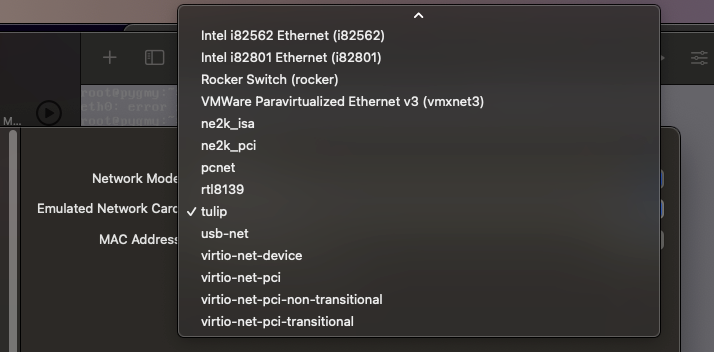
The Tulip option logically would make the most sense, as the RTL8139 might be just too new for this distribution right? But nope. No dice. Neither works. NE2K? No luck there either. It seems that this distribution is destined to be an island. I could probably PPP my way out, but then it occurred to me that I have gotten way too comfortable with things as this is the year 2000 and the idea of plug and play in Linux was out of the question.
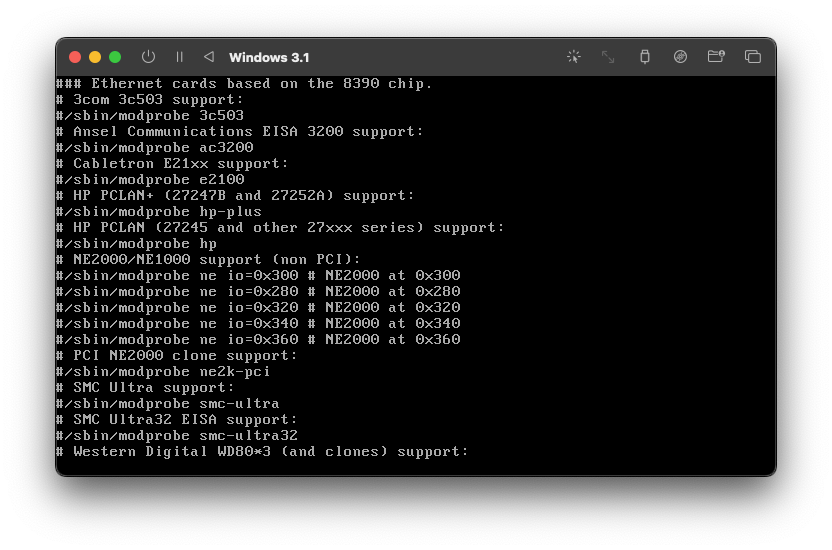
Of course NE2K would be supported and then scrolling past lines telling me that if you use this driver then you should just get a new network card, I see an option for RTL8139 support too. Being that then I actually used a DEC Tulip-based card on that old 486, I opted to enable that card to be supported. I changed the card to be a Tulip and booted it back up–but did it work?
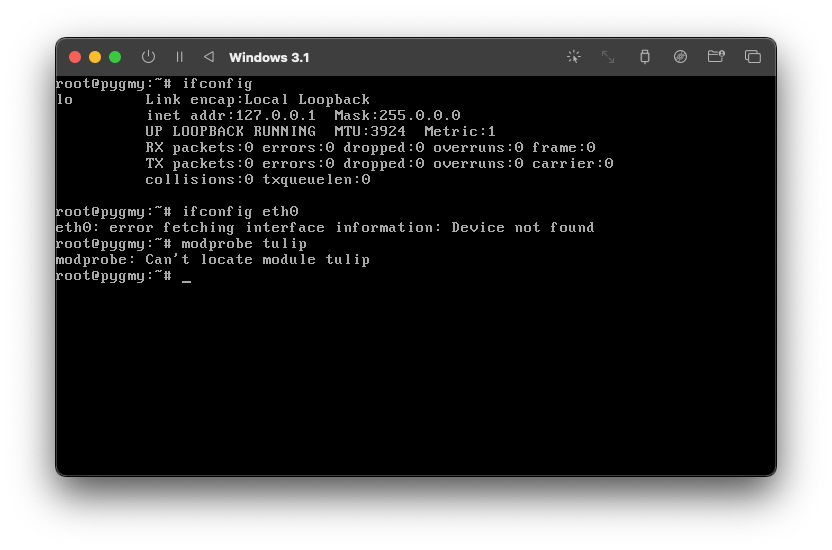
Nope. The module is listed in
/etc/rc.d/rc.modulesas an option, but it is not actually there. Sigh. What options do I have left?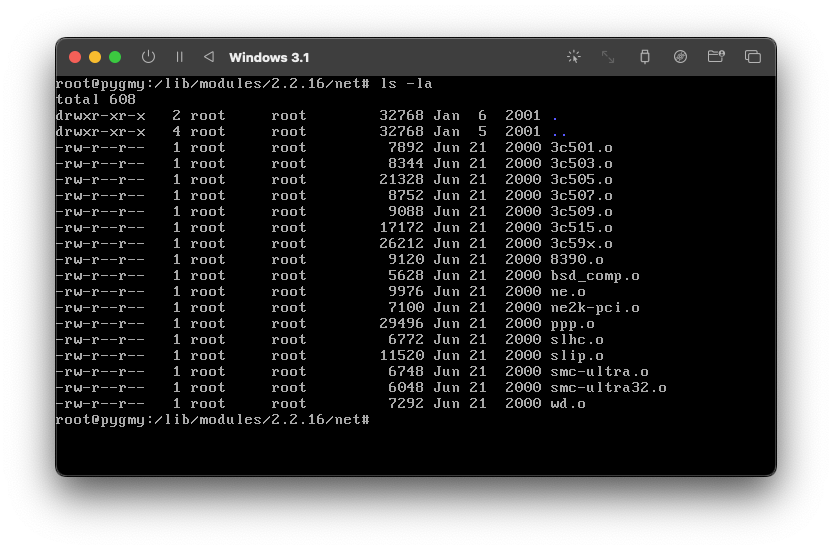
Oh good. NE2000 is an option after all. Thankfully it is an option for QEMU so let’s do this!
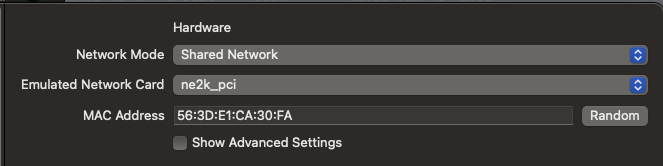
I booted it up and then immediately probed for it. No error. Using
ifconfigshows a network device! Hooray! dhclient had a hiccup but it then got an IP address!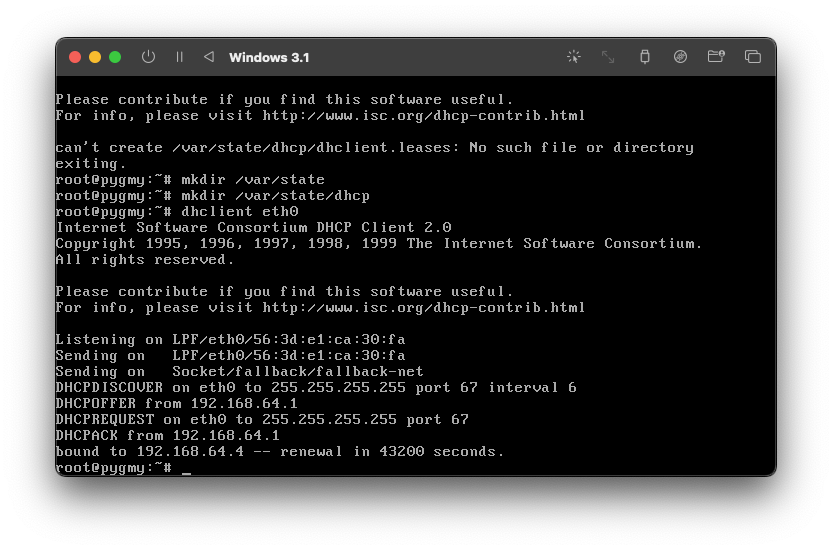
So it has an IP address, but does it mean that it is online?
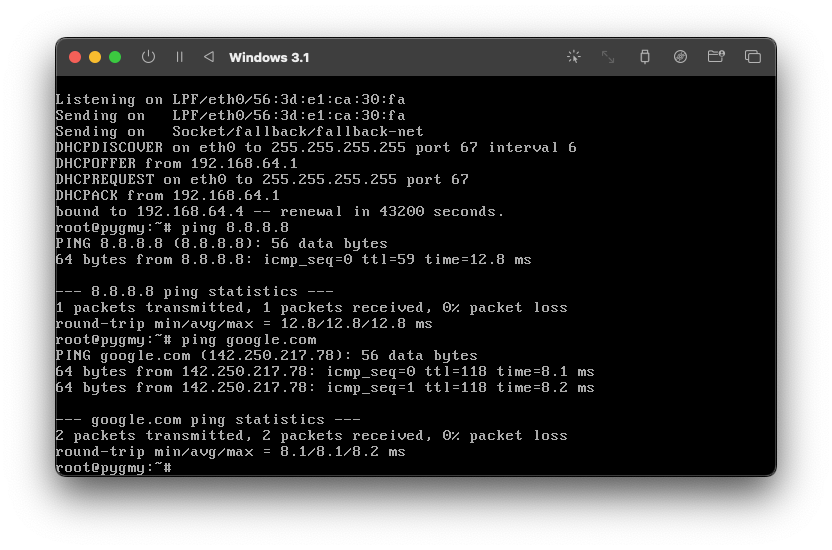
It is! My first Linux distribution running atop of a weird disk configuration is alive and online again! It can even do DNS without any struggle. I added configuration lines to
/etc/rc.dand then rebooted the system for it all to stick.So now that this is Internet-enabled, what is left? Well, sadly there isn’t much else I can do with this distribution as it is a regular CLI Linux that is over two decades old. I tried in vain to find the XFree86 distribution made for it, which literally unzipped itself into the appropriate directly under DOS and just worked.
The original site its download was hosted at has nothing left of the distribution itself and while the Wayback Machine has an archive of it, it does not appear that I can download any files nor find the XFree86 I would need to make this any interesting.
I could go down the rabbit hole of grabbing Slackware packages and installing those once more, but honestly that is a lot of effort for a lark. This is probably as good as this post will get I guess!
If you want to download the 0.9 release, you can grab it here. Maybe if people are interested, I’ll zip up the QCOW and post it on the Internet Archive when I get a chance!