-
I hate this BRT proposal for Metro Vancouver
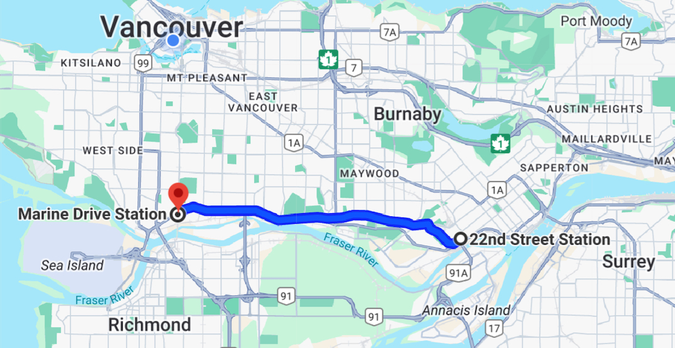
This past week, New Westminster made it clear that it wished to see a North Fraser BRT connecting 22nd Street Station on the Expo Line to Marine Drive Station on the Canada Line.
On paper, this idea makes sense. 22nd Street is a major hub for buses coming in from New Westminster and south of the Fraser River and Marine Drive provides a link to options in South Vancouver and to Richmond and the airport. However, BRT stands for “bus rapid transit” and it’s the “rapid transit” part that has me irritated.
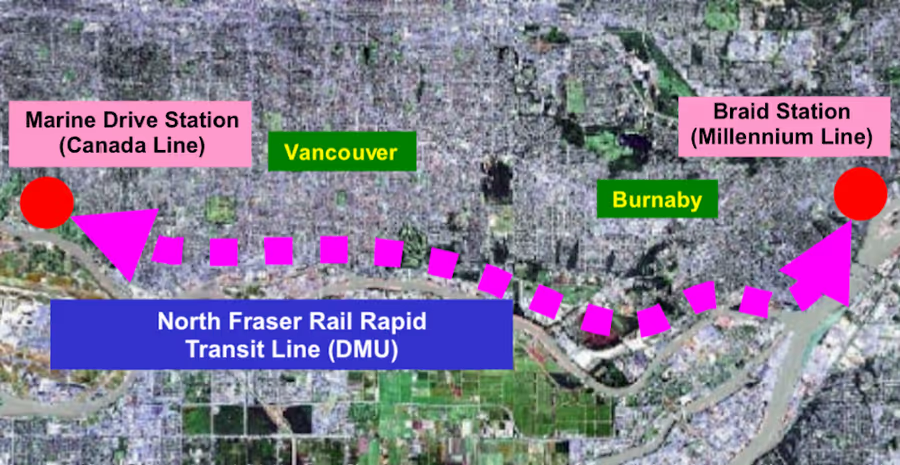
Sometime around 2004 or 2005, TransLink was considering options for the Evergreen extension of the Millennium Line which included a possible use of existing rail routes from what is now Marine Drive Station through New Westminster towards Coquitlam Centre. This would have used DMU (diesel multiple units) along the former BC Electric (now CN) Westminster-Eburne Line.
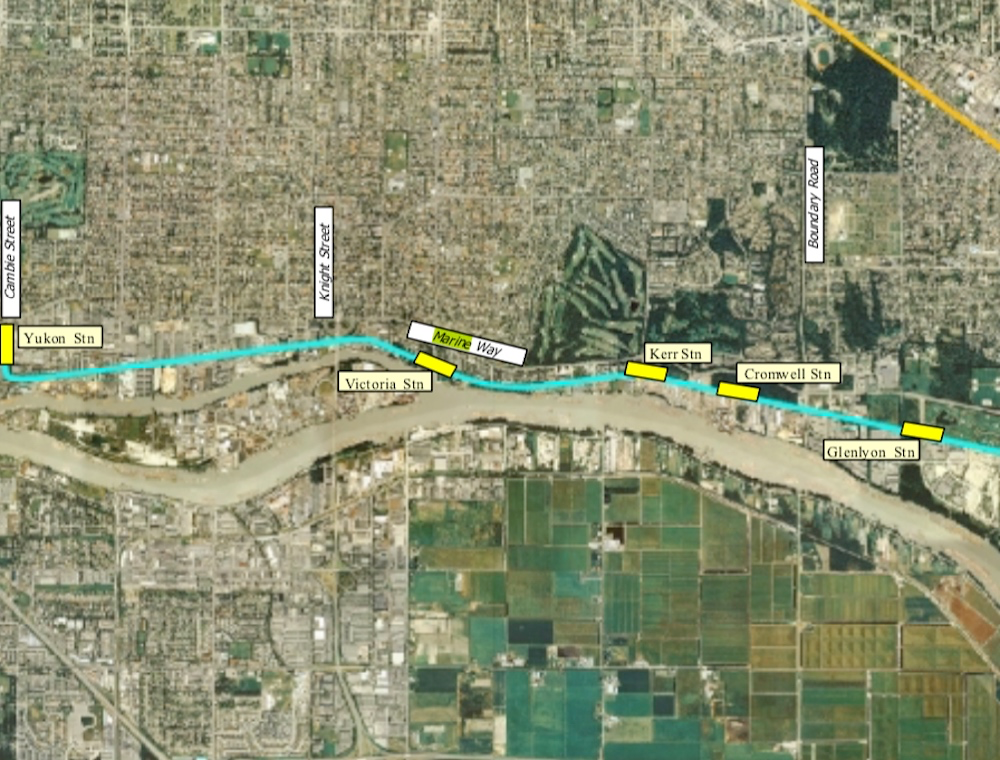
Instead, an alternate route was chosen for this extension, but TransLink and the City of Burnaby still consider this as a future potential transit link. However, the desire right now is to go with the cheaper option of BRT when in reality, I feel like it’s longer-term a bad idea.
There are cons against this idea of mine of course. For example, the railway link itself is almost 300 metres downhill across a highway from the proposed hub at 22nd Street–the height difference is 50 metres too. This really speaks to the impracticality of having the two points linked I will admit.
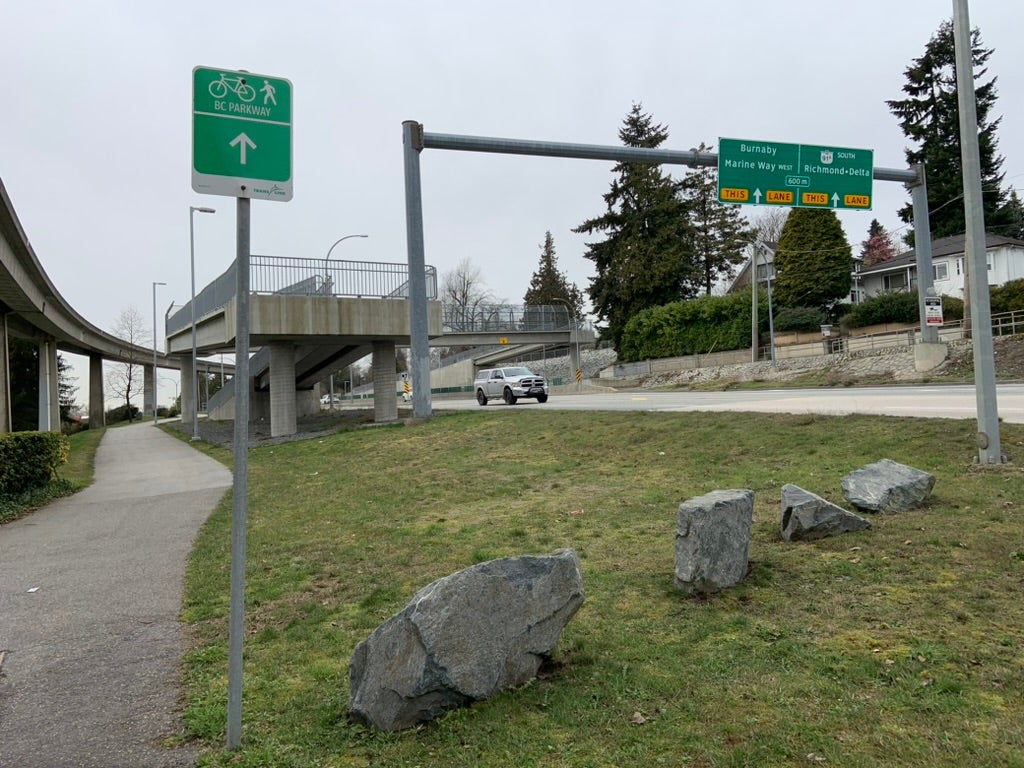
However, the pros are numerous. For one thing, we’re away from cars and the area around 22nd Street Station itself is notorious for traffic jams due to its proximity to the Queensborough Bridge.
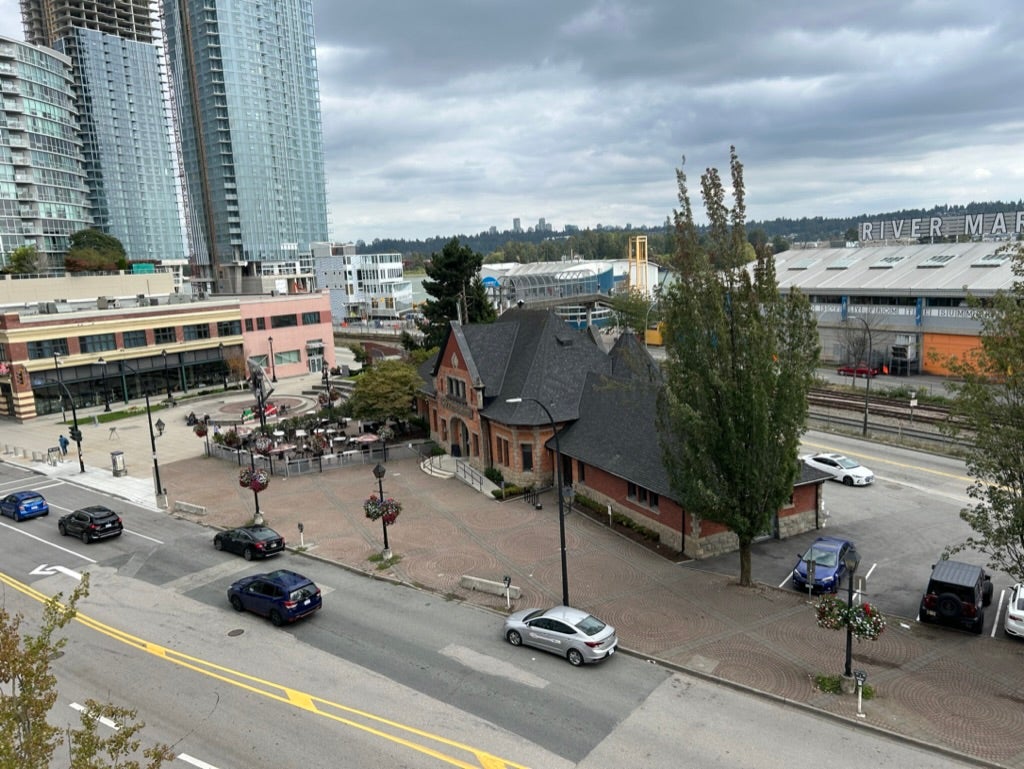
By instead placing the terminus of this line at New Westminster Station itself (which would be a mere 50-75 metres away), we’d be able to take advantage of a more practical terminus while still connecting to a hub.
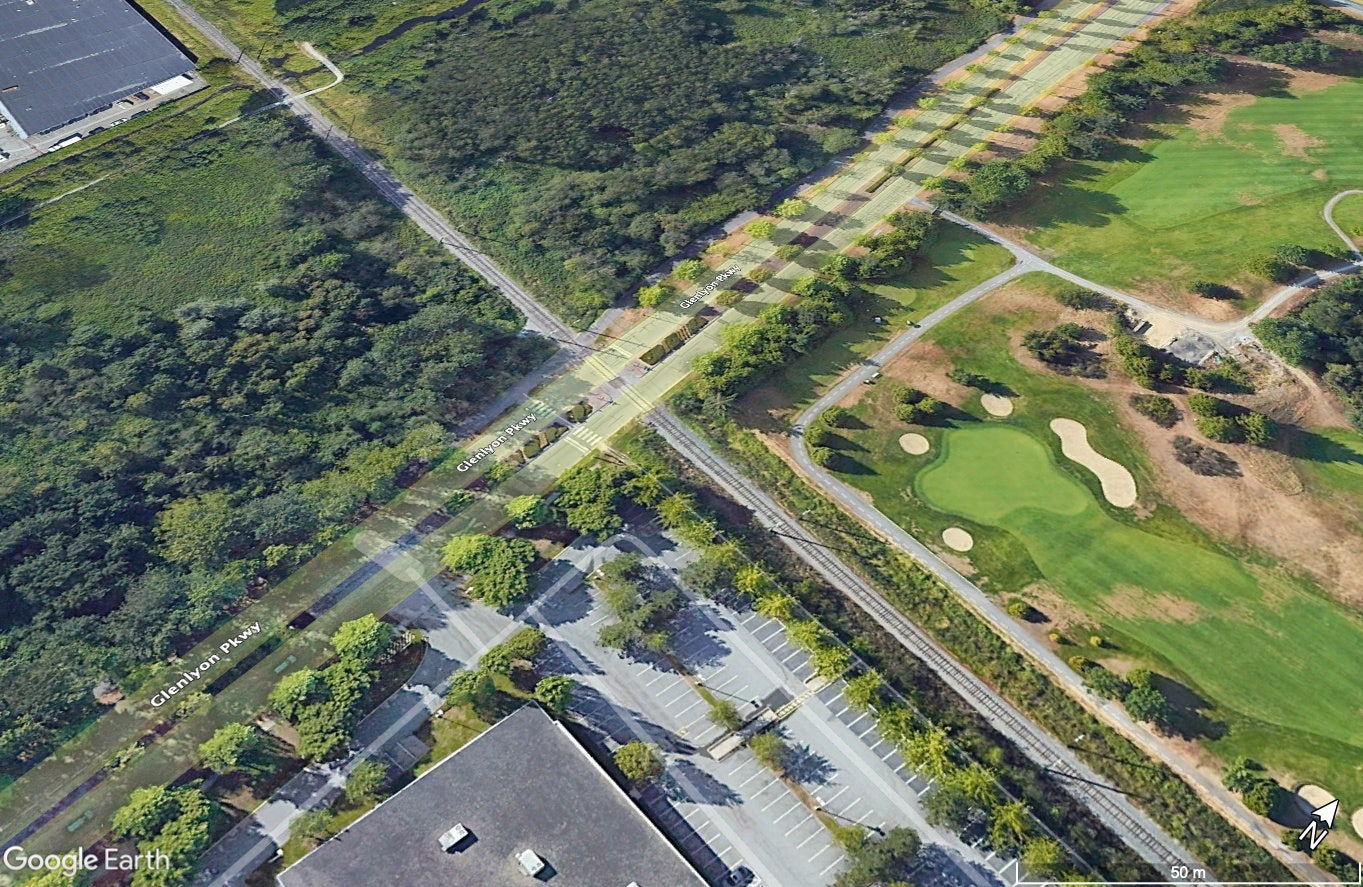
As for how active the existing rail line is, the yard near New Westminster Station is fairly active and is so right past the Queensborough Bridge, but around 2020 or 2021, CN put a concrete barrier just as the line crosses over at Glenlyon Parkway. It seems that sometime in the past few years, its last customer for local rail service ceased to be. This and the fact that the Marpole Line which this line once connected to is no more, CN seems fit to just consider the whole right of way fallow.
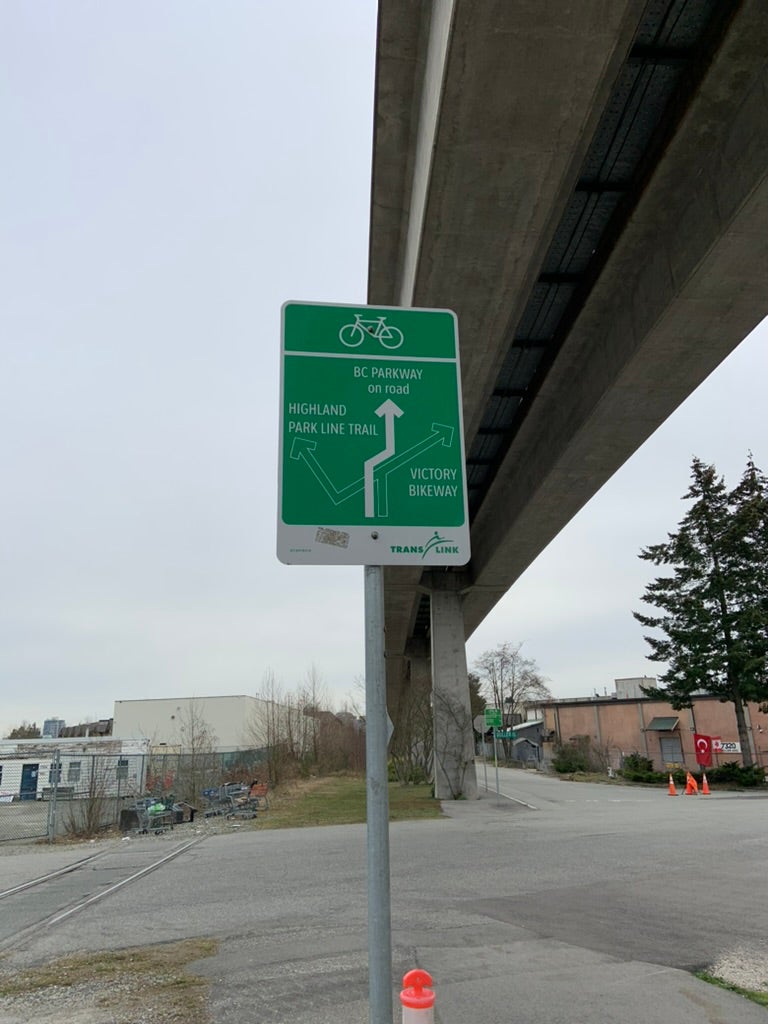
The Expo Line itself was built alongside a former BC Electric rail line. For many decades after the Central Park Line closed, many governments argued to return local passenger rail service along its right of way (something I am writing about for next week on @VancouverTransit I might add). This is how we ended up with SkyTrain and it has proven to be an integral part of our region.
We now have a disused rail line connecting to major centres (Marine Drive, River District, and downtown New Westminster) which is ripe for the taking. BRT is going to be subject to the whims of Metro Vancouver traffic whereas we could purchase a half-dozen DMUs and run them along this right of way with a lot more frequency. We’re going to need to buy new vehicles for this new rapid transit link, so why not just buy some trains?
Sure. We’re going to have to probably buy rights to the railway or outright buy it. There is also going to be a need to build stations and probably a short rail link to get us to Marine Drive, but the benefits to going this route are huge.
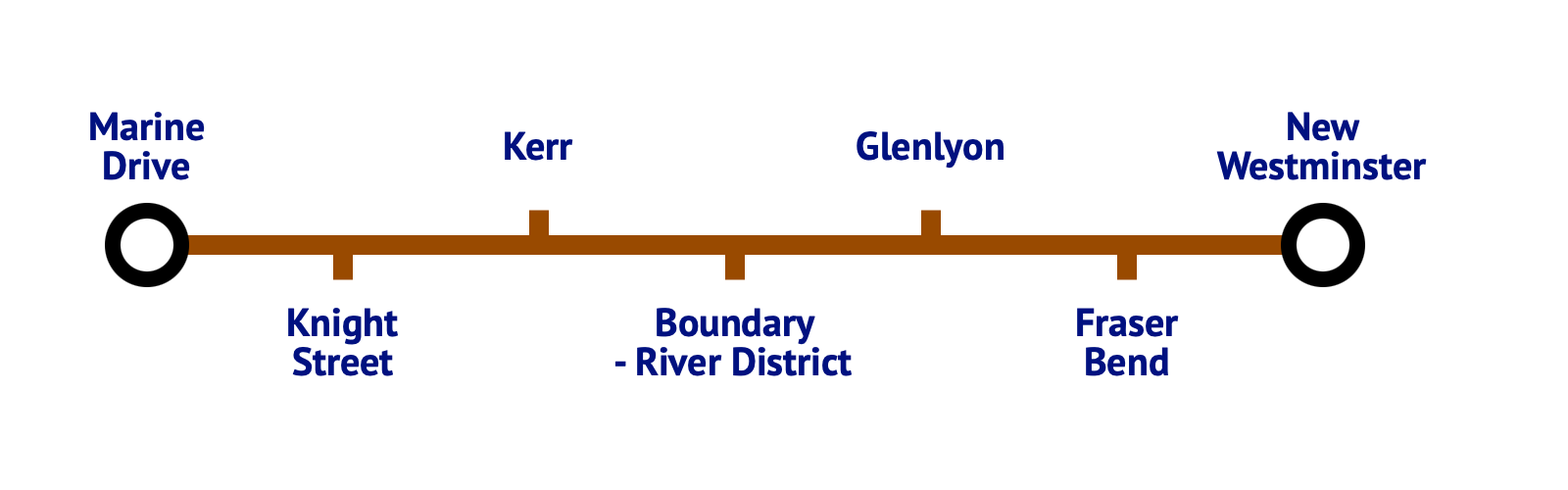
I don’t have hope in this ever becoming a reality, but honestly I think it’s the better idea.
Update (November 17, 2023)
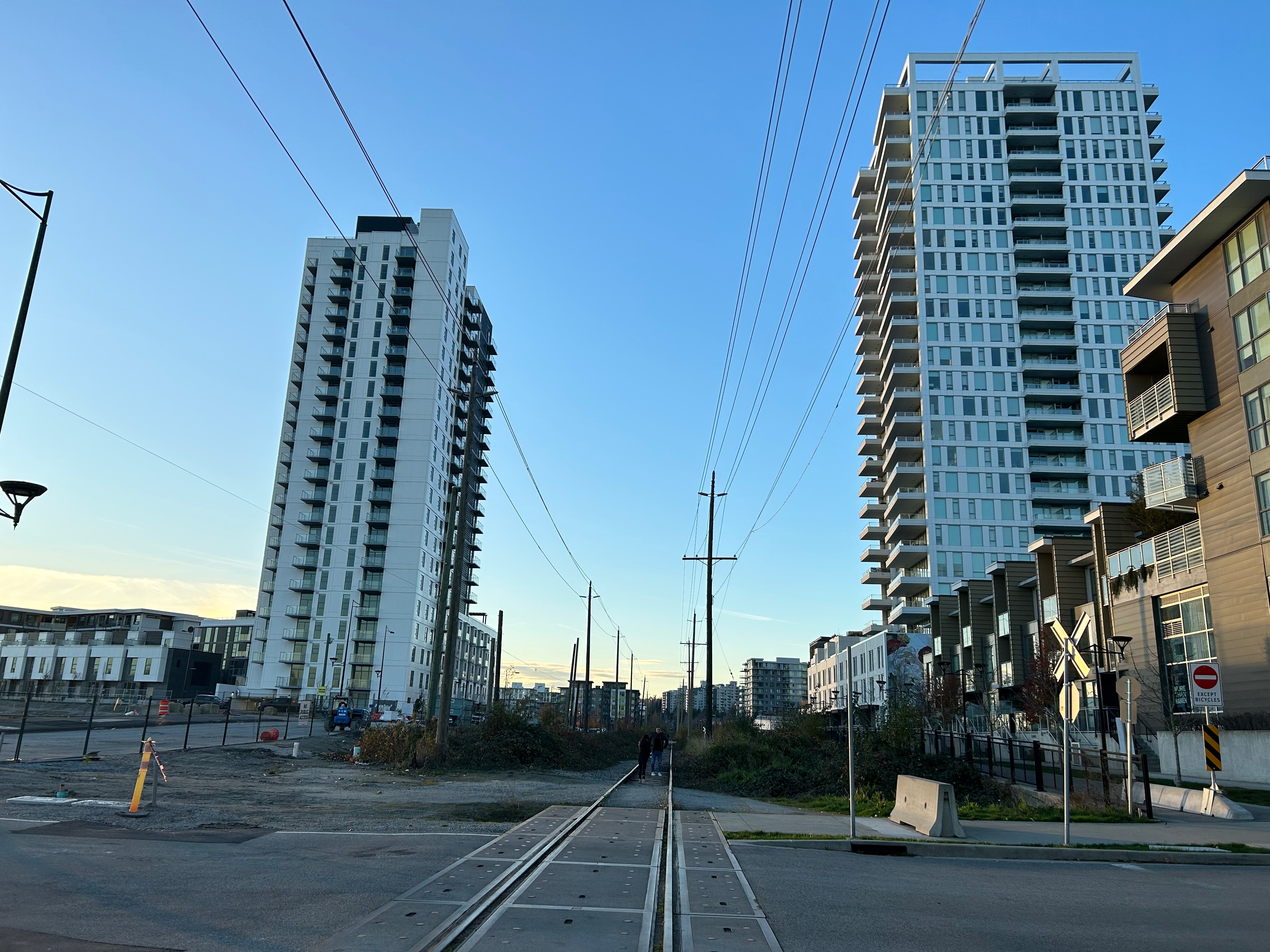
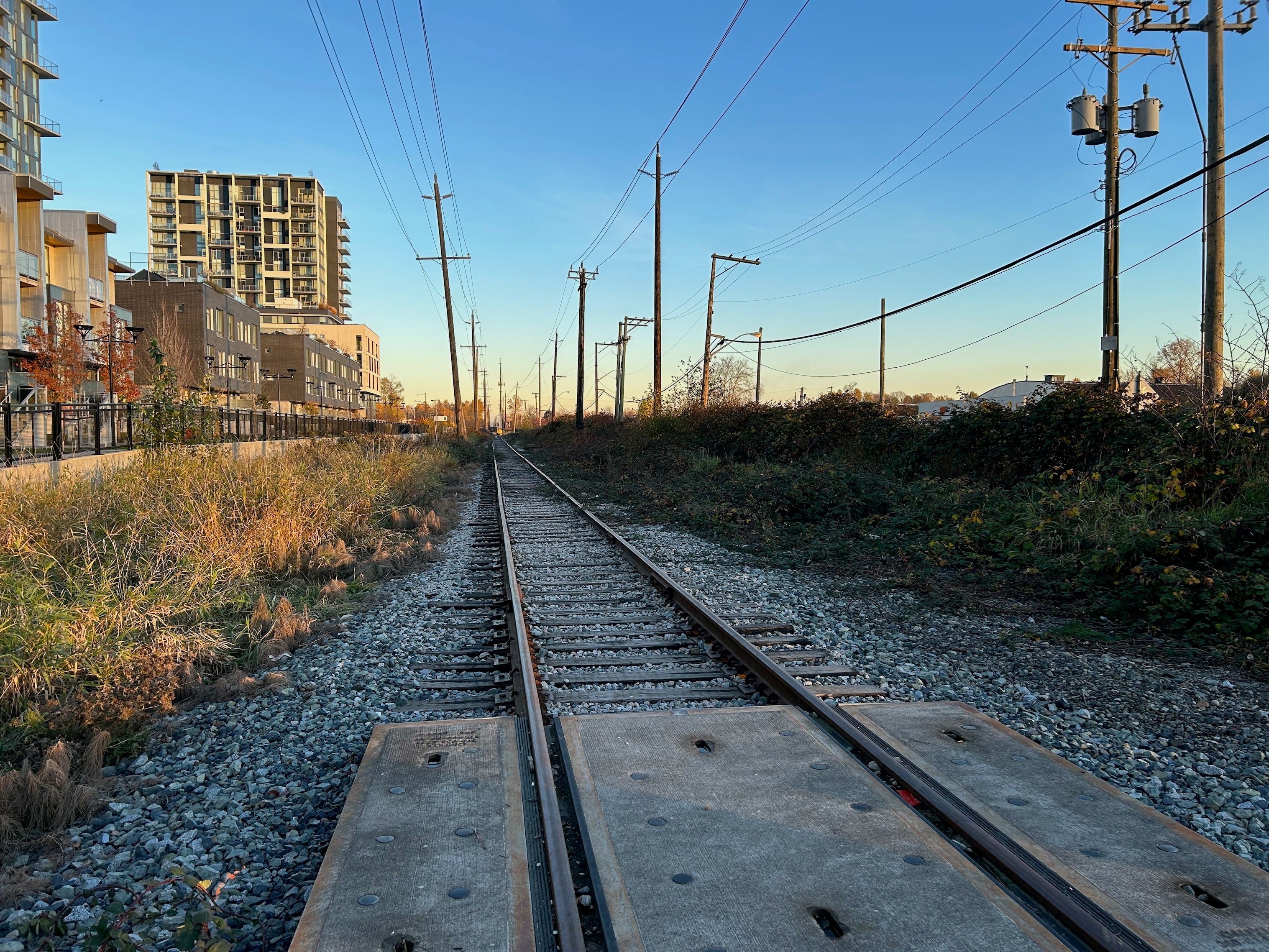
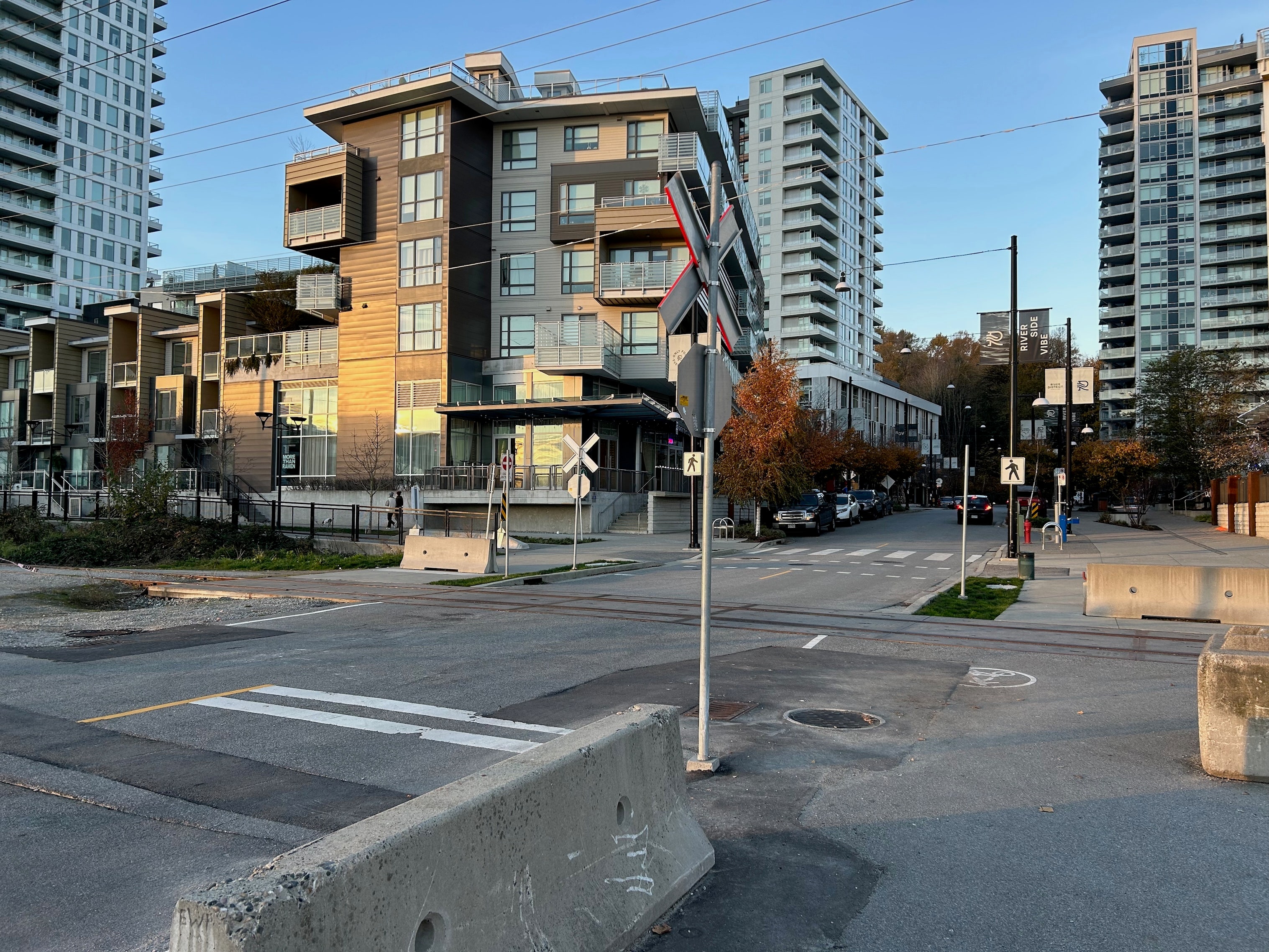
I had to make a trip down to the River District today and opted to snap these photos for a possible future blog entry. In positive-ish news, TransLink did not opt to go with the route I hated.
-
Thoughts on Final Fantasy XVI's story
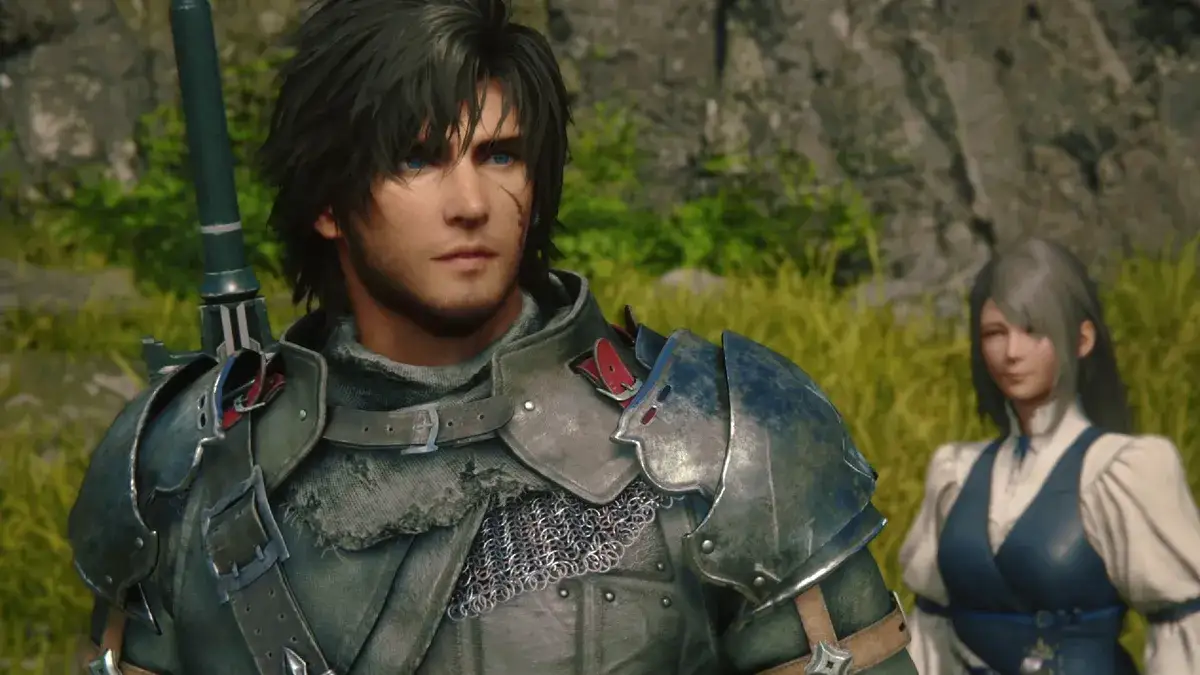
A few weeks ago, I completed Final Fantasy XVI and I still feel like it has the best story since VI. However, since time has passed and I have been able to process a lot of what I saw in the story. The ending in particular was not what I expected and I want to bring it up.
One of the themes in the story is the predominant slavery of those who are marked as bearers or dominants. Throughout the lands of Valisthea, crystals are used as a source of aetherial power to produce water, fire, healing, and so on and those who are marked as bearers are capable of using those powers without the need of crystals. Dominants are similar to bearers but also hold the power of Eikons (think Ifrit, Shiva, and Bahamut for examples).
As a result, bearers are mere tools to keep everyone else fed, warm, and quenched; and dominants are objects of war. Due to a blight facing every kingdom, each state is desperate to maximize their use of crystals, bearers, and dominants.
Being a bearer and dominant doesn’t just leave you to a life of servitude, but also leaves you cursed to an a death where your body petrifies due to the channelling of aether through their bodies. Every use of said power further damages one’s body–and once your body cannot do anymore, you’re discarded as your usefulness to society is no more.
Society for the most part saw bearers and dominants as lower class even compared to the impoverished. Amazingly, the game didn’t go about coming up with slurs for them, but it did make it a point to make classism quite obvious. Bearers were tattooed with a mark on their face so it was easy to tell when looking at someone.
This sort of treatment against bearers was not entirely shared across Valisthea. One of the kingdoms our protagonist, Clive came from a kingdom (Grand Duchy of Rosaria) where bearers were revered and not cast aside. However, said kingdom fell to an invading force and the haven for them was no more. One of the havens, Martha’s Rest was established as a haven for bearers, many of whom were near-death.
I am both glad and disappointed that the game explored this idea of classism and discrimination. The part of me that is glad is that it at least did so and did so in such a way where it didn’t come up with language mimicking slurs. The other part of me is disappointed because it flirted with this whole concept, but it felt like it become more of an afterthought later on the story.
When we start to face more of the antagonist, Ultima, we learn that everything going on in this world were of his own design–he is a “god”. However, we also learn from him that he is not infallible as he never considered that humanity would develop consciousness in such a way where emotion and free will were front and centre. This was seen as a flaw by him and thus all of the events we see in the game are orchestrated by him as a way to undo this ‘mistake’.
Before facing Ultima towards the end of the game, Clive makes a remark that humanity will have generations of hardship facing them once victory was achieved. He made it clear that he had hope for the future, but it wasn’t going to come without much conflict, implying violence and strife were going to be in its future.
One thing I will say is that Ultima yammered (I honest to goodness hated how much he spoke because it was annoying as hell) a lot about his disdain for humanity’s deviance from his design. He really wanted undo this and create the world anew, but was eventually overpowered by Clive who had become more powerful than him.
With Ultima’s death, we were left with Clive at the end facing the source of all aetherial power and by sacrificing himself, he destroyed it, leaving all humans without the ability to channel aether anymore, ending the curse from further progressing. Everyone learns of his death through just knowing including one particular red star (Metia) in the night sky fading out.
The thing is, it gets weird due to what comes up afterward.
Post-credits, we are given a scene in the future in a world that looked much livelier than the one which had faced severe blight. A child is made to start a fire to make a meal and he makes a quip about wishing he had “the power of an Eikon” in order to start said fire–instead of a crystal, he’s seen using two pieces of flint being hit against each other.
His mother tells him to stop believing in fairy tales just as he gets a fire started. We then cut to a scene where a nearby book is shown to have the title “Final Fantasy”, as written by Joshua (Clive’s brother). When the game opens and ends, Clive is narrating and he is narrating at the end. So did he really die? The game makes it seem like he is dead as it shows a part of him petrified on a beach, having succumbed to a curse, but then there is a book written by him.
I don’t think Clive died. However, as this is the end of the story, we’re left without actually knowing much of what happens between Clive on the beach and then however long in the future where we see this mother and child. Who wrote the book with said ending? Someone had to have written the book and I doubt that anyone took Joshua’s name. Someone had to have taken the book and we know Joshua was dead.
The ending is in my opinion kind of frustrating all the while interesting. I would like to know how classism affected bearers after aetherial power was no more? I imagine it was quite bleak, but then after a few generations, bearers would probably just simply exist as a concept but never in practice. Surely some of these bearers created offspring, and if so did they find themselves subjected to mistreatment as well?
I guess Clive’s remarks about it taking generations to resolve the conflicts humanity will face after his victory were alluding to the questions I have in my previous paragraph.
In any event, the game was good and I do hope that more people can play it so they can read my thoughts and have context.
Also Jill rules. I feel like she was kind of ruined as a character at a few points in the game, but I otherwise liked her quite a bit.
-
I don't belong in every community and that is okay
One of the things I witnessed last week was a situation where someone in a local online queer space took exception to rules put in place to make moderation easy for everyone. They didn’t take kindly to our decision to not relax the rules and a desire for us to not expose ourselves to content we voluntarily would have to handle were an issue to arise. As a consequence, they opted to have the last word and left said space.
How did I feel? I didn’t feel any remorse over the matter.
When I was younger, I was bullied quite a lot. The bullying was horrifying because I went to a small private school with no alternate classes for each grade. If you were in Grade 6, you were in the Grade 6 classroom and there were no alternatives. This led to me having a massive breakdown during my time in said grade and my school and parents required me to see a psychologist despite the fact that the bullying came from elsewhere. The 1990s were so great weren’t they?
As I entered adulthood and was able to leave that time of my life behind, I had a lot of trouble getting on in some online spaces. I hadn’t learnt how to find my space online and a lot of it was due to my having not reconciled with aspects of my queer identity. Trying to fit in was difficult and I didn’t know how to be myself there.
Coming out, I was able to figure out the spaces I belonged in with some trial and error. I listened to myself and didn’t attempt to try and fit in where I didn’t belong or I found hostile.
Does my experience line up with this person in the opening example 1:1? Absolutely not, but at least for me, I know where I belong and don’t fight these communities where I may not fit.
A space that doesn’t cater to me and my interests, desires, needs, et cetera is not a space for me. I think that this a healthy approach and one that takes a lot to learn how to grasp. Yearning to return to a community after being removed either voluntarily or forcibly is unlikely to be a healthy behaviour to continue with.
Creating your own community is healthier.
I must make it clear that this does not of course excuse anything rotten such as bigotry, classism, and the like, but the above thinking applies to how I want to socialise. Awful communities must be called out, but not all communities where I don’t feel like I fit in are necessarily awful in themselves.
-
I live in nice region on this planet

Pender Island in British Columbia
-
Ten years of Compass and a brief history of automated fare payment
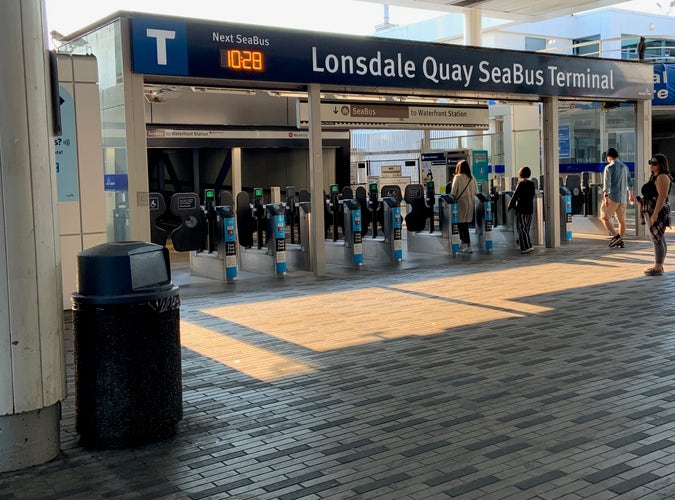
September 2023 marks ten years since Compass card readers were beginning to implemented. While the system itself wasn’t fully activated until 2016 and the necessity of it was more political than practical, I felt it was worth acknowledging the anniversary by looking at the ways fare validation on BC Transit and then TransLink services have evolved.
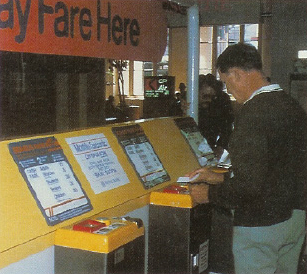
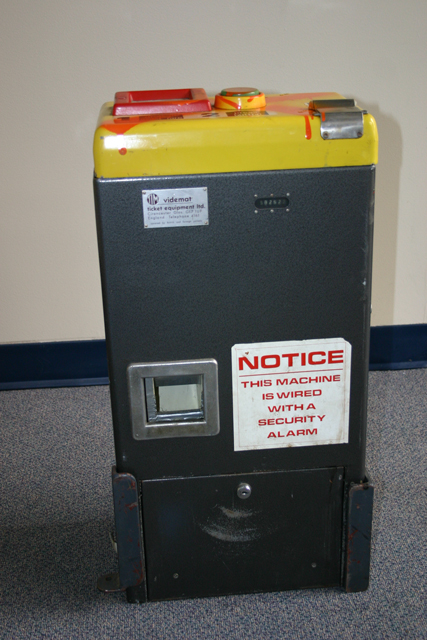
The first use of automated fare collection was in 1977 when the SeaBus link between Vancouver and North Vancouver first began regular service. The ticket machine was simple in its design: you’d place the appropriate fare into the machine and it would photocopy every single coin inserted and print them on to a piece of receipt paper to be used as proof of fare.
This of course was back in the day when coinage included pennies but excluded loonies, meaning that if you had inserted a lot of pennies, you’d have a rather lengthy proof of payment.
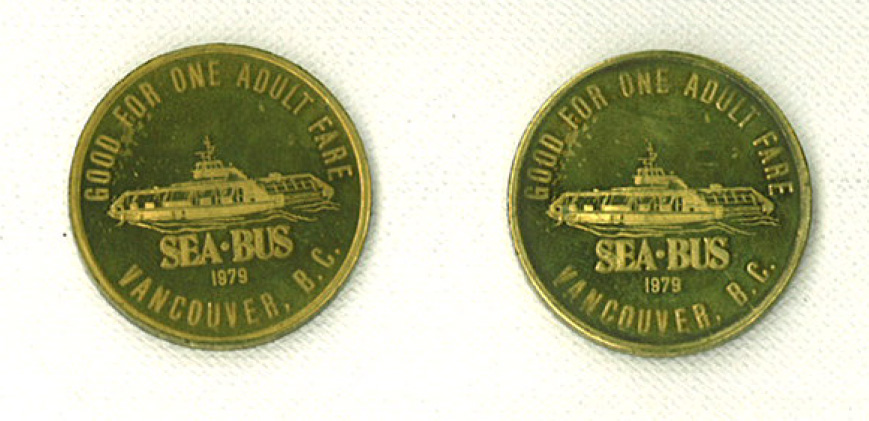
When SkyTrain service began, a new ticket machine was needed and this meant the end of tokens as they would not be effective for the new railway. Automated ticket machines were placed at every station and they took paper notes in addition to coins.
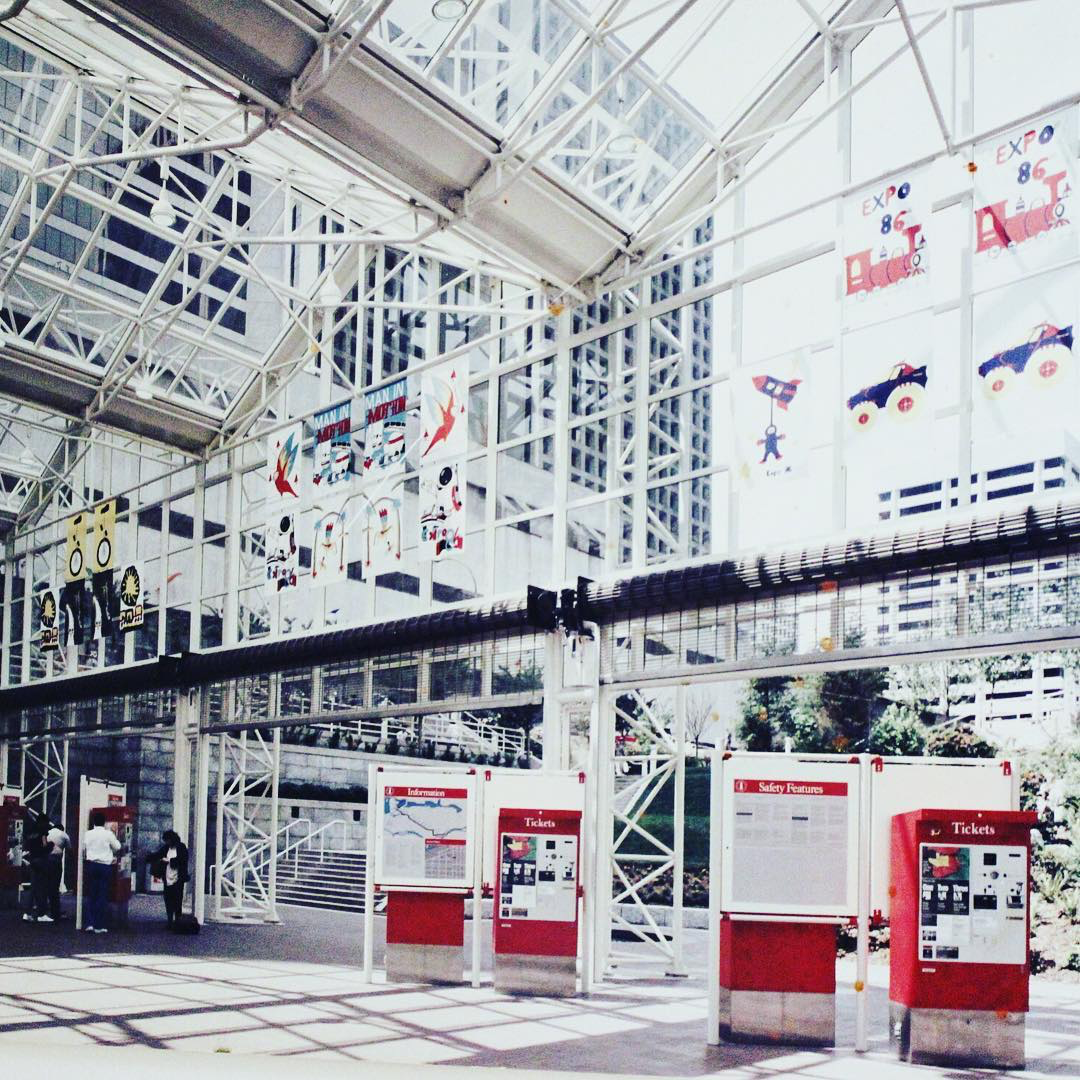
Tickets issued on SkyTrain were valid on buses and SeaBus as well as the entire system had complete fare integration.
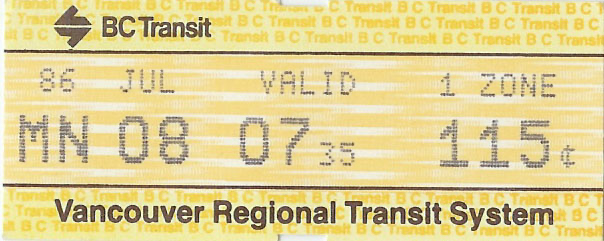
These ticket machines were in place for over a decade and a half and survived substantial changes to Canadian currency including the introduction of the two dollar coin–also known as the toonie. However, a brand new line was being opened and this required a whole slew of new machines and the new transit agency, TransLink opted to purchase brand new, high-tech machines to take their place.
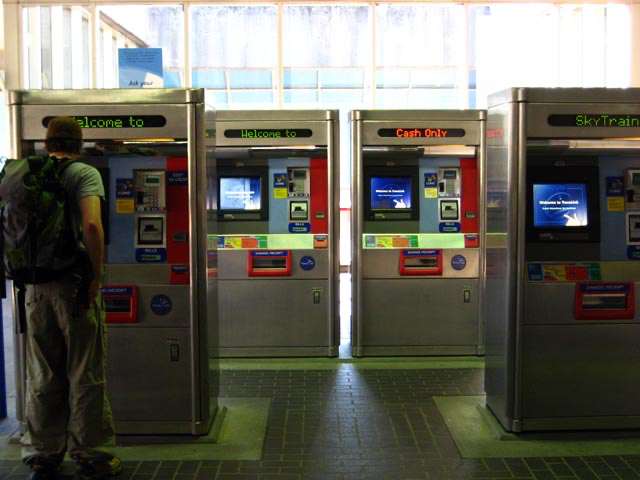
The big difference with these new machines was that the tickets had a magnetic stripe and could be issued and validated on buses.
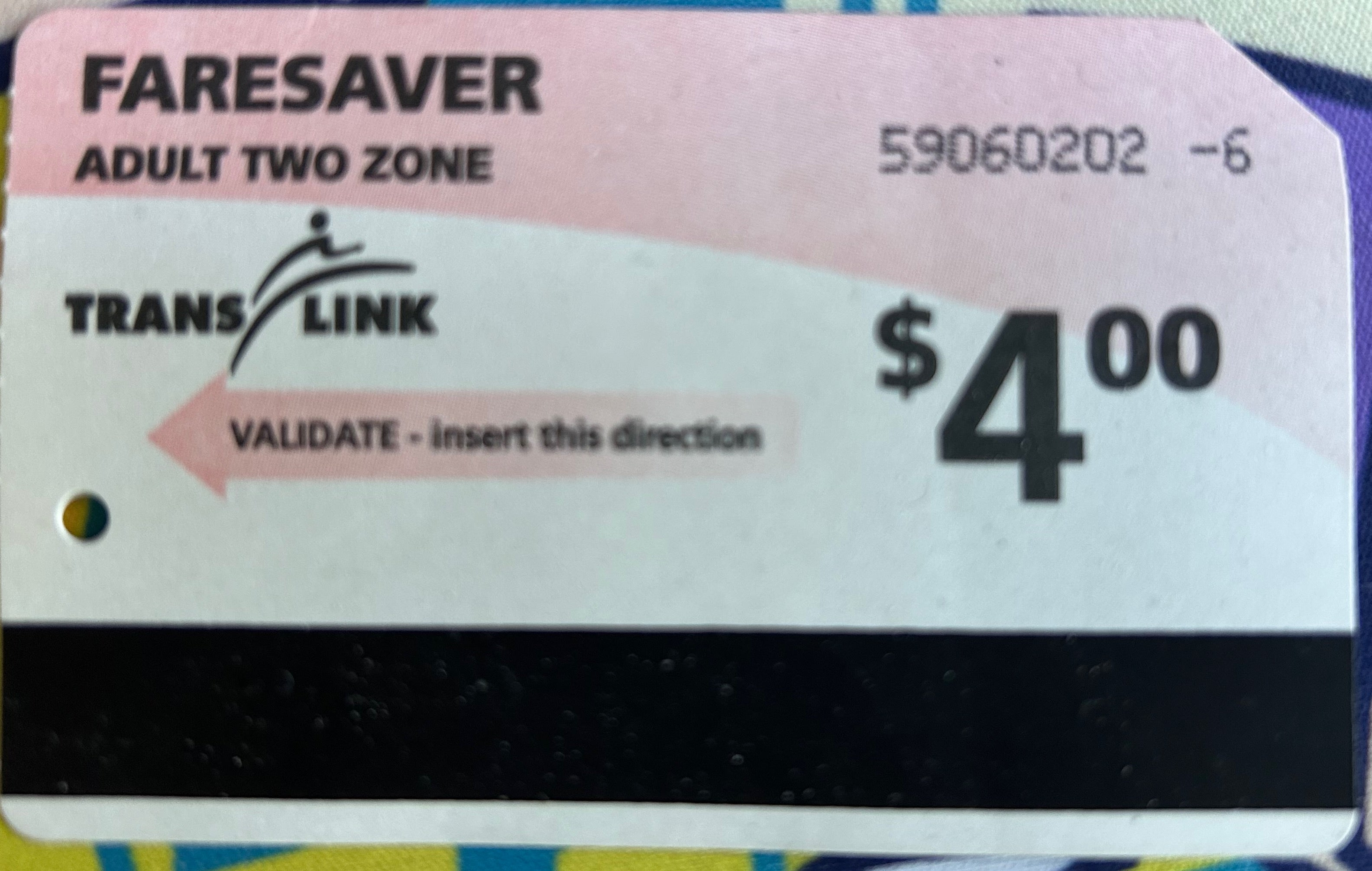
There were no gates on the system however so proof of payment had to be manually verified by staff should a ticket inspection be conducted.
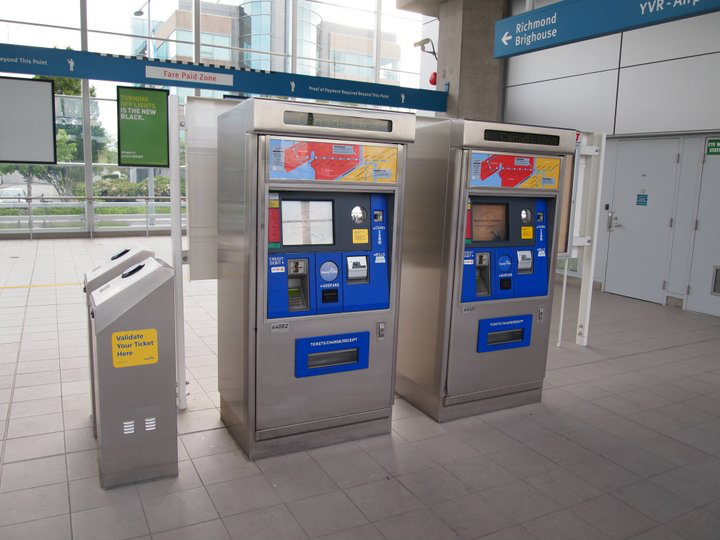
With the opening of the Canada Line, new ticket machines were ordered and they provided a hint of things to come: RFID passes were coming. The machines were designed with RFID readers in mind, but no system had been entirely established. This was all going to change when provincial politicians wanted to do away with the gate-less honour system SkyTrain employed and thus began a long ordeal to rid ourselves of the existing fare system.
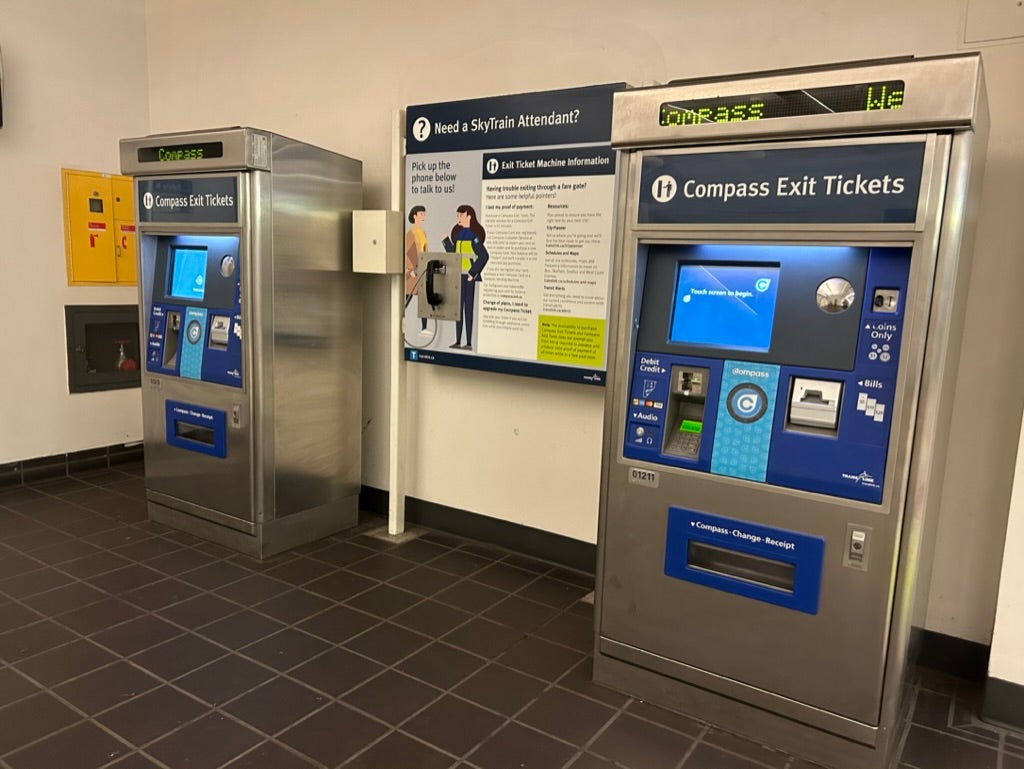
Starting in 2013, TransLink began to implement the Compass service and invited thousands of users (including this author) to be part of the program. Implementation was controversial as it required construction at many stations to accommodate fare gates. Many of these stations had to be completely remodelled as while the Canada Line stations were designed with such things in mind, Expo and Millennium Lines were not.
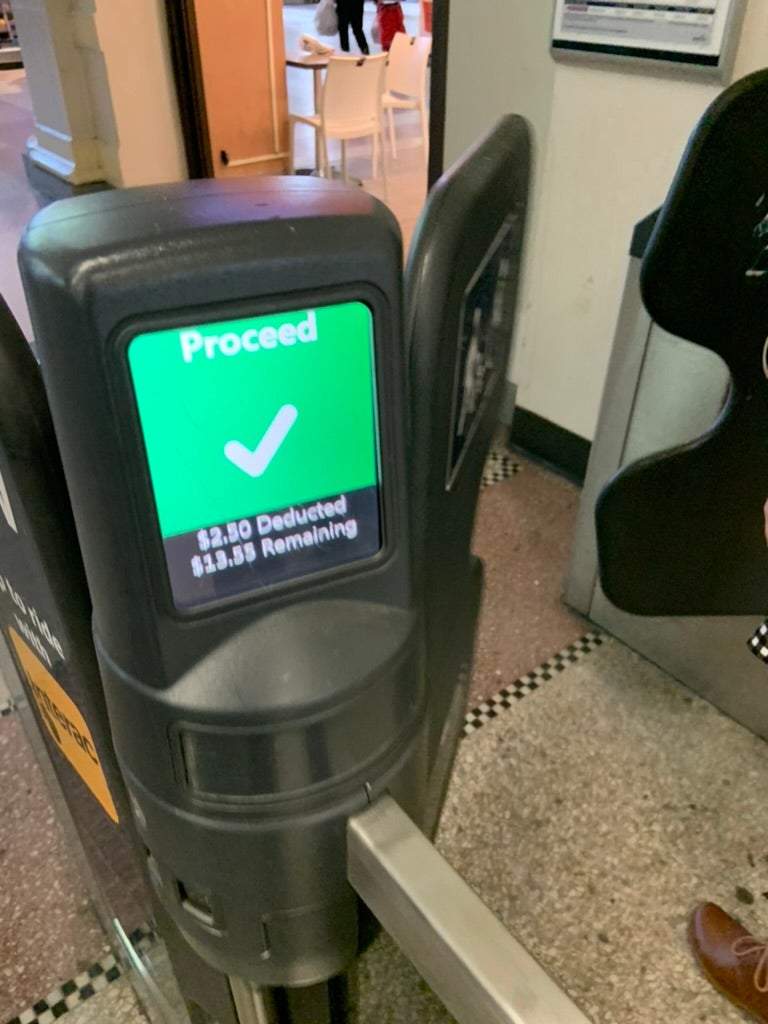
Implementation was fraught with problems with one big problem in particular: Metro Vancouver has a zone system for determining zones. It would be straightforward to enforce this with fare gates, but how do you deal with buses? How do you remind users to tap off of a bus? Nobody could come up with anything practical and this plus other issues caused years of delays, causing the Compass service to not officially launch until 2016.
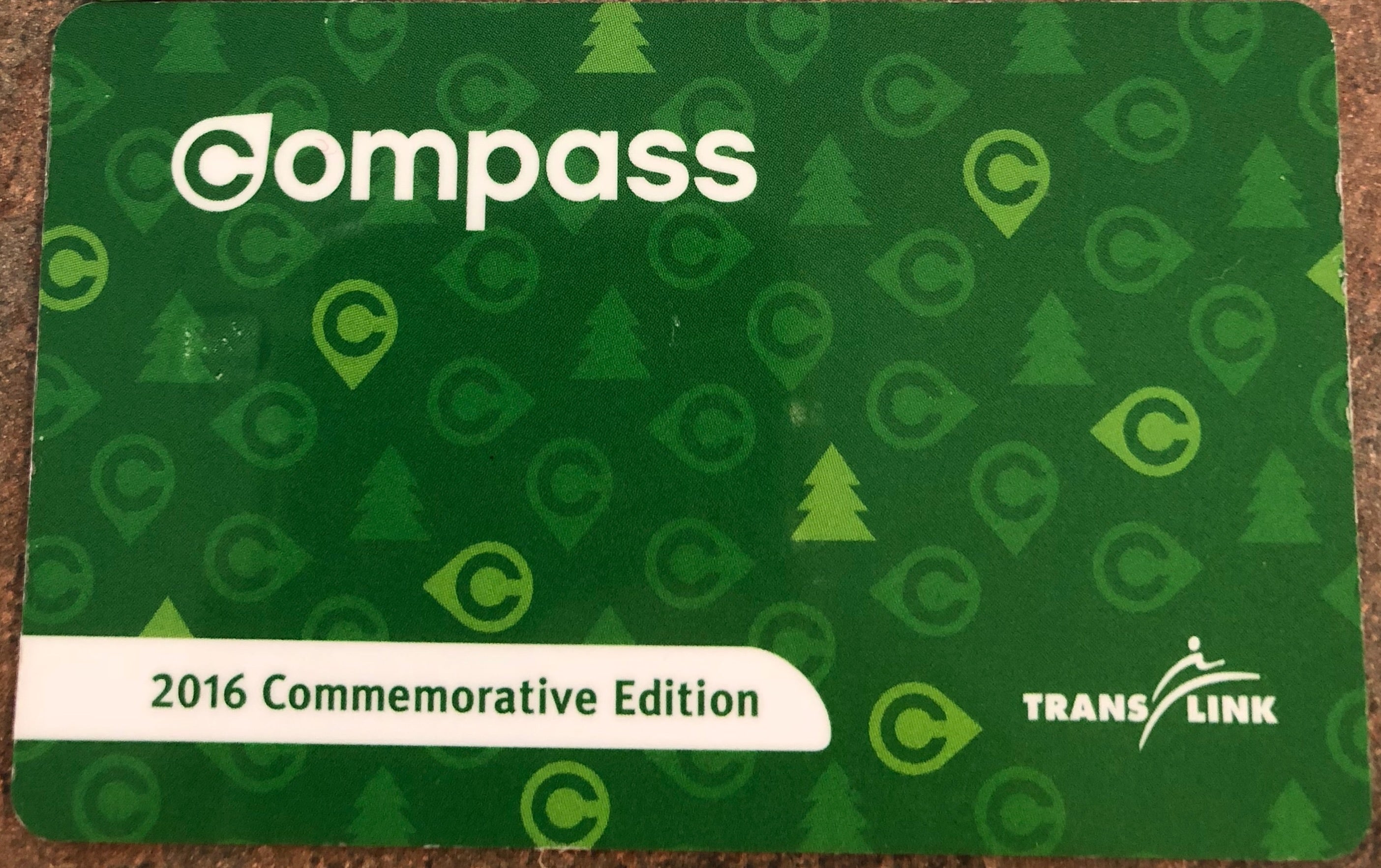
The cost to implement the whole system likely exceeded the cost of fare enforcement, but it’s the system we have received.
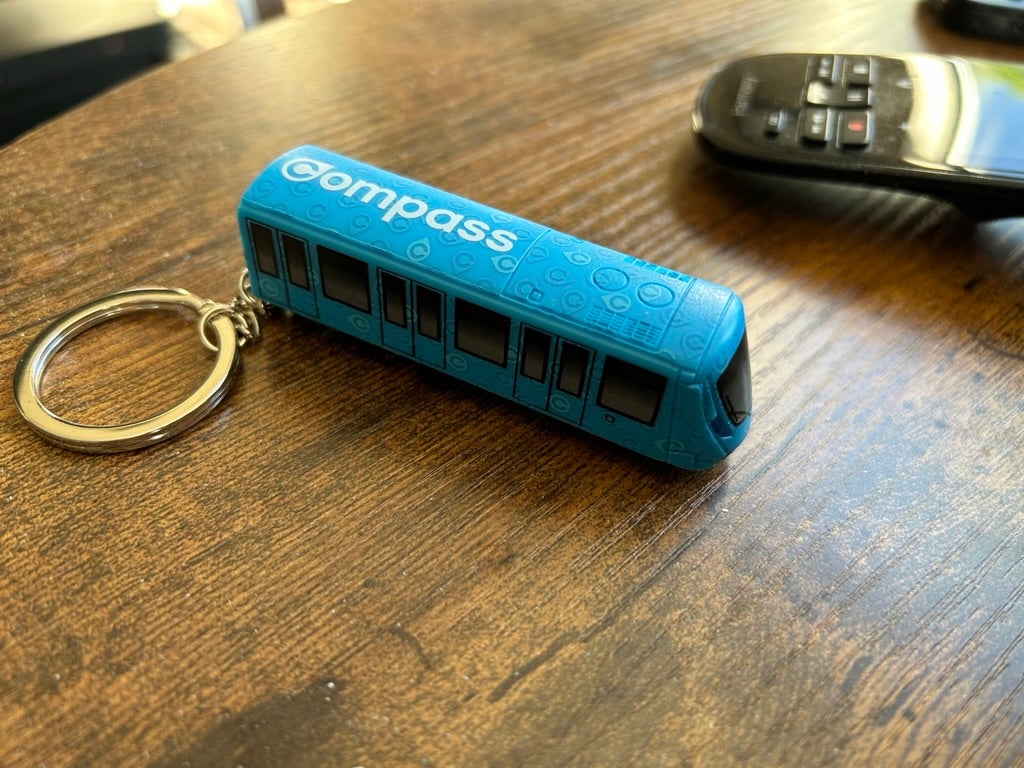
Since then, we have had limited-edition Compass card in the form of wrist bands, miniature versions, celebrations of holidays and expansions, and scale models of buses and trains. You can also purchase cards at pharmacies, including at many which are nowhere near a SkyTrain station.
The future of payment with transit in Metro Vancouver is going to change once again. TransLink has been exploring moving to a new scheme where you can use a transit pass using your mobile phone, akin to cities such as Hong Kong and San Francisco. This has been delayed so far by the pandemic, but we’re due to see these changes in the next few years.
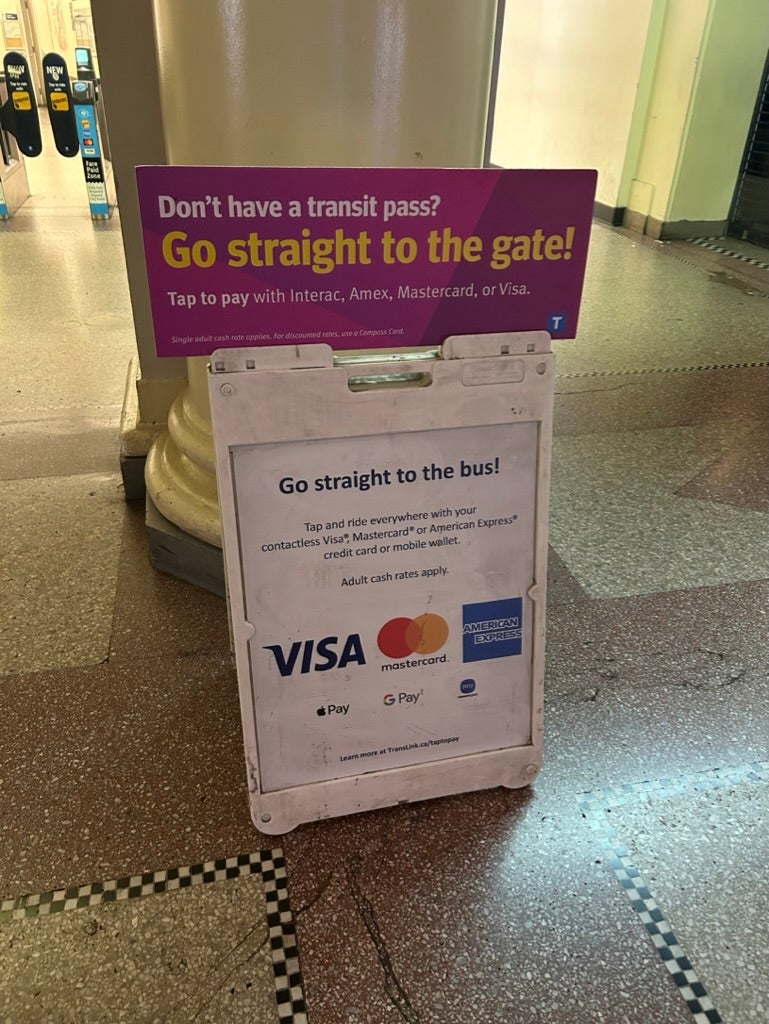
However, payment can be made by simply tapping your debit or credit card so the need for an actual transit pass to ride the services provided by TransLink is kind of no longer necessary.
One thing to mention is that buses have rolled back on automated fare payment in favour of paper tickets given out by bus drivers. If there is interest in how bus fare has been handled historically, let me know and I’ll consider it in the future.
Maybe one day payments won’t be needed at all, but for now this is what we have.