A tale of two very different cities
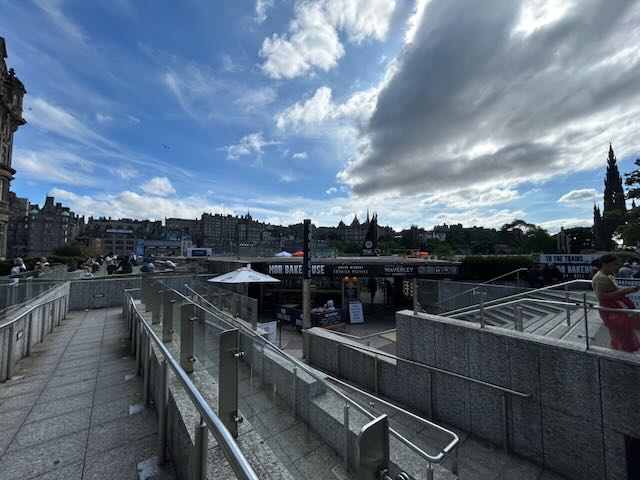
Edinburgh skyline as seen from next to Waverley Station
Last year, I had finally visited Scotland–Edinburgh to be exact. It is a lovely city with an excellent public transport system to the point where Waverley Station–located in a former lake surrounded by the original city centre (or “Old Town”)–became one of my favourite railway stations in the world. The buses and the single tram line made it quite easy for myself to navigate and visit friends during one of the busiest times of the year when the city was hosting the Fringe.
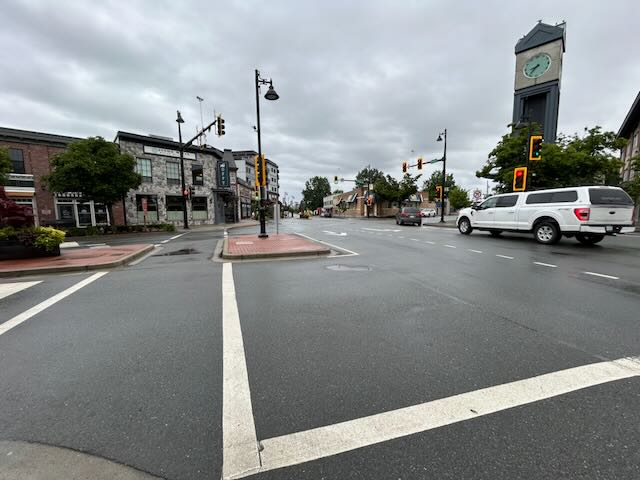
The less glamourous city of Chiliwack as viewed at something I want to complain about
A month prior, I attended a wedding of my cousin and his now wife in Chilliwack, British Columbia. You might find it a bit jarring for me to go from a medieval city with roads barely capable of permitting private automobiles to a rural municipality with its foundings seven centuries after and was built for cars.
The comparisons I can make between the two cities would on the surface be impossible, right?
The simple answer of course is that both have had public transportation at one point destroyed in favour of the automobile and even then anyone would be justified in saying that there’s nothing more. I would agree with that, but there is something Chilliwack has that felt disconcerting to me.
This blog post has lingered in my brain for nearly a year and a half and so to cap off 2025, let me rant about something I found obnoxious in Chilliwack.
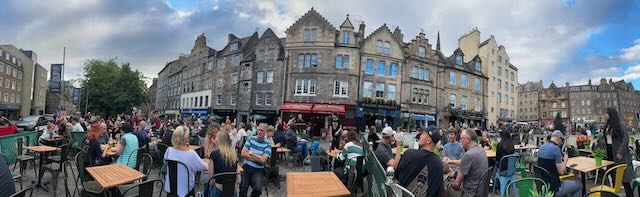
Edinburgh city centre during an August evening
Edinburgh’s history starts in the twelfth century, meaning that the concept of the automobile would have been as foreign to them then as interstellar travel is to us now. The concept of the carriage pulled by a horse really didn’t exist in Britain until the 1600s (it did exist during the Roman Empire but had been forgotten), so this was really a space meant for people.
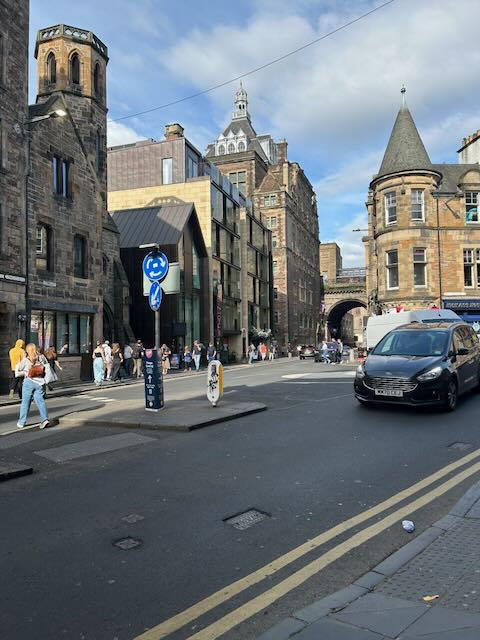
Car travelling through one of the more medieval parts of Edinburgh
Much of Edinburgh is not like this at all admittedly. The Old Town is the original part of the city with New Town being an extension built in the 19th century. The creation of the new area, enabled by advancements made in the industrial revolution are a bit more friendlier to cars, but really the roads constructed were to permit the aforementioned carriages and then eventually trams which saw use from after the first World War until their demolition in 1956 in favour of cars and buses.
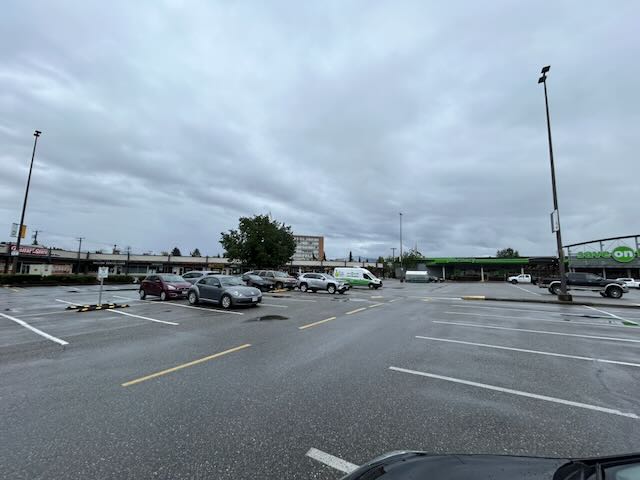
A parking lot in Chilliwack where a supermarket and other business reside
Chilliwack itself is located about a hundred kilometres east of the City of Vancouver. It was first settled by the Stolo (Stó:lō) First Nations some five millennia ago, but was then stolen by failed gold miners in the Fraser Canyon, with them incorporating a town in 1873. Eventually, the city centre was built in 1881 (a year that will become important for later) with its location chosen due to the rest of the city being largely on a flood plain.
With the Canadian Pacific Railway passing through north of the Fraser River from the city as well as in 1910, becoming the terminus of an electric railway from the up and coming Vancouver, this made the area quite bustling and an important centre for commerce and trade.
This is where the parallel between the two cities begin as in 1950, six years prior to Edinburgh’s rapid transit decline, the British Columbia Electric Company, which at the time, oversaw trams and interurban railways in much of the southwestern portion of the province ceased operations to the city, forcing people to switch to modes which used public highways. This has largely remained the case for seventy five years even though Chilliwack does to this day have a one-way railway option.
Chilliwack’s fate was sealed only because it was a city created just in time for the advent of the automobile. This persisted with the construction of the Trans Canada Highway which bypasses its city centre and cuts the city as a whole in half.
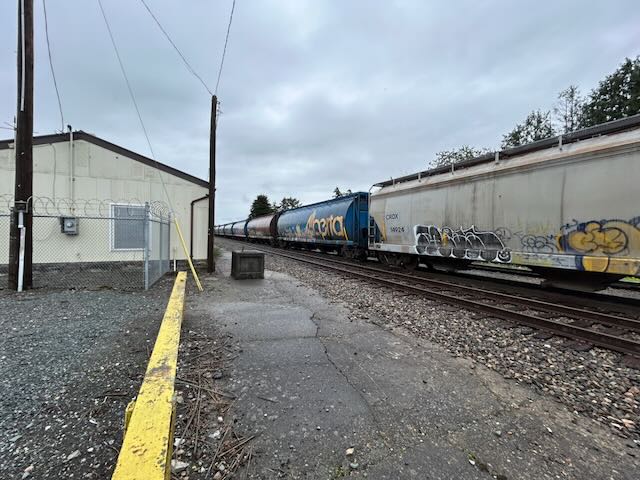
This is in fact a passenger railway stop
To demonstrate how poor transportation options are for non-car drivers, the above is Chilliwack station, serviced by VIA Rail with only two westbound trains weekly. It is located in a very unpleasant industrial estate, has no shelter, and it is only available as a flag stop.
I know “station” is doing some heavy lifting here. If you want to use it, you can book a ticket with VIA and hope that the train arrives at its scheduled time of some weeknight 2 AM as it is subject to the whims of freight traffic.
Transportation is so great in this country.
Public transportation options aside from this include a bus service which while excellent for merely existing, it has no priority and is thus subject to the whims of other motorists, making it less efficient than to drive a car. It is a quite busy route but a lack of funding by and infrastructure from the province and local authorities means it will never live to its fullest potential in its current state.
However, Chilliwack really wants to latch on to something it lost from its past: it wants to be a place where it feels like a lived in setting that doesn’t feel like it’s shackled by the automobile. Born out of “District 1881”, the city embarked on a project to create a neighbourhood that is inviting.
I really feel instead that it is half-baked.
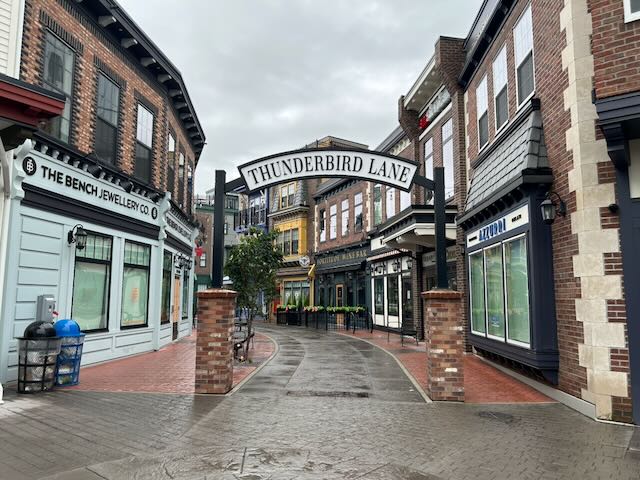
“Thunderbird Lane” located in Chilliwack, British Columbia
This concept of building a walkable area to revive a city centre is nothing new. However, the way that this area was built, it doesn’t feel lived in and even at 8 AM on a Sunday morning on a long weekend, it should be a bit more alive than what the above photo shows.
People like brunch even if they live in a largely agricultural area.
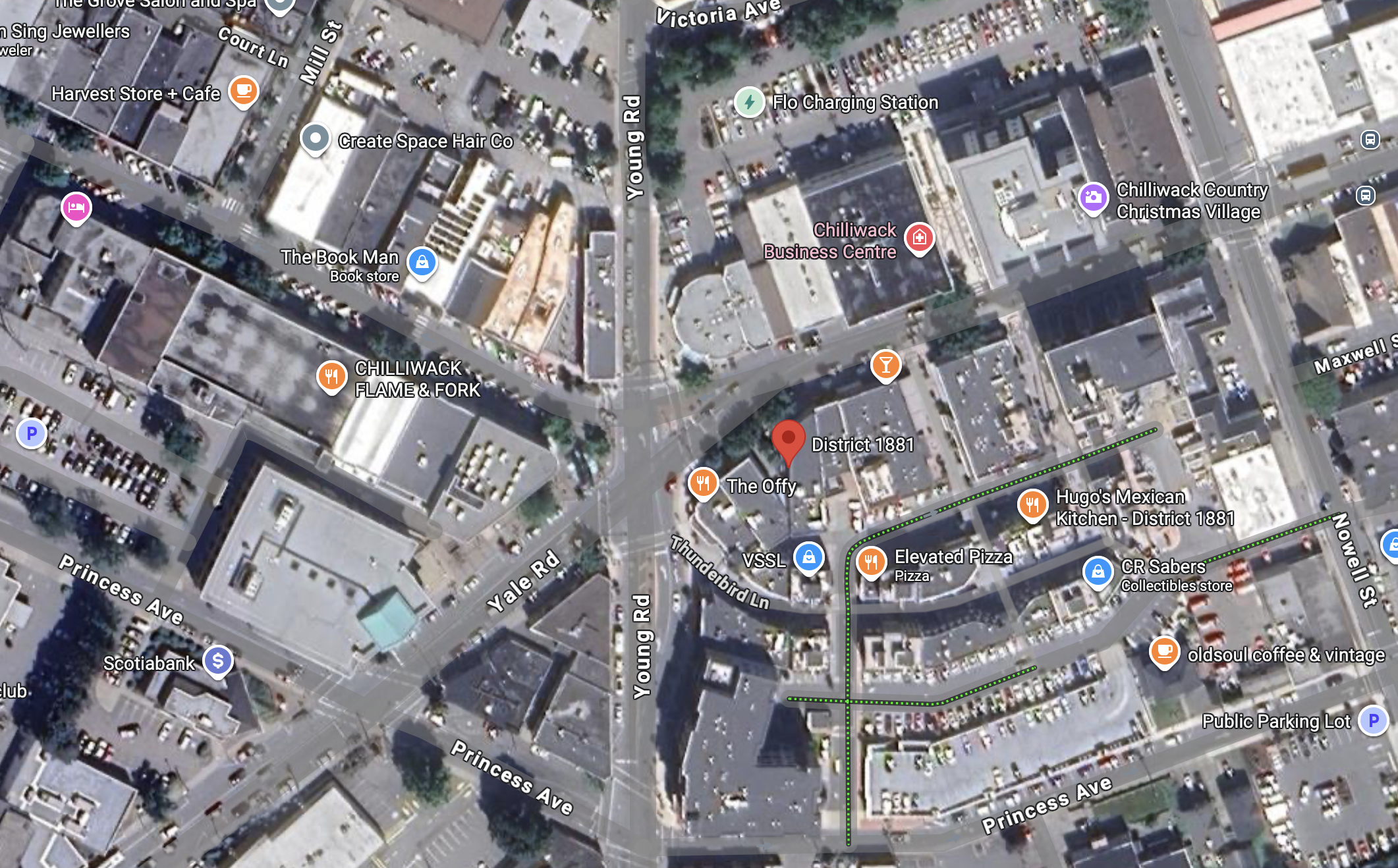
Satellite shot of District 1881
There are two problems that makes this development suffer: the transportation options to and from and the residential or lack thereof around it.
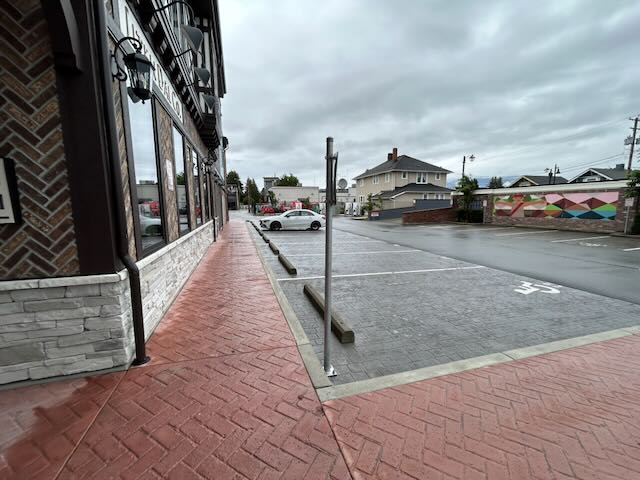
Ample parking day and night
Cars are expected to drive to this place as parking was built into its design. There is a bus that serves the area directly plus another that will connect you back to Vancouver, but the local bus is limited in service with no road priority anywhere to speak of and service ranging from a decent fifteen minute interval on weekdays to a paltry thirty on Saturday and fourty five on Sunday.
The area is walkable I must admit, but once you’re barely a hundred metres out from it all, it becomes low-density housing and that is what really kills the idea of this being anything ideal. One medium density residential building is adjacent to the area and while that is good, that’s it. It’s surrounded by offices that will remain vacant past 6 PM on a weekday and will be nearly absent of people otherwise.
You cannot build such a place and expect it to be lively. The initial novelty of the place has worn off; people don’t want to drive to these places. You have to encourage people to live around them and based on searches for rentals and sale properties, it’s slim pickings if you want to be part of this feeble attempt to revitalise the area.
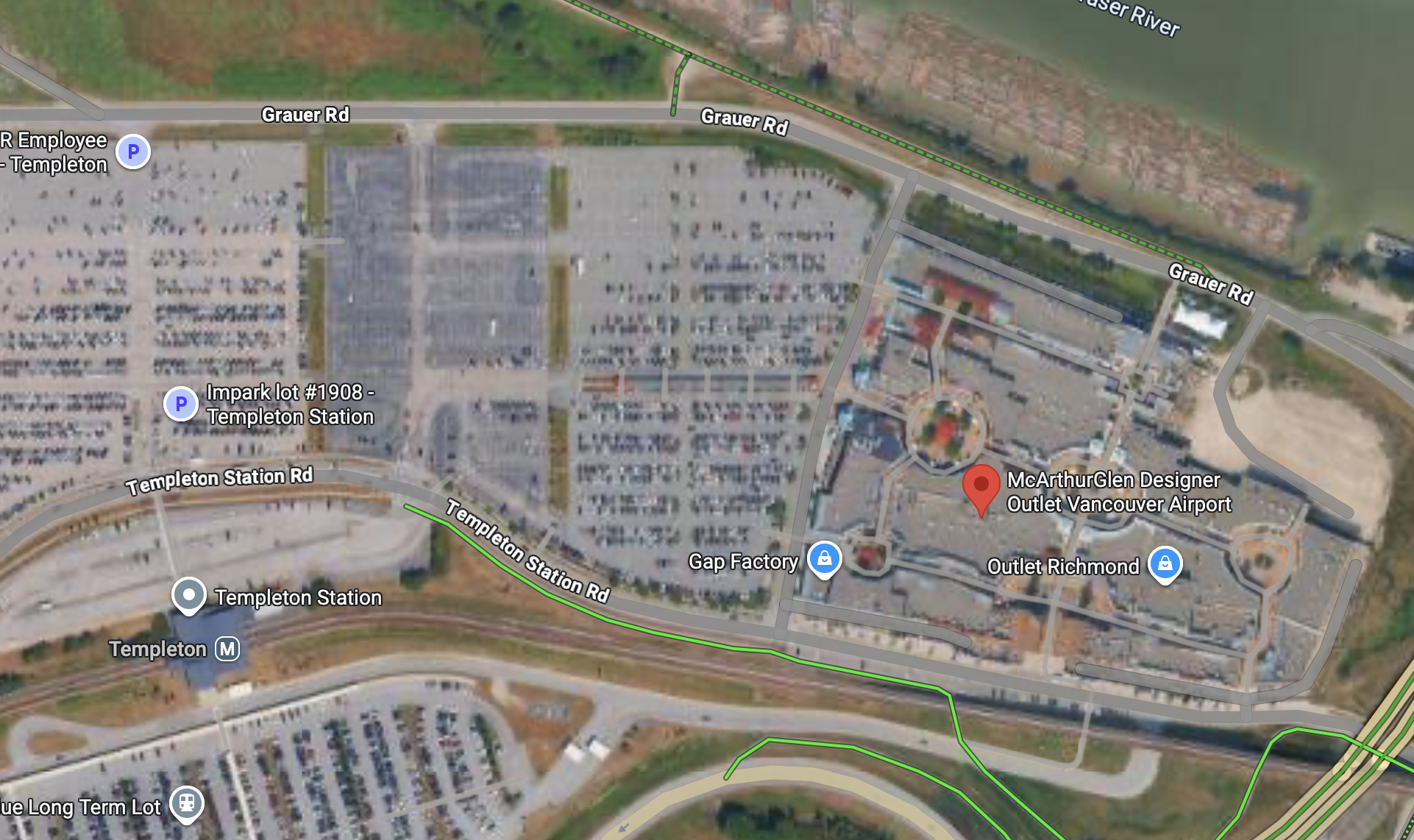
Satellite shot of MacArthur Glen (right) in Richmond, British Columbia with parking to its left and a SkyTrain station (Templeton) to its south
Near Vancouver International Airport, MacArthur Glen is a shopping centre intended to mimic the walkable areas of older European cities such as Edinburgh. It is honestly just a trap for tourists who want to spend their remaining Canadian dollars before going off to the airport and don’t mind planes flying a hundred metres overhead the whole time.
The crime with this place however is that while I may be complaining about the parking given to this project in the Fraser Valley, at least it didn’t have thousands of parking spaces allocated unlike the one that actually was built next to a rapid transit line.
I don’t need an explanation for why as I understand the intended clientel, but it’s still ridiculous.
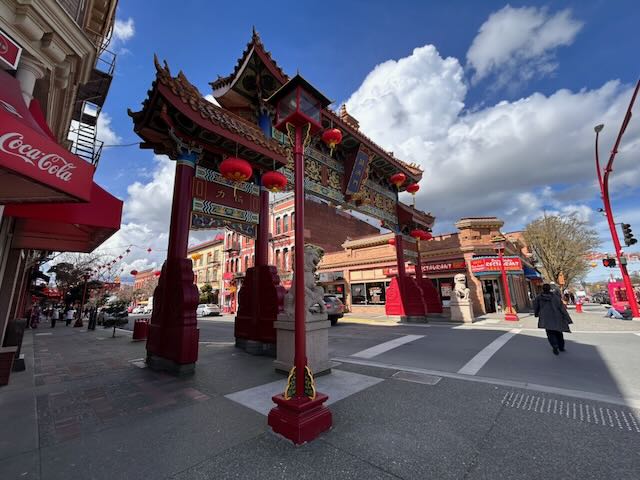
I don’t have any photos of Downtown Victoria so just deal with it here
Now, to be fair, Edinburgh is a city with half a million people and may as well be as many years old when compared to Chilliwack. However, Edinburgh didn’t go and build parking lots to revitalise its city. While it took nearly six decades to begin construction of a new tram line, the initial phase of the project was completed and added character to the city that was sorely missed.
I will repeat myself by saying it is unfair of me to compare Chilliwack to Edinburgh, but District 1881 is a Potemkin village and offers no character due to nothing else being done to support it.
So let’s talk about a population peer that is in British Columbia: Victoria. Both of these cities have roughly the same population (approximately 92,000 for Victoria and 93,000 for the other) and while Victoria may reside in a region with roughly 350,000 people, Chilliwack is part of the Fraser Valley Regional District and it has a similar number of people.
Neighbouring Abbotsford may be more dominant in the region, but there is nothing to say that you cannot have multiple centres. This is the approach of Metro Vancouver and it has worked out quite well for its constituents. If Chilliwack wants to make a project like District 1881 work, it has to make it so it’s not just a theme park for people who don’t realise that there are parts of the world that actually live in spaces like this.
Victoria has density. It has walkable areas. It has adequate transit. It’s not Vancouver and never will be. It is just the provincial capital and is unlikely to ever become more due to its geography.
However, Chilliwack isn’t shackled by its geography and its role in the province is nothing more than a city. Additionally, it also does not suffer from remnants of being the sole eastern Pacific base for the former British Empire. The city could evolve into something more modern if its municipal government actually had some real imagination.
The potential for Chilliwack is that it is the last city in the Lower Mainland before you go east into the interior of the province and then the rest of the country. However, its focus on low density despite all of its growth really says a lot when they say things like this in response to housing targets set by the government:
Coun. Chris Kloot described the frustration: “I think what Chilliwack feels is that we were the poster child, we absorbed growth and did everything in our power to make sure things would go well, recognizing the need for housing.
“And then with the new housing legislation it kind of felt insulting to us, because we were doing all the right things, making room for housing and all the growth.”
Chilliwack’s phenomenal growth is reflected in the 2021 Census numbers that showed Chilliwack was the second-fastest growing city in Canada behind Kelowna, at the time
I have a simple proposal:
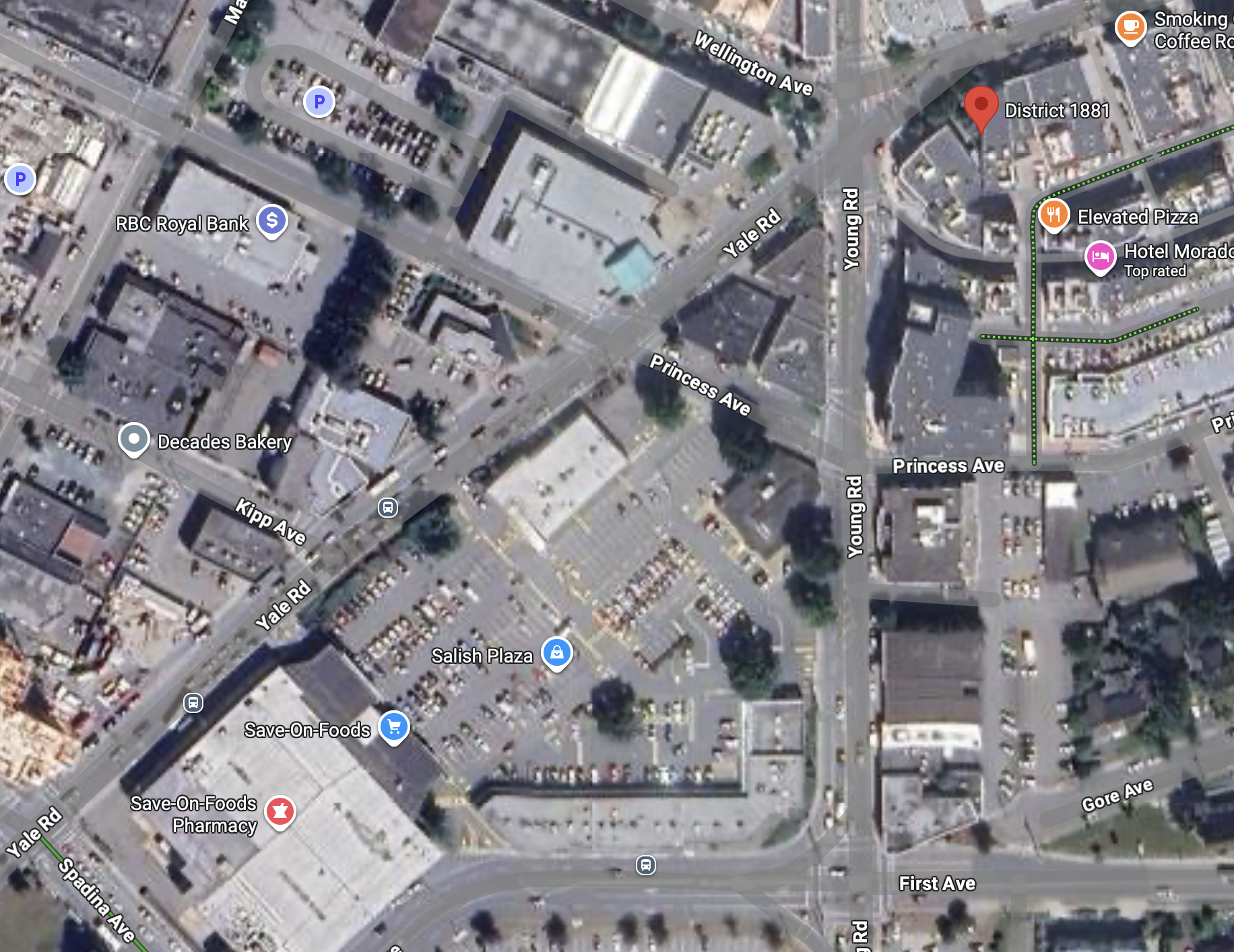
District 1881 on the top-right with a shopping centre parking lot on the bottom-left
District 1881 is 50 metres to the northeast of the Salish Plaza shopping centre. This shopping centre is situated on the former site of the BC Electric Railway’s terminus. The removal of this station and the shift to automobile dependency is the root cause of today’s downtown Chilliwack’s woes.
I am not looking to return this space back to a railway station because it is unlikely to ever happen. Much of the required supporting infrastructure is long gone and any attempts to bring back a railway would be better focused on the station I shared earlier.
However, the fact that this shopping centre remains largely a parking lot and area transit has barely seen any improvement means that projects such as District 1881 will produce a half-baked result and will only satisfy landlords and real estate developers.
Chilliwack and the Fraser Valley deserves better.