Thoughts on Final Fantasy XVI's story
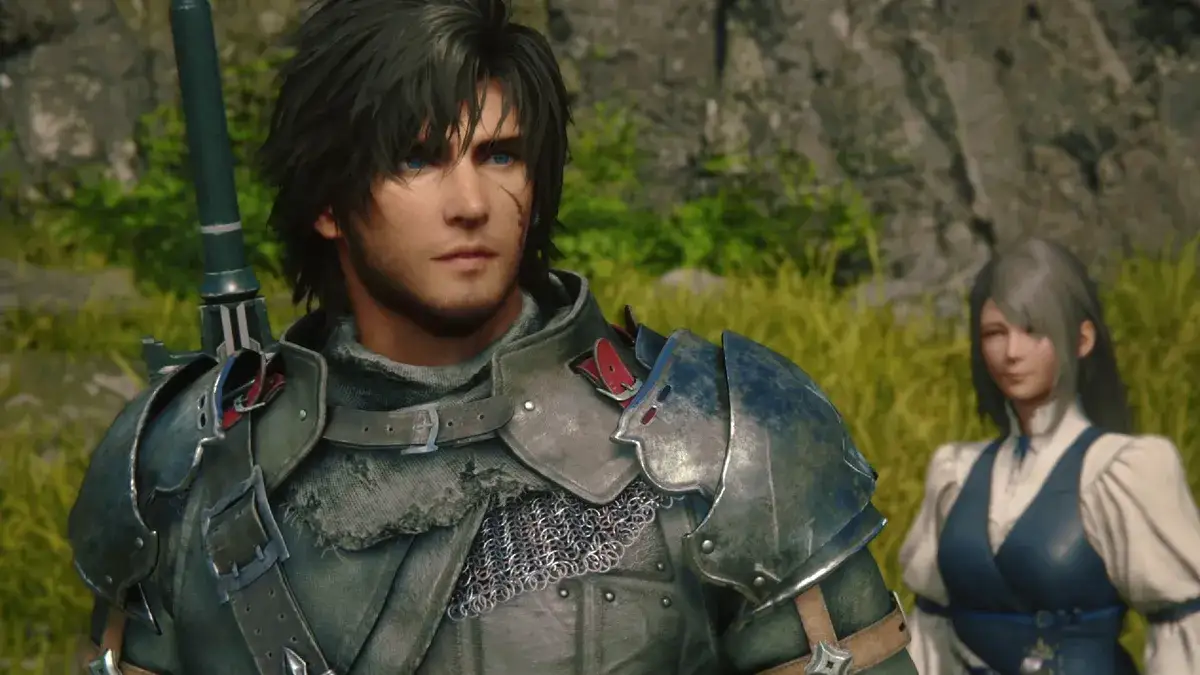
A few weeks ago, I completed Final Fantasy XVI and I still feel like it has the best story since VI. However, since time has passed and I have been able to process a lot of what I saw in the story. The ending in particular was not what I expected and I want to bring it up.
One of the themes in the story is the predominant slavery of those who are marked as bearers or dominants. Throughout the lands of Valisthea, crystals are used as a source of aetherial power to produce water, fire, healing, and so on and those who are marked as bearers are capable of using those powers without the need of crystals. Dominants are similar to bearers but also hold the power of Eikons (think Ifrit, Shiva, and Bahamut for examples).
As a result, bearers are mere tools to keep everyone else fed, warm, and quenched; and dominants are objects of war. Due to a blight facing every kingdom, each state is desperate to maximize their use of crystals, bearers, and dominants.
Being a bearer and dominant doesn’t just leave you to a life of servitude, but also leaves you cursed to an a death where your body petrifies due to the channelling of aether through their bodies. Every use of said power further damages one’s body–and once your body cannot do anymore, you’re discarded as your usefulness to society is no more.
Society for the most part saw bearers and dominants as lower class even compared to the impoverished. Amazingly, the game didn’t go about coming up with slurs for them, but it did make it a point to make classism quite obvious. Bearers were tattooed with a mark on their face so it was easy to tell when looking at someone.
This sort of treatment against bearers was not entirely shared across Valisthea. One of the kingdoms our protagonist, Clive came from a kingdom (Grand Duchy of Rosaria) where bearers were revered and not cast aside. However, said kingdom fell to an invading force and the haven for them was no more. One of the havens, Martha’s Rest was established as a haven for bearers, many of whom were near-death.
I am both glad and disappointed that the game explored this idea of classism and discrimination. The part of me that is glad is that it at least did so and did so in such a way where it didn’t come up with language mimicking slurs. The other part of me is disappointed because it flirted with this whole concept, but it felt like it become more of an afterthought later on the story.
When we start to face more of the antagonist, Ultima, we learn that everything going on in this world were of his own design–he is a “god”. However, we also learn from him that he is not infallible as he never considered that humanity would develop consciousness in such a way where emotion and free will were front and centre. This was seen as a flaw by him and thus all of the events we see in the game are orchestrated by him as a way to undo this ‘mistake’.
Before facing Ultima towards the end of the game, Clive makes a remark that humanity will have generations of hardship facing them once victory was achieved. He made it clear that he had hope for the future, but it wasn’t going to come without much conflict, implying violence and strife were going to be in its future.
One thing I will say is that Ultima yammered (I honest to goodness hated how much he spoke because it was annoying as hell) a lot about his disdain for humanity’s deviance from his design. He really wanted undo this and create the world anew, but was eventually overpowered by Clive who had become more powerful than him.
With Ultima’s death, we were left with Clive at the end facing the source of all aetherial power and by sacrificing himself, he destroyed it, leaving all humans without the ability to channel aether anymore, ending the curse from further progressing. Everyone learns of his death through just knowing including one particular red star (Metia) in the night sky fading out.
The thing is, it gets weird due to what comes up afterward.
Post-credits, we are given a scene in the future in a world that looked much livelier than the one which had faced severe blight. A child is made to start a fire to make a meal and he makes a quip about wishing he had “the power of an Eikon” in order to start said fire–instead of a crystal, he’s seen using two pieces of flint being hit against each other.
His mother tells him to stop believing in fairy tales just as he gets a fire started. We then cut to a scene where a nearby book is shown to have the title “Final Fantasy”, as written by Joshua (Clive’s brother). When the game opens and ends, Clive is narrating and he is narrating at the end. So did he really die? The game makes it seem like he is dead as it shows a part of him petrified on a beach, having succumbed to a curse, but then there is a book written by him.
I don’t think Clive died. However, as this is the end of the story, we’re left without actually knowing much of what happens between Clive on the beach and then however long in the future where we see this mother and child. Who wrote the book with said ending? Someone had to have written the book and I doubt that anyone took Joshua’s name. Someone had to have taken the book and we know Joshua was dead.
The ending is in my opinion kind of frustrating all the while interesting. I would like to know how classism affected bearers after aetherial power was no more? I imagine it was quite bleak, but then after a few generations, bearers would probably just simply exist as a concept but never in practice. Surely some of these bearers created offspring, and if so did they find themselves subjected to mistreatment as well?
I guess Clive’s remarks about it taking generations to resolve the conflicts humanity will face after his victory were alluding to the questions I have in my previous paragraph.
In any event, the game was good and I do hope that more people can play it so they can read my thoughts and have context.
Also Jill rules. I feel like she was kind of ruined as a character at a few points in the game, but I otherwise liked her quite a bit.