I'm still angry about Professor Layton vs. Phoenix Wright
Late last year, I tried playing the original Phoenix Wright: Ace Attorney trilogy for the first time ever. Within a week, I was hooked and was determined to play every single Ace Attorney game by the end of 2022.
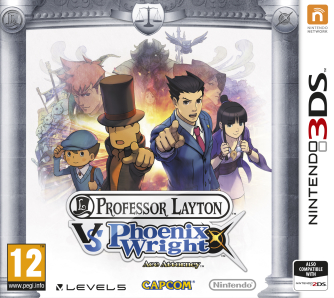
As of today, I have completed the original trilogy, Apollo Justice: Ace Attorney, Phoenix Wright: Ace Attorney - Dual Destinies, and the subject of this post, Professor Layton vs. Phoenix Wright. While, Dual Destinies is often lamented as the worst of the mainline games, it never left me as angry as the Layton/Wright did–hereby referred to as “PLvPW” moving forward.
This post is going to contain spoilers so be warned. Also preemptive content warning around some matters relevant to the story. Also enjoy the typos and linear inconsistencies.
This game should have been good
PLvPW is an interesting game as we’re taking the mechanics of the Layton series with using puzzles to investigate mysteries and merging them with the defence and logic approach with defending the accused from the Ace Attorney games. The thing that makes this even more interesting is that the logic approach has a slight twist: we’re dealing with witch trials.
Historically, witch trials were baseless in logic and instead rooted in everything from fear to economics. With the Salem witch trials in particular, 80% of the accused were women and many found themselves in the crosshairs of these trials due to petty disputes with neighbours or were behaving outside of the expectations of gender. Of those who were accused, 15% of them were imprisoned and around two-thirds of convicts found themselves executed with another 15% dying due to neglect.
The stakes are high enough that introducing the Ace Attorney world to the concept of a witch trial should be a slam dunk. Out goes the frustrations of expecting to be punished for perjury and inadequate evidence handling and in comes the reasonable frustrations of being made to counter the beliefs around witches. It isn’t really outlandish to have this plot considering your legal assistant, Maya Fey is herself a spirit medium and can channel the dead–this is also a point of frustration of which I’ll address later on.
With Layton, I’ll admit my ignorance: up until this point, I was familiar with the Tumblr memes about him and Luke, but overall I was out to lunch. However, he’s known for dealing with unusual mysteries and having learnt a little bit about the games since completing PLvPW, I feel that it works–sort of.
So we have witch trials, puzzle solving, confusion how we ended up in this situation, and a need to completely rethink our use of logic in solving the case. This should be a slam dunk right? I’m afraid not.
There is always something “wrong”
As I streamed my progress through PLvPW, there was something always unusual with the scenery I was observing. The city (named “Labyrinthia”) is walled off, there are slight anachronisms about the clothes and mechanics of the world we’re in, and the references to the city’s past are extremely cloudy.
We’re at least given the impression that time has passed because when Layton and Luke first meet Phoenix and Maya, they claim to have been bakers for the past five years and have no recollection of their past. And this is where I start to get really confused: if our AA dual are unaware of their pasts, why is it that our Layton counterparts are not too? Perhaps I missed this, but I felt like the reason why we were all here were due to one person.
And that one person is: Espella. She claims that she left her father who is known as “the Storyteller” due to vague circumstances with his behaviour and in turn the entire town have many suspicions about her. Her only confidant aside from her cat, Eve is also her aunt who is claimed to be her sole ally in all of Labyrinthia.
It has been supposedly years since Espella has found herself the subject of much ire by the city folk. This itself is weird because the Storyteller himself is apparently in control of the fate of every person residing within the city walls. And then it happens: Espella is accused of being the “Great Witch Bezella” because her father decreed in his most recent parade that this must occur.
How did we end up here?
I need to explain how we end up in this world because when I discuss the ending, you’ll understand where my discontent comes from.
The game opens up with an epic car chase scene where these “witches” are flying through the sky, chasing a vehicle resembling a Morris Oxford–no wonder it didn’t end well. Statues are coming alive and the witches are flying around effortlessly as the man driving attempts to protect Espella.
We’re then introduced to supportive characters from the Layton series who then segue to a scene introducing Professor Layton and his assistant, Luke. Coincidentally, they end up speaking about witch trials and the existence of witches, with Layton stating that they’re no more than mere fantasy as a thunderstorm rolls on.
Parallel to all of this, we’re then taken to a scene showing Maya and Phoenix on a flight approaching into London. Phoenix is here as part of an exchange trip for the Legal League of Attorneys–which is a weird name consider “attorney” is an American word–to observe and participate in the British court system.
We’re then taken back to Luke and Layton introduce the mechanics of puzzle solving, with its completion leading to Espella visiting their home. Through her accounts, we’re introduced to her protector (a detective) who she gives to Layton as instructed by him. At this point, he’s no longer important, but after a bit prelude, a witch breaks into Layton’s residence and Espella is kidnapped. Witches are real?
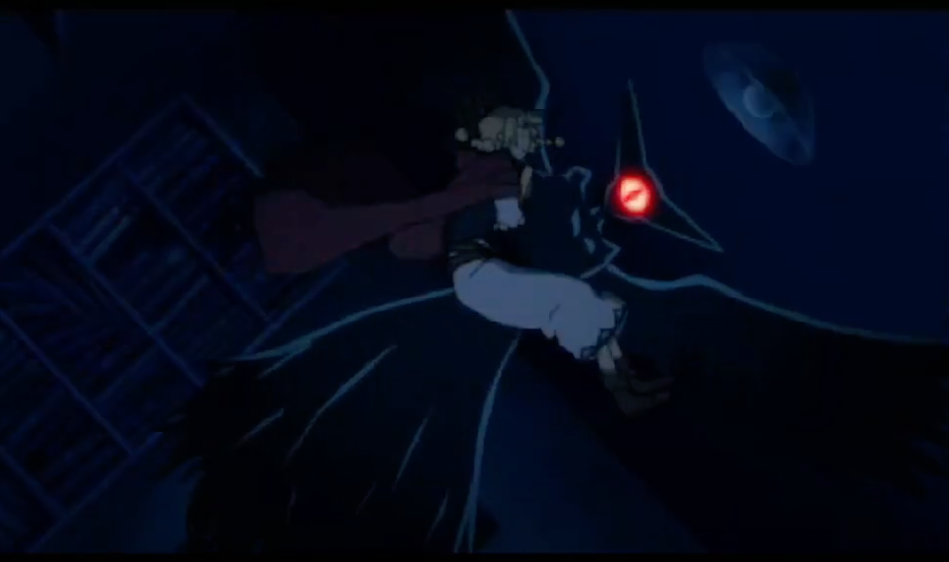
And now we spend the next bit meeting some Layton characters we’ll never see again, solve a few puzzles, and finally with one remaining puzzle, we come to find Espella and meet the witches. We’re given the trope of “this is bigger than you think” from the lead witch and with a diversion, Espella escapes on to a freighter moving by on the Thames.
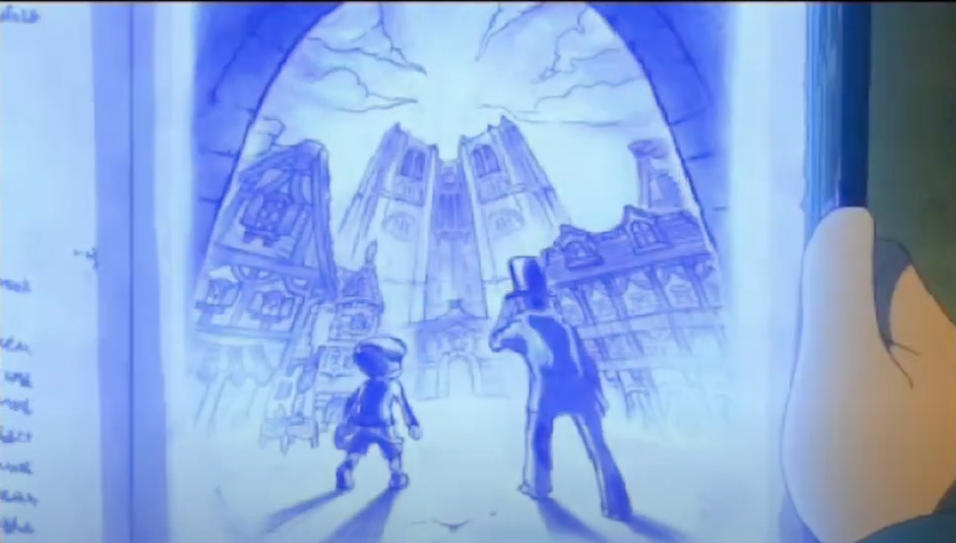
Layton and Luke find this book that Espella had been running around with and upon reading the text, they find it starts to move and see themselves in it. They’re then thrusted in a forested scene and fade out. At which point, Espella finds herself party to a crime.
So naturally this is somehow becomes Phoenix’s problem and we have defend Espella from the accusations laid upon her. Her guardian, Darklaw informs him and Maya that she doesn’t see the need to defend her and that we should let the whims of the court decide her fate. This is an affront to our trusty lawyer of course and we proceed to do what he does best anyway. All the while, Espella is very different from before. Aside from her attire resembling that of a school uniform, her eyes and voice appear lifeless as if she was under the control of something greater than her.
The usual AA mechanics for how the court proceeds and flows exist here and upon victory, Espella is cleared and the real culprit is arrested. After being congratulated by Darklaw for a job well done, they depart but curiously the same book that Layton and Luke saw earlier was left behind.
Maya insists on reading the book and just like before, the same moving text appears but this time the image we saw before is replaced with them instead. At this point, they’re teleported into the book and the book lands to the ground.

Layton and Luke plus Maya and Phoenix have been sucked into another world.
This was a good approach to an isekai
The term “isekai” (異世界) means “other world” in Japanese and in my opinion, this is a good execution of the trope. A mysterious book and this blurring overlap between what seems to be our world and the realm of magic really do make for a good story. While I cannot comment on the Layton games, it’s at least to me plausible for Ace Attorney to have this situation because we’re constantly coming across Maya channeling her dead sister in the original trilogy.
Things are extremely curious once we find ourselves in Labyrinthia. We’re made to solve puzzles as somehow the entire city is into them and then eventually introduced to the the Storyteller through a parade. He’s writing and copies of his writings are being thrown out to the towns people. However, a curious individual steps out to the front: it’s Darklaw, the woman Maya and Phoenix had met earlier in London.
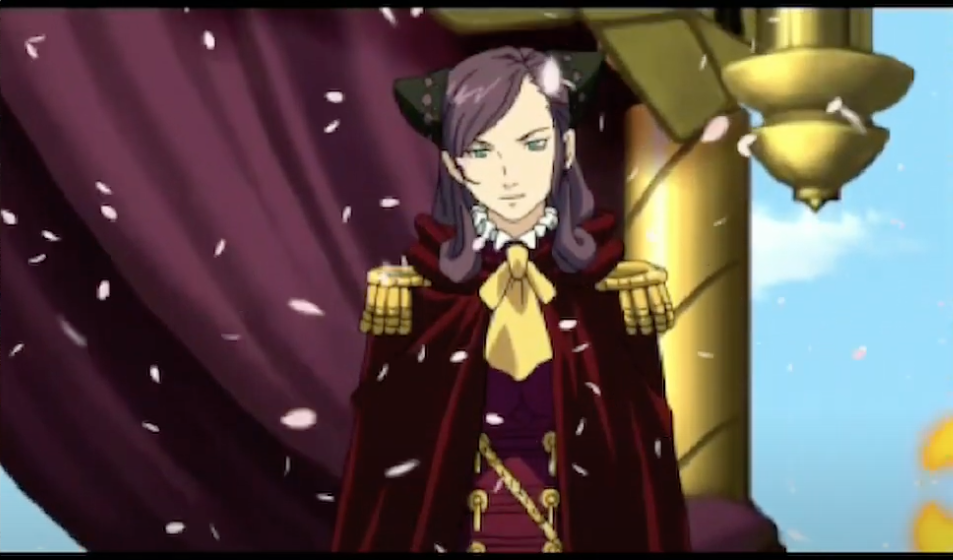
Why is she here? Is she the reason why we’re here? What is going on? What did that book actually do? Espella eventually rescues us because Layton opines against the writings of the divine texts of the Storyteller, raising the ire of the city folk and nearby guards. It is at this point she leads us to meeting her aunt and now we have Layton and Luke finally meeting Maya and Phoenix for the first time–except they’re both bakers.
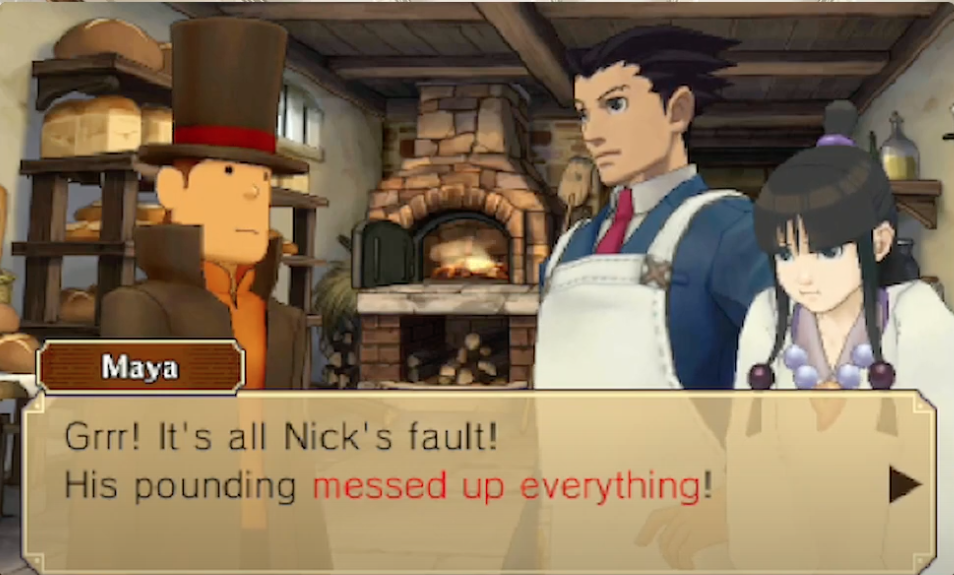
We’re then introduced to more of the lore through Labyrinthia’s archives, leading to additional backstory. After we leave, it’s time to defend Espella in a witch trial.
The game goes to eleven out of ten as for the first time ever, we walk into a court room at the tail end of a prior trial, watching as someone convicted thrusted into a fire pit at full force–in all previous AA games, executions are implied but never shown.
It’s time to go to court, except with a twist.
The courtroom mechanics are awkwardly augmented
Typically in an AA game, we have evidence, profiles, and choices in order to provide our defence. However, we learn quickly that this is all useless as evidence and logic has to battle against conjecture and irrationality. Phoenix suddenly learns through his suggestion we examine fingerprints that the concept of modern forensics is as alien to the people we’re battling as computers would be to pre-common era mathematicians. This is exciting and should be again a slam dunk, right?
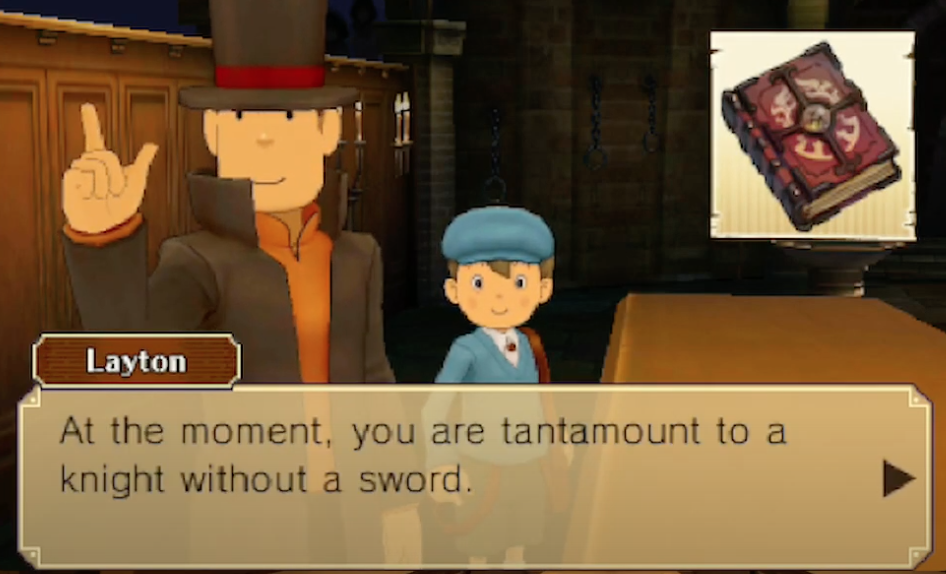
And it is at this point Layton introduces Phoenix to the book that brought us here in the first place: The Grand Grimoire. It’s a book which outlines the incantations witches can use alongside accompanying stones in order to cast magic. At no time can a witch other than Bezella make use of these words without the accompanying stone and to add to that, they are only able to have two of those stones on their staff at any given time.
The book is cool but is also a problem. It’s pivotal to the story of this game but the way the overall story is paced and how we’re to argue our cases, the logic and reason Phoenix still ends up using collides with the book’s purpose. We have to use the evidence we have and this magic book, but as the game progresses, the importance of this magic book becomes less so.
The importance of magic
And that is where things just get weird. What is this magic? Why is it that the Great Witch Bezella is seemingly capable of using magic but the rest of the witches are limited to one of two stones and their staff? This becomes clear as the story inches a long when the anachronisms we noticed earlier appear more and more.
As mentioned earlier, there are a lot of spoilers, but we eventually find ourselves having to defend Espella once again as she opts to lay claim to being the Great Witch despite the woman herself being a century old and she is merely 18. When she is found guilty, we’re treated a scene where Maya and Phoenix object and through some mishaps, Maya finds herself in the contraption, landing in the fire pit below.

Espella has escaped and Maya is dead? Well, no. Eventually we go to investigate what is below and we discover that the fire pit itself is merely an illusion. The contraption that the witches are put inside is essentially an elevator which passes safely through the flames to a tunnel below. It is unlikely that anyone who goes through here is dead at all and we eventually are led to a chase scene where Layton rescues Maya.
It was at this point I asked: is this something akin to Westworld, the Running Man, or better yet, The Truman Show? The latter of the three happens to be a favourite movie of mine as it centres around a single man unknowingly held captive to entertain the masses. He is kept with a confined space with artificial lighting and cameras in every single nook and cranny. The outcome of the movie is that he comes to discover the truth of the world he lives in is al a sham.
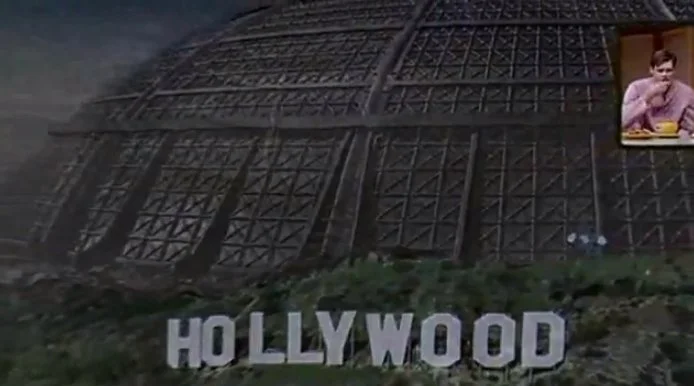
My thoughts were not baseless considering that in every single past Ace Attorney game I played, there was always a reason behind the unusual circumstances of whatever story faced. Ockham’s Razor is the antithesis of the AA universe and I found myself convinced that there was something sort of rational about everything going on.
There was no magic and I was also about to find out how on the nose my thoughts were.
The unravelling of the world
After meeting someone claiming to be the Great Witch with her unusual mansion built atop of ancient ruins, we find ourselves at the Great Witch Trial with Espella herself charged after she claimed to be the witch who killed her father earlier in the day. Phoenix once again has to defend her in court, but now faces Darklaw as the inquisitor (instead of prosecutor) for the trial as our previous foe, Barnham was accused of treason after the Storyteller’s death.
Parallel to this trial, Layton once and for all decides to visit the residence of the Storyteller himself. It is here that we come to discover a curious photograph.
And yeah. A photograph. This is a society that seems to straddle the line between medieval and renaissance and yet in his hand he’s holding a full colour print showing a young Espella holding hands with someone who resembles Darklaw, the woman presently tasked with convicting her of being a witch.
This world is not at all an isekai; it’s still made up however. After a battle with the Storyteller himself (oh what a surprise that he is not dead either), he relents after Layton points out what is happening and opts to accompany him and Luke to the trial.
Layton finally shows up just when Darklaw herself has been formally accused by Wright as the Great Witch. There’s no inquisitor to convict her so the Professor volunteers him and finally we get where the “versus” in the game’s title comes from. We get something akin to Edgeworth and Wright from game two’s final case where it’s now Layton in Miles’ role.
The truth is finally revealed: there was no Great Witch Bezella. It turns out that every year the Labyrithians would have a giant pyre in the square. During that time, it was revealed that a much younger Espella and Darklaw (who is revealed to be named “Eve”) were hanging out atop of the local bell tower. They decided to ring the bell against the wishes of their respective fathers (their fathers were friends and business partners), leading to a great catastrophe.
And why was the bell forbidden to be wrung? Because the whole concept of Labyrinthia was a research facility on some island, largely funded by the British government. Everyone had been contractually living on the island in a mind-altering drug programme which had been going on for over a decade. The sheer legal nonsense around this had me recalling my readings about the troubles with the Pitcairn Islands (content warning: sexual assault).
The ringing of the bell caused a side-effect due to the frequency emitted, causing everyone who was drugged to collapse and fall unconscious. This coinciding with the pyre led to the entire town being engulfed in flames and because of Espella’s father using a made up story to prevent her from messing with the bell in the first place, when she looked at the fire through the grates of the fence, she was led to believe that she herself was seeing the Great Witch and thought that it was all her fault.
Espella was so traumatized that her involvement in difficult situations (such as being in court) would lead to her mentally shutting down. Her trauma combined with herself being subject to the drugs led to believing that she was the great witch. Because of Eve’s involvement in all of this, she had to take on a special role in effectively playing a central role in building a whole world where nobody suffered in a great fire because she only dreamt it. It was all because her father couldn’t tell her the truth and instead of therapy, he’d just drug her and make a fucked up reality world for her to live in.
So how did this whole charade persist? Easy. Nobody had any recollection of their lives prior to being placed in this facility. The drugs were part of the water they drank so they constantly had a dose of whatever medication suppressed their past memories and additionally the writings on the paper were written with an ink which as it gassed out would convince someone of what was to happen. It was all brainwashing and it was claimed that everybody living on this island signed contracts that only Scientology could dream of legally enforcing.
As a consequence of this, it led to Eve’s father (who’s also the Storyteller’s business partner) to commit suicide midway through the game’s story. We were never given details about Eve being his daughter as we’re given the impression that his adoptive daughter was his only kin, but it speaks volumes to the impact and horror this island has made.
To make people “see” the magic, they were told that they could not see black. If you review all of the things you see in the game, there isn’t much of that. The writers decided to really lean into the idea of Vantablack paint, which at the time was rather controversial. Everything required to make things appear other worldly were merely painted in this paint and because people were convinced through this brainwashing medication that they couldn’t see anything painted with this colour, they would substitute it out of their sights.
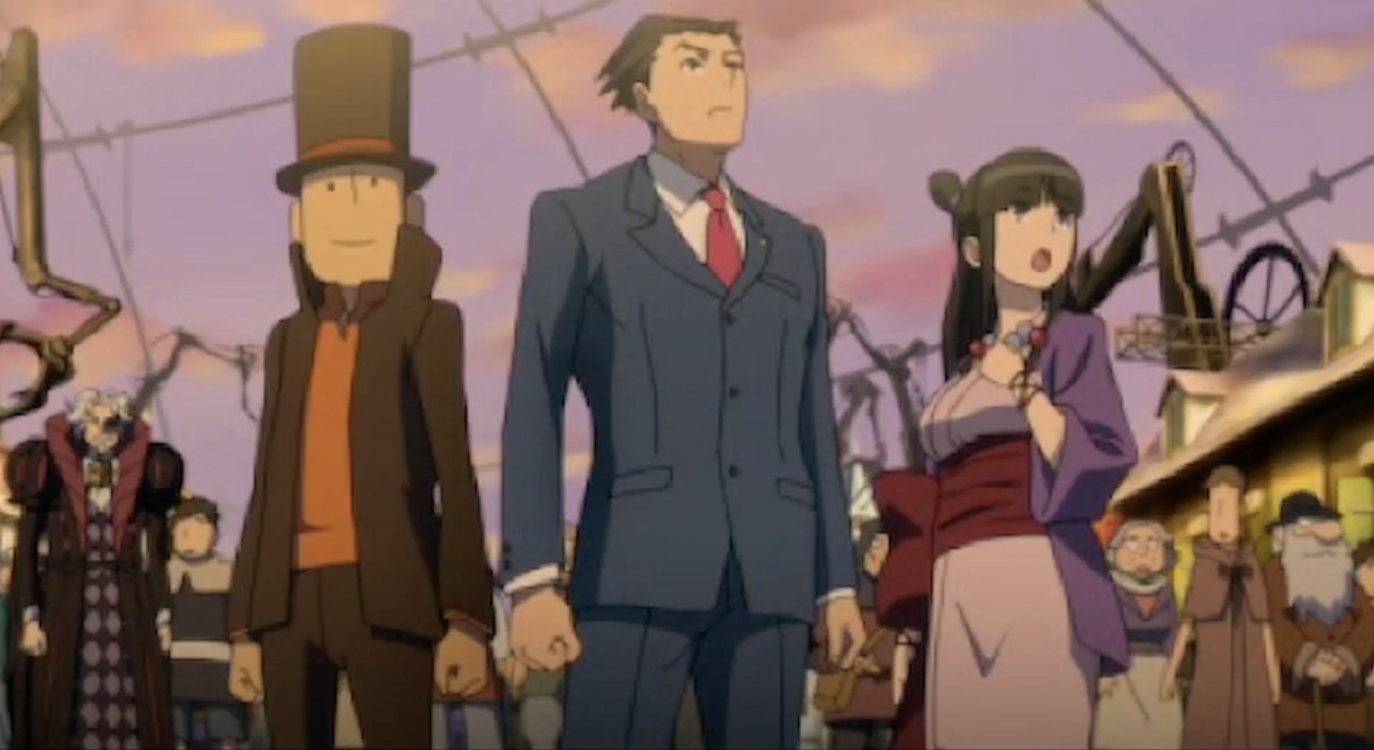
So with one magic word said to everyone involved, Layton says “taelende” and those subject to the drug’s effects would see that they were not living in a world of magic but something akin to movie magic instead.
I was right.
This was not my problem The reveal at the end was admittedly in line with a lot of things I have seen so far in Ace Attorney. The intensity of the story had me thinking back to some emotions I had when finishing off the final story of the original trilogy.
But unlike that story which had me sobbing at the end, this one decided to make a hard left turn straight into a concrete wall, ruining everything it built up.
Legal ramifications are a weird area for Ace Attorney games, but you are able to roll along with the outcomes because it usually makes sense. However, I brought up the story of Pitcairn because the legal nonsense around that island was an actual think the UK government faced and I cannot think of any way an island in the middle of the ocean could past muster with anybody marginally capable of performing a legal review.
I cannot see how an island funded by the UK government with dubious contracts and outright brainwashing could go without any scrutiny in the House of Commons. MKUltra was highly controversial in the United States and it would equally be so in the UK–the parallels between this story and the real-life CIA one are rather staggering.
You’d think that with Espella aware of her father’s unethical behaviour that she’d not be pining for a return to normalcy in the relationship, but she does and why wouldn’t she? Having been sheltered on a remote island for so long, I guess you probably wouldn’t have developed that level of critical thinking that her father is actually a huge problem.
And of course, he reveals that he is dying! Of course he is! But then three sentences later, his research team has developed a new “wonder drug” and that he is going to take it after having surgery. Yep. No consequences. Happy family. Too bad about Eve’s dad, though.
Closing I’ve wanted to complete this rant for a month now. Having learnt about the development of this game and how it led to the problems around Phoenix Wright: Ace Attorney - Dual Destinies (they were developed in parallel with PW’s creator, Shu Takumi on this game instead), I am still annoyed.
One of the things about Layton games I’ve learnt is that the happy ending is always the one the writers go for. However, that is not really the case in Ace Attorney.
After we finished game three of the original PW trilogy, we come to realise the impact the abuse one character faced at the hands of her mother will have lasting impacts as she becomes an adult. Espella herself was about the same age as Pearl when she started to be manipulated, but consequences be damned, we must be happy. I guess it’s obvious that Shu didn’t get his way on this outcome.
This game had fantastic story, probably one of the best soundtracks of any Ace Attorney game I’ve played thus far, and mechanics and concepts that were rather refreshing, but because of this desire to make everything seem “okay” as we depart the island, I’m not left feeling anything like that at all.
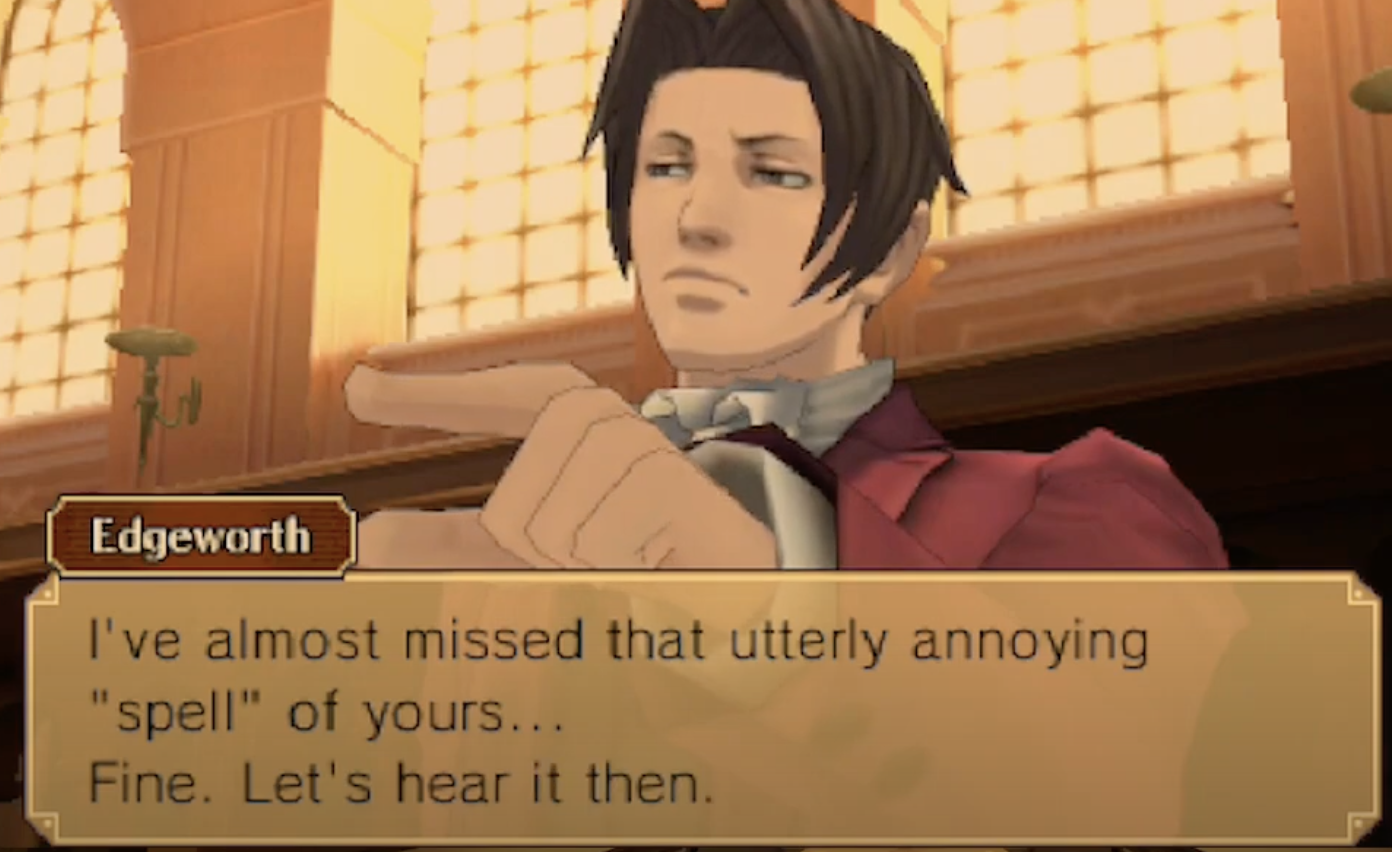
At least we got an Edgeworth cameo at the end.